
- csi_security
Why 24/7 Alarm Monitoring Matters for Your Home and Business
If your alarm system isn’t monitored around the clock, it’s only doing half the job. A break-in at 3 AM, a kitchen fire while you’re at work, or a medical emergency when no one’s home can go completely unnoticed without professional monitoring. That delay can mean the difference between a close call and a devastating loss.
24/7 alarm monitoring ensures that someone is always watching, ready to alert emergency responders the moment a threat is detected.
In this article, we’ll explain exactly how 24/7 monitoring works, why it’s essential for both homes and businesses, and how to choose the right monitoring service.
What Is 24/7 Alarm Monitoring and How Does It Work?
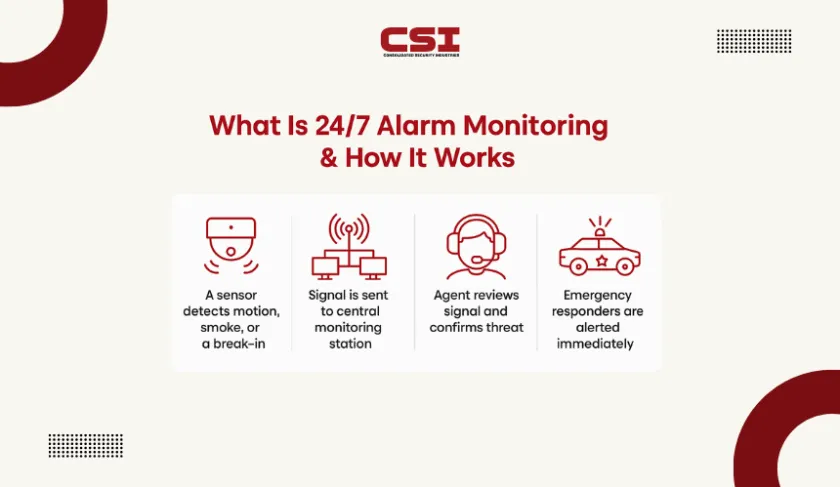
24/7 alarm monitoring means your security system is constantly connected to a live monitoring center, where trained professionals are ready to respond the moment an alarm is triggered.
It is not just a siren going off, it is a real human on the other end, evaluating the threat and contacting the right emergency services in seconds.
Here’s how 24/7 Alarm Monitoring actually works:
- A sensor detects trouble, whether it’s motion, smoke, heat, broken glass, or a panic button.
- The signal is instantly sent to a central monitoring station using a secure connection like cellular, internet, or radio.
- A monitoring agent reviews the signal in real time, filtering out false alarms and confirming emergencies.
- If a threat is confirmed, they alert police, fire, medical responders, or dispatch emergency patrols without delay.
- You also receive a call or mobile alert, so you’re always in the loop, even when you’re not there.
A reliable monitoring service uses UL-listed central stations, backup communication channels, and redundant systems to ensure no signal ever goes unanswered.
Why Your Home Needs 24/7 Monitoring
Home should feel like the safest place in the world, and that safety shouldn’t disappear the moment you leave the house. That’s where 24/7 alarm monitoring makes all the difference.
Here’s exactly how it protects your home:
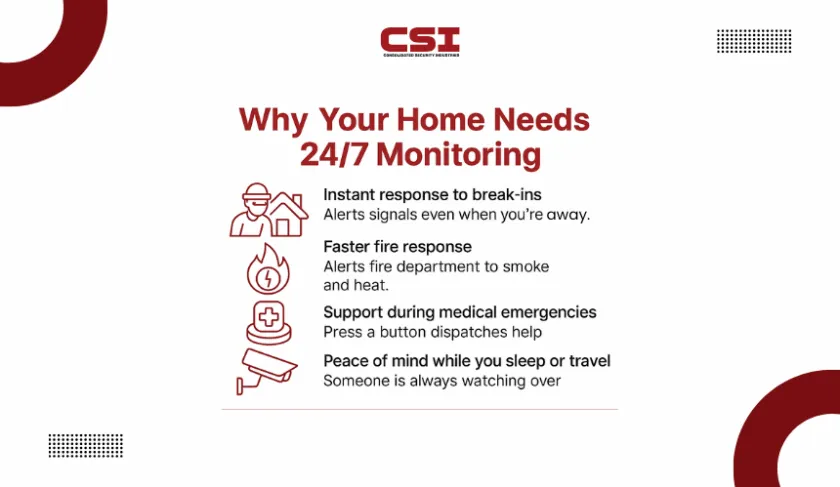
- Instant response to break-ins even when you’re miles away. A triggered alarm sends a signal straight to the monitoring center, and they can dispatch police or emergency patrols within seconds.
- Faster fire response. Smoke and heat detectors connected to a monitored system don’t just make noise. They trigger an alert that gets fire services moving before flames have a chance to spread.
- Support during medical emergencies. If a family member presses a medical alert button or a fall is detected, help is dispatched immediately, even if no one else is around to call for it.
- Peace of mind while you sleep or travel. You don’t have to rely on your phone for alerts or hope a neighbor hears the alarm. Someone is always watching, ready to respond.
- Smart-home integration. Most modern monitored systems work with your mobile device, letting you arm, disarm, and view live camera footage from anywhere. All of this while knowing a professional team is handling emergencies in real time.
Did you know? Nearly 30% of U.S. homes now have a security monitoring system, and over 51 million households use some form of video surveillance. |
For families with kids, seniors, or frequent travelers, residential security systems with 24/7 surveillance turns a home alarm into a complete life-safety system.
Why 24/7 Alarm Monitoring Is Non-Negotiable for Businesses
Security is not just a line item in your business plan, it is a fundamental part of staying open, staying protected, and staying compliant.
Whether you run a small storefront or a large commercial facility, 24/7 alarm monitoring adds a critical layer of protection that supports your operations, your team, and your bottom line.
Here’s why every business needs professional monitoring in place:
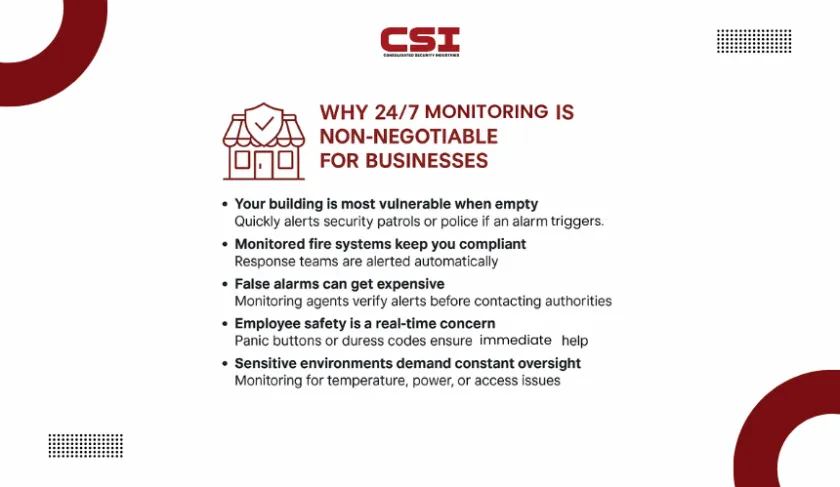
- Your building is most vulnerable when empty. After hours, your property is unoccupied. A monitored system quickly alerts security patrols or police if an alarm triggers. Without monitoring, break-ins might go unnoticed until morning.
- Monitored fire systems keep you compliant. Many local codes require fire alarms to be monitored. When smoke or sprinklers activate, response teams are alerted automatically, even if no one is inside.
- False alarms can get expensive. Repeated false dispatches often lead to costly fines. Monitoring agents verify alerts before contacting authorities, helping you avoid unnecessary penalties.
- Employee safety is a real-time concern. In emergencies like robberies or medical issues, panic buttons and duress codes let staff discreetly request immediate help, ensuring their safety.
- Sensitive environments demand constant oversight. Places like restaurants and server rooms need monitoring for temperature changes, power failures, or unauthorized access to prevent damage and liability.
- Insurance and liability protection. Many insurers require monitored alarms for coverage. Verified alarm data and dispatch logs can be crucial when filing claims.
At the end of the day, your business is not just brick and mortar. It’s your livelihood, your investment, and your responsibility. Commercial security solutions with 24/7 monitoring ensures that every part of it is guarded with professional precision.
Self-Monitoring vs. Professional Monitoring: What’s the Risk?
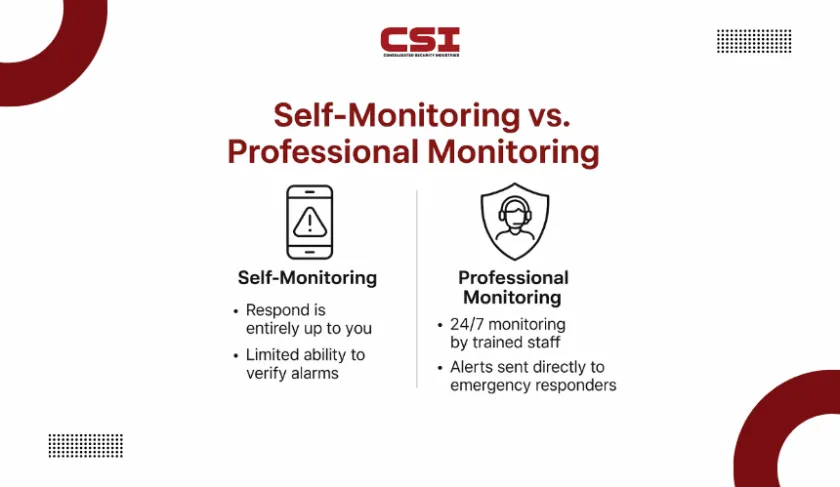
When it comes to protecting your home or business, choosing between self-monitoring and professional monitoring is not just about cost, it is about reliability and legal safeguards. Understanding the risks involved helps you make an informed decision for your property.
The table below compares the core differences between self-monitored and professionally monitored systems at a glance:
Feature | Self-Monitored System | Professionally Monitored System |
24/7 Agent Surveillance | No | Yes |
Automatic Emergency Dispatch | No | Yes |
Compliance with Insurance/Fire Code | Usually No | Generally Yes |
App Notifications | Yes | Yes |
False Alarm Management | No | Yes |
Professional monitoring covers critical functions that self-monitoring simply cannot match, especially when real emergencies unfold.
Choosing the Right 24/7 Monitoring Provider
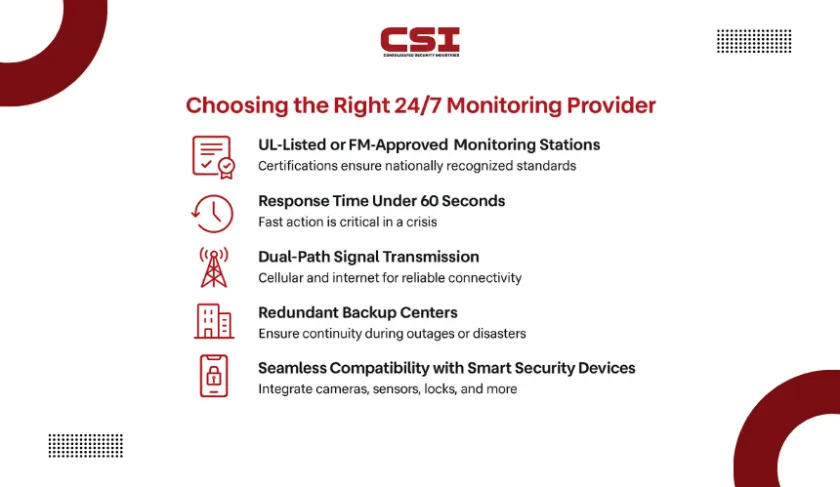
Whether you’re protecting a family home or a commercial property, choosing the right 24/7 monitoring partner means looking beyond just price. It’s about reliability to respond quickly.
Here’s what truly matters when evaluating a professional monitoring provider:
UL-Listed or FM-Approved Monitoring Stations
Look for providers that operate UL-listed or FM-approved central stations. These certifications ensure the center meets nationally recognized standards for safety, performance, and staffing. It is your assurance that the infrastructure is built for high-stakes emergencies.
Response Time Under 60 Seconds
Every second counts in a crisis. Industry-leading providers average response times under 60 seconds, meaning a trained agent is already assessing your alert before you’ve even processed the sound of the alarm. Fast response is one of the most critical indicators of quality.
Dual-Path Signal Transmission
Modern systems should use dual-path communication, typically cellular plus internet, to ensure the alarm signal gets through, even if one network fails. This redundancy improves signal reliability and protects against tampering or outages.
Redundant Backup Centers
Your monitoring should not go dark during storms, outages, or disasters. Choose providers that maintain multiple geographically redundant monitoring centers, ensuring seamless continuity of service even if one facility is compromised.
Licensing and BSIS Compliance (California Requirements)
Seamless Compatibility with Smart Security Devices
Today’s security setups are often hybrid: cameras, sensors, locks, thermostats, and more. Your monitoring provider should offer smart system integration, ensuring seamless communication between your devices and the central station for a unified and responsive experience.
When it comes to real protection, CSI Security delivers more than just alarms by providing 24/7 monitoring, video surveillance, and armed patrol response to keep both homes and businesses secure around the clock.
Frequently Asked Questions
Can professional monitoring work if the power or internet goes out?
Yes. Reputable monitoring services use cellular backup and battery-powered systems to keep your connection alive during outages. Plus, redundant signal paths ensure alerts go through even if one channel fails.
Do monitoring stations help reduce false alarms?
Absolutely. Skilled agents use verification protocols, including video and voice checks, to filter out false triggers. This approach helps prevent repeated dispatches and keeps your account off local authorities’ “no-response” list .
Will my insurance actually give me a discount for professional monitoring?
Yes. Many insurers offer security discounts, typically 5‑20 percent, when you have a UL-certified, professionally monitored system. Proof of documented emergency dispatch often seals the deal.
What happens if I’m traveling abroad and my alarm goes off?
Even if you’re overseas, professionally monitored centers still automatically verify and dispatch help first. You’ll get notified via app, while the monitoring team ensures local responders are alerted quickly.
Can monitoring systems detect environmental issues like water leaks or temperature drops?
Yes. Advanced systems include sensors for floods, HVAC failures, or temperature deviations, and monitoring agents can send specialized alerts to prevent damage in sensitive areas like data centers or server rooms.