
- csi_security
6 Types Residential Alarm Monitoring Services You Should Know
Residential alarm monitoring is the link that keeps your home connected to professional help when security threats occur. Unlike basic alarms that only make noise, monitored systems ensure that every alert is acted on promptly, whether it’s a break-in, fire, or medical emergency.
Homeowners typically choose from several popular monitoring options: landline monitoring for basic connectivity, broadband monitoring for faster alerts over the internet, cellular monitoring for the highest reliability, self-monitoring through mobile apps, and video verification for confirmed emergency responses.
Did you know? In the United States alone, 94 million households use some form of security system in 2025. |
In this blog, you will learn about the six main types of residential alarm monitoring services. It will also cover their key features, benefits, and best use cases to help you make an informed choice.
1. Landline Alarm Monitoring
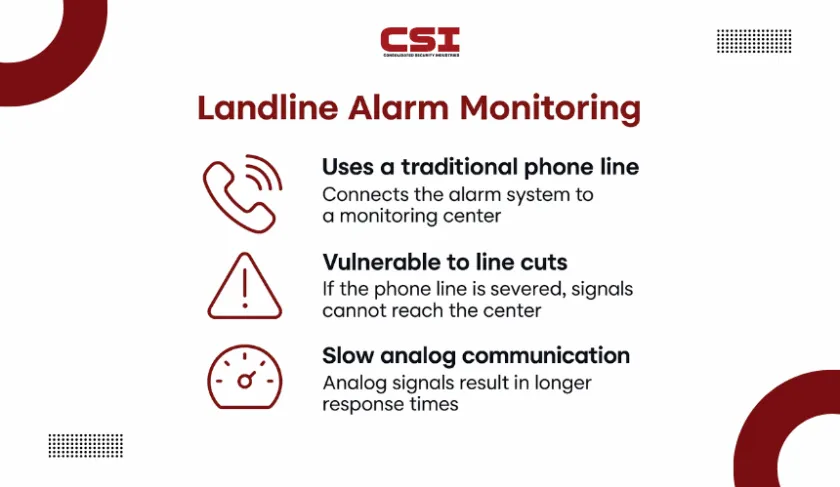
Landline alarm monitoring uses your home’s traditional telephone line to transmit signals to the monitoring center when the alarm system is triggered. It is the oldest and most widely recognized form of alarm monitoring in residential security.
How Landline Alarm Monitoring Works
The process is simple: when an intrusion or emergency occurs, the control panel dials the monitoring station over the landline connection, and trained operators initiate the necessary response. It offers a cost-effective way to maintain professional monitoring without relying on modern connectivity.
What are the Drawbacks of Landline Alarm Monitoring
Landline alarm monitoring uses your home’s traditional telephone line to transmit signals to the monitoring center when the alarm system is triggered. It is the oldest and most widely recognized form of alarm monitoring in residential security.
Who Should Choose Landline Monitoring
Landline monitoring is best suited for homes in rural or remote locations where traditional phone lines remain reliable, and there are no significant risks of line tampering. It’s a practical choice if you want an affordable and straightforward solution without the need for internet or cellular backup.
2. Broadband Alarm Monitoring
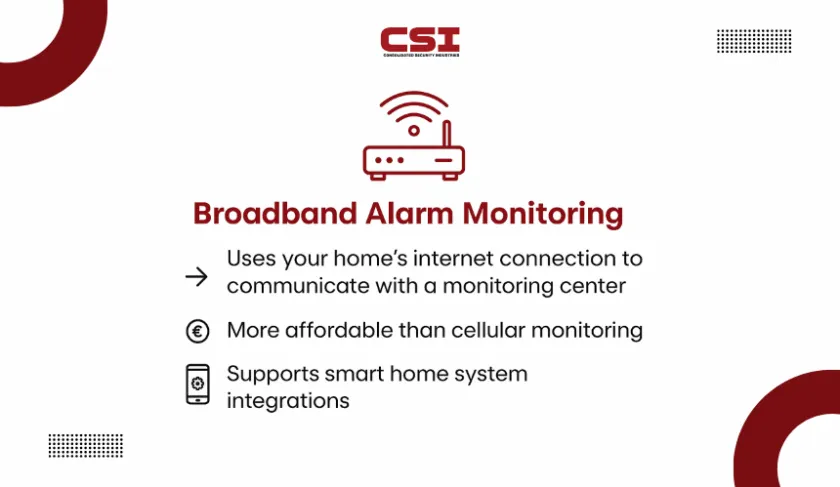
Broadband alarm monitoring is a security service that uses your home’s internet connection to communicate with a professional monitoring center. It’s a digital alternative to landline systems, offering faster and more reliable signal transmission for modern households.
How Broadband Alarm Monitoring Works
When the alarm activates, the system sends alerts through your broadband network to the monitoring station. This digital communication enables faster data transfer and often supports smart features like real-time notifications and remote access through mobile apps.
Pros of Broadband Alarm Monitoring
- Faster transmission compared to landline monitoring.
- Affordable alternative to cellular monitoring.
- Compatible with smart home systems and mobile apps.
Cons of Broadband Alarm Monitoring
- Dependent on internet availability and electricity.
- Service interruptions during power or network outages without backup options.
Who Should Choose Broadband Monitoring
This type of monitoring works best for homes with a stable high-speed internet connection and minimal power disruptions. It is a good option for homeowners seeking cost efficiency along with smart security features.
3. Cellular Alarm Monitoring
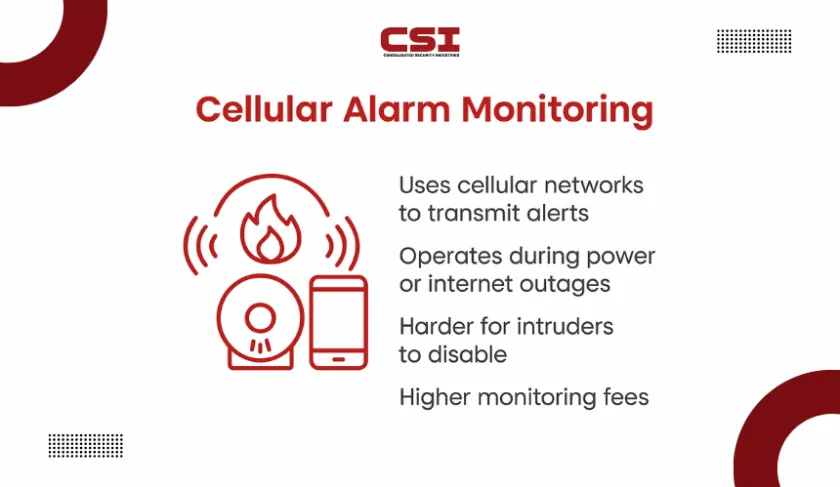
Cellular alarm monitoring is an advanced wireless method commonly used in residential alarm monitoring, offering reliable communication through cellular networks. It is considered one of the most dependable monitoring solutions for modern home security.
How Cellular Alarm Monitoring Works
When an alarm is triggered, the system transmits signals over a secure cellular network instead of relying on landlines or internet connections. This ensures uninterrupted communication even during power outages or internet failures. Many cellular systems also include features like mobile app access, remote system control, and instant alerts for enhanced security.
What are the Advantages of Cellular Alarm Monitoring?
This monitoring option stands out for its reliability and advanced features. Here are the four key benefits you should know:
- Highly reliable because it does not depend on landlines or broadband.
- Works during power outages with built-in battery backup.
- Harder to tamper with compared to wired options.
- Supports modern smart home integrations and remote monitoring.
Are there Any Limitations of Cellular Alarm Monitoring?
Although it offers the strongest protection, cellular monitoring has a few drawbacks worth considering:
- Higher monthly monitoring fees compared to landline or broadband options.
- Requires strong cellular coverage in your area to function optimally.
Who Should Choose Cellular Alarm Monitoring
This option is ideal for homeowners seeking the most secure and tamper-resistant monitoring service. It is particularly suitable for urban and suburban homes where cellular networks are strong and where uninterrupted security is a priority. If you want premium reliability and advanced features, cellular monitoring is the best choice.
Self-Monitoring via Mobile App
Self-monitoring is a security approach that gives homeowners full control over their alarm system through your smartphone without relying on a professional monitoring center.
How Self-Monitoring Works
When a sensor or alarm is triggered, the system immediately sends push notifications or text alerts to your smartphone. Through the app, you can view real-time status updates, watch live camera feeds if integrated, and decide whether to contact emergency services.
Many systems also allow remote control of features such as door locks and security cameras, making it convenient for tech-savvy users.
What Are the Advantages of Self-Monitoring?
This option offers cost savings and direct control, which many homeowners find appealing. Here are the main benefits:
- No monthly monitoring fees, reducing long-term costs.
- Instant alerts delivered directly to your smartphone.
- Full control over response actions without third-party involvement.
- Ability to integrate with smart devices for a personalized experience.
What Are the Limitations of Self-Monitoring?
Self-monitoring can be effective, but it depends on a few conditions being met:
- A reliable internet connection for uninterrupted notifications.
- Consistent access to your smartphone to respond to alerts quickly.
Who Should Choose Self-Monitoring?
This approach is ideal for homeowners who want control and cost efficiency without sacrificing convenience. It works best for those who are always connected and comfortable managing security decisions on their own. If you value flexibility and tech integration, self-monitoring is a strong choice.
5. Video Alarm Verification Monitoring
Video alarm verification combines professional alarm monitoring with video surveillance to confirm threats before dispatching emergency responders. This method reduces false alarms and speeds up the response process, making it one of the most advanced security options for residential use.
How Video Alarm Verification Works
When an alarm is triggered, the system sends an alert along with real-time video footage to the monitoring center. Trained operators review the footage to verify whether the alarm is genuine or a false trigger. If a real threat is detected, authorities are dispatched immediately with critical visual information, improving both response time and accuracy.
What Are the Advantages of Video Alarm Verification?
This monitoring type offers enhanced security and efficiency. Here are the main benefits:
- Reduces false alarms by verifying each alert with video evidence.
- Speeds up emergency response by providing real-time visuals.
- Improves law enforcement prioritization during actual incidents.
- Enhances homeowner confidence through visual confirmation of events.
What Are the Limitations of Video Alarm Verification?
Although highly effective, this system requires a few important considerations:
- Higher upfront costs for cameras and compatible equipment.
- Requires a strong internet connection for smooth video transmission.
Who Should Choose Video Alarm Verification Monitoring?
This option is best for homeowners who want the highest level of security and accuracy in threat detection. It is particularly suitable for properties in areas with strict false-alarm penalties or for those who prioritize rapid, verified emergency response. If peace of mind and quick verification are top priorities, this monitoring type is a smart investment.
6. Hybrid (Dual-Path) Alarm Monitoring
Hybrid alarm monitoring, also called dual-path monitoring, combines two communication channels, typically cellular and broadband, to transmit alerts to the monitoring center.
This approach adds a layer of redundancy, ensuring that if one connection fails, the other continues to keep the system online. It is one of the most dependable solutions for residential security, offering both speed and reliability.
How Hybrid Alarm Monitoring Works
When the alarm triggers, the system first attempts to communicate through the primary channel, often broadband. If the internet connection is unavailable or disrupted, the backup channel (usually cellular) immediately takes over. This seamless switch guarantees continuous monitoring without any downtime, even during network or power outages.
What Are the Advantages of Hybrid Alarm Monitoring?
This option is designed for homeowners who want maximum reliability and fail-safe performance. Key benefits include:
- Dual connectivity minimizes the risk of communication failure.
- Provides faster signal transmission by using broadband when available.
- Ensures continued protection during power or internet outages through cellular backup.
- Supports advanced smart home features and remote monitoring.
What Are the Limitations of Hybrid Alarm Monitoring?
While highly effective, dual-path monitoring requires a few considerations:
- Higher equipment and monitoring costs compared to single-path options.
- Requires both a stable internet connection and strong cellular coverage for optimal performance.
Who Should Choose Hybrid Alarm Monitoring?
This solution is ideal for homeowners who prioritize uninterrupted security above all else. It works best in properties where consistent protection is essential, such as large homes, vacation properties, or residences in areas with variable connectivity. If reliability and advanced functionality are top priorities, hybrid monitoring delivers the strongest safety net.
To choose the best alarm monitoring solution, start by assessing connectivity and identifying the features that matter most. Select a service that delivers the protection every home deserves. For expert guidance and dependable monitoring options, contact CSI Security today and take the next step toward a safer home.
Frequently Asked Questions
Will alarm monitoring work during a power or internet outage?
Yes. Cellular and hybrid monitoring systems are designed to maintain communication during outages. They use battery backups and cellular networks to keep your home connected when primary connections fail.
Can alarm monitoring reduce false alarms?
Modern systems with video verification or advanced sensor technology significantly lower false alarms. Verified alerts ensure authorities only respond when a genuine threat is detected.
How much does residential alarm monitoring typically cost?
Costs vary based on the type of service. Basic landline or broadband plans start around $10 to $20 per month, while cellular and hybrid solutions can range from $30 to $50 monthly. Additional costs may apply for installation and smart features.
Do alarm monitoring services integrate with smart home devices?
Yes. Most modern monitoring solutions work with smart devices like cameras, locks, and voice assistants. This integration allows homeowners to manage security and home automation from a single app.