

- csi_security
Top Home Security Alarm Systems Every Los Angeles Homeowner Should Consider
The best security alarm systems for homeowners in Los Angeles are those that combine fast emergency response, smart technology, and resilience against local risks like burglary, wildfires, and power outages. In LA, where property crimes remain higher than the national average and rolling blackouts are a seasonal concern, homeowners need more than just a basic alarm.
Systems that work best in this region typically include professionally monitored setups with cellular backup, smart home-compatible systems with remote access, and hybrid wired-wireless models that maintain reliability during outages. Some also offer video verification, motion detection, and environmental sensors for fire, smoke, and carbon monoxide.
Did you know? Property crime rates in Los Angeles remain notably high, about 2,354 incidents per 100,000 residents, which exceeds the statewide average and reflects ongoing challenges with burglary and theft, especially ‘smash and grab’ events. |
This guide will walk you through the most effective alarm system types for different home styles and neighborhoods in Los Angeles, so you can choose the protection that fits your home and your lifestyle with confidence.
Why Los Angeles Homeowners Need a Robust Alarm System

Los Angeles is a city where the need for a dependable home alarm system goes beyond peace of mind. With property crimes reported in neighborhoods from Hollywood to Van Nuys, and natural threats like wildfires and power outages becoming more frequent, homeowners here face unique risks that demand proactive protection.
Unlike smaller cities, LA’s urban sprawl and mix of single-family homes, hillside properties, and multi-unit dwellings create different levels of exposure. Homes in high-traffic areas may need systems with faster police dispatch and video verification, while those near wildfire zones benefit from systems with battery backup and environmental sensors for heat and smoke.
For Your Information: Despite a significant 24% drop in homicides by late 2023, violent crime is still present in LA, with certain police districts reporting increases in robberies (10.5%) and a slight rise (0.4%) in burglaries as of early 2024. This underscores the importance of fast emergency response through monitored alarm systems. |
Another major factor is the rise in smart home adoption across LA. Many residents want systems that connect with devices they already use, such as video doorbells, smart locks, and app-based controls.
Top Alarm System Types That Work Best for Los Angeles Homes
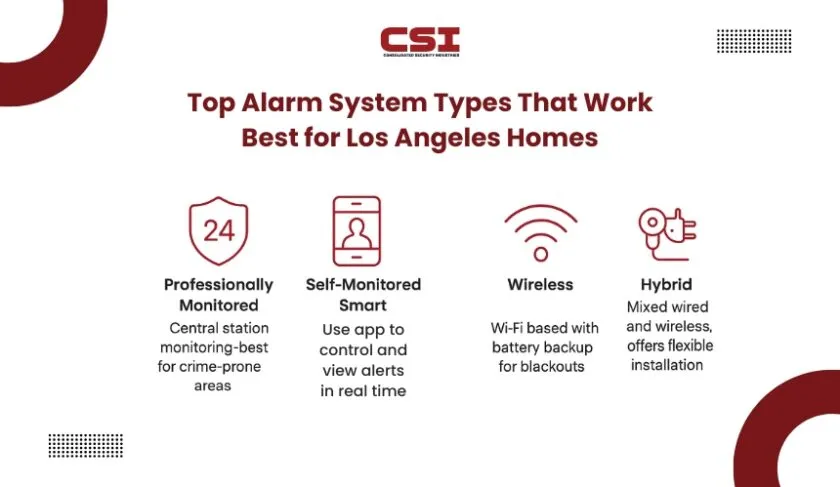
Choosing the right alarm system in Los Angeles is about choosing a system that fits your environment, home layout, and lifestyle. The most effective systems for LA homes offer a balance of real-time response, smart technology, and protection that continues working even when the power or internet goes out.
Here are six types of alarm systems that consistently meet those needs:
1. Professionally Monitored Alarm Systems
These systems are monitored around the clock by a central station that contacts emergency responders when an alert is triggered. In Los Angeles, where fast response can be the difference between minor damage and a major loss, this type of system adds peace of mind.
Professionally monitored setups often include intrusion detection, fire and smoke monitoring, and remote mobile access.
Best suited for: Single-family homes, hillside properties, or areas with higher crime activity.
2. Self-Monitored Smart Alarm Systems
Many LA homeowners, especially in condos or rental properties, prefer self-monitored systems. These setups allow you to view cameras, receive instant alerts, and control the system through a mobile app. While they don’t automatically notify emergency services, they give homeowners real-time visibility and control, which is especially helpful when you’re away from home.
Best suited for: Apartments, condos, or tech-savvy homeowners who travel often.
3. Wireless Alarm Systems
Wireless systems rely on Wi-Fi and cellular connections rather than hardwiring. This makes them easier to install and more adaptable to modern smart homes, especially in LA’s older houses where retrofitting wired systems can be difficult.
Most wireless systems include battery backup, which keeps them running during blackouts or wildfire-related outages.
Best suited for: Homes where installation flexibility and backup power are priorities.
4. Hybrid Alarm Systems (Wired and Wireless Combined)
Hybrid systems combine the stability of wired connections with the flexibility of wireless devices. These are especially useful in larger LA homes that already have existing wiring but also need additional smart features like mobile control or remote access. They’re typically used by homeowners who want more custom configurations with long-term reliability.
Best suited for: Larger properties, homes with existing wired infrastructure.
5. Alarm Systems with Environmental Sensors
Los Angeles homes are increasingly adding sensors that detect more than just break-ins. Systems that include smoke, heat, carbon monoxide, and water leak sensors provide layered protection against environmental hazards. These are particularly important in areas near fire zones or neighborhoods prone to power outages and electrical risks.
Best suited for: Homes in wildfire zones, older houses, or properties with basements or crawl spaces.
6. Systems with Cellular Backup and Battery Power
In a city where rolling blackouts and wildfire-related power loss are common, alarm systems that include both cellular backup and battery power are critical. These ensure your system stays online and continues to communicate with monitoring centers even when local power or internet is down.
Best suited for: Any home where consistent uptime is a priority.
Top Features to Look For in a Home Security Alarm System (Los Angeles Edition)

When choosing a home security system in Los Angeles, it is not just about how many sensors you have. It is about how well those features work in real-life situations that LA homeowners actually face. From high-density neighborhoods to hillside communities at risk of wildfires, the five features below are essential for keeping your home protected, connected, and secure.
1. UL-Certified Central Monitoring Station

Having a system that connects to a UL-certified monitoring station is one of the most important choices you can make. These stations meet strict standards for signal reliability, backup power, and operator training.
In LA, where response time can be critical, this certification means that when your system sends an alert, the signal reaches a professional who can quickly contact police, fire, or medical services. Many insurance companies also recognize UL certification, and having it can help qualify you for premium discounts.
2. AI-Powered Motion Detection

Standard motion sensors often mistake a dog for an intruder or trigger alerts from passing cars. AI-powered motion detection solves that problem by learning to recognize movement patterns and filtering out everyday activity.
This is especially helpful in suburban areas of Los Angeles where false alarms can be common. Whether it is a pet running through the hallway or a delivery driver walking up the steps, advanced sensors help your system react only to real threats.
3. Smart Home Compatibility
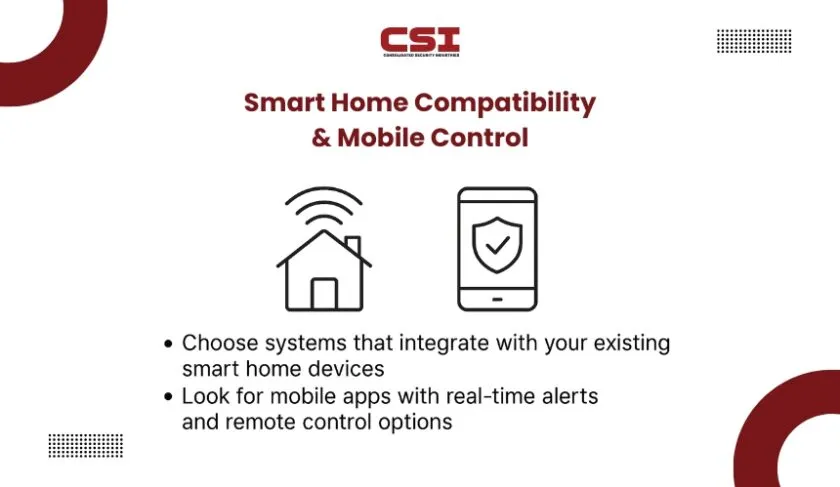
More homeowners in Los Angeles are turning their houses into fully connected smart homes. If you already use devices like smart locks, video doorbells, or voice assistants, your security system should work with them seamlessly.
Look for systems that are compatible with platforms like Google Home, Alexa, and Apple HomeKit. These allow you to create automations like locking all doors and arming your alarm at bedtime with one voice command or triggering security lights when motion is detected at night.
4. Mobile App with Real-Time Alerts
A good home security system should put full control in the palm of your hand. Whether you are on the Westside or out of town, a mobile app gives you instant access to what is happening at home.
Choose systems that support both iOS and Android and include features like two-way audio, remote arm and disarm, live camera feeds, and video clip playback. In a fast-moving city like Los Angeles, knowing the moment something happens can make all the difference.
5. Redundant Communication Channels
One of the most overlooked but essential features for LA homeowners is communication redundancy. Power outages, wildfires, and service disruptions can all interfere with your system’s ability to send alerts.
That is why it is important to have multiple communication paths, such as cellular, Wi-Fi, and landline options. If one connection fails, the others keep your system online and responsive. This level of resilience is especially important in areas prone to blackouts or where cell signals may be weak.
Choosing the right features can be the difference between a system that just makes noise and one that truly protects your home. If you’re not sure where to start or which options make the most sense for your Los Angeles property, CSI Security is here to help you make a choice that feels right and works when it matters most.
Frequently Asked Questions
Do I need a home alarm permit in LA?
Yes. Every homeowner is required by city ordinance to obtain a police alarm permit, currently $45 for a first-time permit and $26 yearly to renew. Without a permit, your first false alarm can cost as much as $276, compared to $176 with a valid permit. It is the law and it can save you serious money and hassle.
What happens if my alarm goes off accidentally?
A false alarm happens when emergency responders are called but there’s no real emergency. In Los Angeles, the first false alarm with a permit costs $176, and fees increase with each additional incident. You can attend an online LAPD Alarm School to waive one false alarm fee per year.
Will LAPD still respond after multiple false alarms?
Yes, but only for verified emergencies. The LAPD requires alarm verification after two false burglar alarms within a year before dispatching officers. Panic, fire, or medical alerts are always prioritized.
How secure are wireless systems from signal jammers?
Wireless signals can be jammed, potentially disabling Wi‑Fi or cellular alerts. Homes concerned about this risk often use hybrid or wired systems with backup landline connections or jamming-detection sensors. These setups maintain security even if wireless signals are disrupted.
Can emergency alerts reach me during wildfire or blackout events?
Wireless networks can become overloaded or delayed during emergencies, like the Eaton Canyon fire alert mix-up in January 2025. That is why alarm systems with cellular backup and battery power are critical in wildfire-prone areas in the LA region.