
- csi_security
How Smoke and CO Detectors Are Integrated into Alarm Systems for Enhanced Safety
Every year, thousands of households and workplaces face life-threatening risks from undetected fires and invisible carbon monoxide exposure. While smoke alarms and carbon monoxide detectors once operated as independent devices, today they are often integrated into full-scale alarm systems that provide a unified shield of protection.
The shift toward integrated systems is not just about convenience. It is about ensuring that every signal, whether from rising smoke particles or a dangerous build-up of CO gas, is instantly recognized, transmitted, and acted upon.
In this article, we will explore exactly how smoke and CO detectors connect, communicate, and transform the capabilities of modern alarm systems.
How Do Smoke Detectors Work Within Alarm Systems?
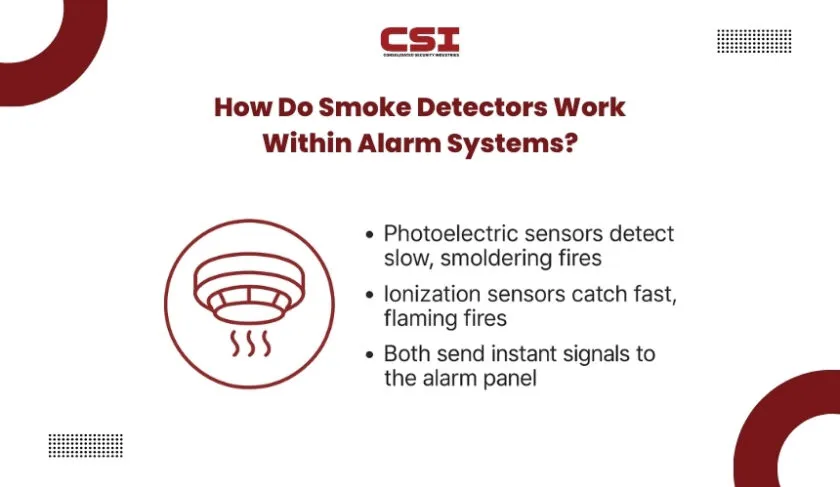
Smoke detectors function through two main technologies: photoelectric sensors and ionization sensors. Photoelectric models use a light beam that gets disrupted when smoke particles scatter it. This makes them reliable for detecting slow, smoldering fires.
Ionization models rely on a small electric current between two charged plates, which combustion particles interrupt, making them more effective for fast-flaming fires.
How Do Carbon Monoxide Detectors Work in Alarm Systems?
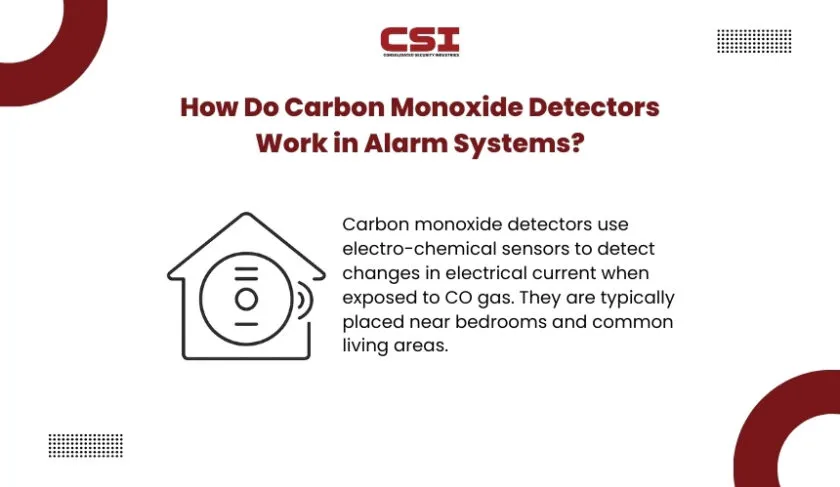
Carbon monoxide detectors are built with electrochemical sensors that measure changes in electrical current when exposed to CO gas. This design makes them highly sensitive to even small concentrations of the odorless, colorless gas that is otherwise impossible to detect without technology.
Unlike smoke detectors, placement is critical for CO detectors. They are typically installed near bedrooms and common living spaces to ensure that occupants are warned before exposure reaches dangerous levels.
How Are Smoke and CO Detectors Integrated Into Alarm Systems?
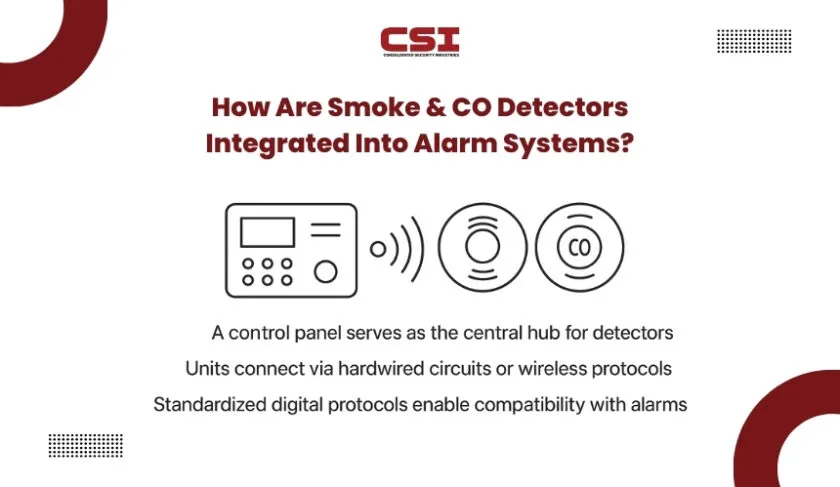
Integration begins with a control panel, which serves as the central hub for all detectors. Each smoke and carbon monoxide unit connects to this panel either through hardwired circuits or wireless communication protocols, ensuring signals are instantly recognized.
The panel assigns identifiers to every detector, allowing the system to locate where an alert originates. Through standardized digital protocols, detectors remain compatible with alarm components such as sirens, strobes, and monitoring software. This structure enables seamless communication across the entire network, whether in a home or a large commercial property.
By forming part of the alarm ecosystem, detectors transform from standalone devices into coordinated safety tools, ensuring that no critical signal is overlooked.
What is the Difference Between Wired and Wireless Integration of Detectors?
Wired integration connects detectors to the control panel using physical cabling. This method is known for its reliability and low susceptibility to interference, making it common in new construction projects and commercial facilities where structured wiring is easier to implement.
Wireless integration relies on radio frequency signals instead of physical wiring. These detectors are easier to install, especially in existing buildings, and allow for greater scalability when expanding an alarm system. However, they depend on battery maintenance and may require stronger network management to prevent signal disruption.
What Happens When Detectors Trigger an Alarm?
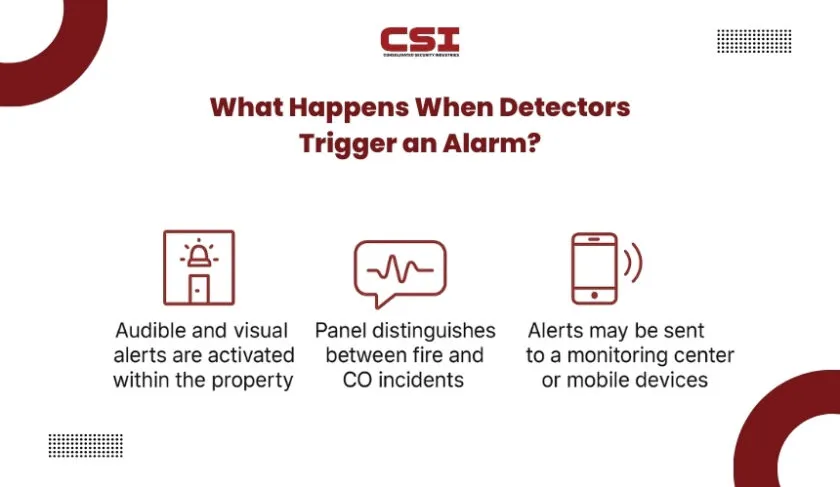
Once the control panel receives a signal from a smoke or carbon monoxide detector, it initiates a tiered response sequence. The system first activates audible and visual alerts within the property, such as sirens, strobe lights, or voice evacuation commands.
These cues are designed to ensure occupants immediately recognize the nature of the threat and respond accordingly.
At the same time, the panel distinguishes between fire and carbon monoxide incidents, delivering separate alert tones or spoken messages so occupants understand the type of emergency without confusion.
Beyond on-site notifications, most integrated alarm systems are programmed to escalate alerts externally. The panel may send signals to a professional monitoring center or push instant notifications to connected mobile devices. This layered approach ensures that emergency responders or property managers are informed even if no one is present in the building.
What Are the Benefits of Interconnected Alarm Responses?
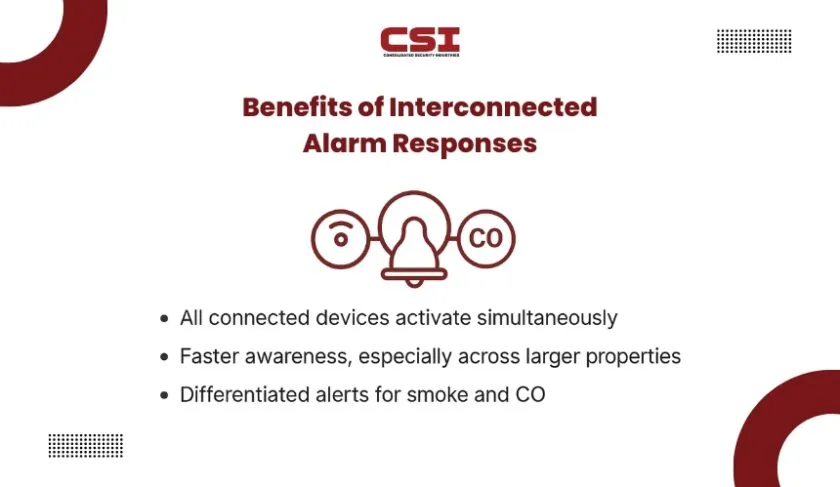
When smoke and carbon monoxide detectors are interconnected, the alarm system no longer reacts as isolated units but as a coordinated network. This design ensures that when one detector senses danger, all connected devices across the building activate simultaneously.
This interconnected network results in faster awareness, especially in multi-room or multi-story properties where a single alarm might not be heard everywhere.
Interconnected systems also deliver differentiated alerts, so occupants can immediately distinguish whether the threat is fire or carbon monoxide. This clarity eliminates hesitation and helps people take the right action.
Another benefit lies in compliance with safety standards. Organizations such as the NFPA and UL outline strict requirements for alarm interoperability, and interconnected systems make it easier for both homeowners and businesses to meet these codes.
How Do Smoke and CO Detectors Integrate With Smart Home and IoT Systems?
Modern home alarm systems extend beyond traditional sirens and strobes by connecting detectors to the Internet of Things (IoT). Through cloud platforms, smoke and carbon monoxide detectors share real-time data with smartphones, tablets, and smart assistants, giving occupants instant visibility even when they are away from the property.
Smart integration also enables automation routines. For example, when a smoke detector activates, the system can automatically unlock smart locks, switch off HVAC units to reduce smoke spread, or turn on smart lighting to guide safe evacuation. Similarly, a CO alert can trigger the immediate shutdown of fuel-burning appliances to stop the source of the gas.
Many IoT-enabled detectors include predictive maintenance features, sending alerts when batteries run low, sensors need calibration, or devices lose connectivity. This proactive monitoring reduces false alarms while ensuring detectors stay operational at all times.
How to Choose and Maintain an Integrated Alarm System
Selecting and maintaining the right detectors is just as important as understanding how they work. This section outlines the key factors property owners should consider to keep their systems reliable and compliant.
Selecting Compatible Detectors
When building or upgrading an alarm system, it’s essential to choose smoke and carbon monoxide detectors that are compatible with the control panel and communication protocols already in place.
Some detectors are designed for specific alarm brands, while others follow universal standards. Key criteria include sensor reliability, power source (battery or hardwired), and whether the device supports wired or wireless integration.
The Importance of Regular Maintenance
Even the most advanced detectors require consistent upkeep. Monthly testing ensures that sensors respond correctly, while battery checks prevent unexpected failures in wireless units.
Hardwired detectors also need periodic inspection to confirm that circuits remain intact. Neglecting maintenance increases the risk of false alarms or delayed detection during an actual emergency.
Professional vs. DIY Installation
For small residential properties, DIY installation kits can be practical, especially when using wireless detectors. However, in larger homes or commercial spaces, professional installation is strongly recommended. Trained technicians can ensure optimal placement, compliance with building codes, and correct system calibration, which directly affects safety performance.
For property owners who want complete peace of mind, CSI Security offers professional installation backed by 24/7 monitoring services. Our team ensures every detector is placed, calibrated, and connected correctly.
Frequently Asked Questions
Do smart smoke or CO detectors pose privacy or security risks?
Smart detectors that connect to Wi-Fi or cloud platforms may collect data such as device usage patterns and performance logs. While most models are designed with encryption, they can be vulnerable if not updated regularly or secured with strong passwords.
How often should smoke and CO detectors be replaced?
Even if they appear to work, detectors have a limited lifespan. Smoke detectors should be replaced every 10 years, while carbon monoxide detectors usually last between 5 and 7 years, depending on the model and sensor type. Over time, sensor accuracy declines, so replacement is necessary to ensure proper detection.
What does it mean when a CO detector chirps intermittently?
A chirping CO detector does not always indicate a low battery. Many models emit this sound when the unit has reached the end of its service life. In this case, replacing the detector entirely is the only safe solution. Continuing to rely on an expired sensor can leave a property unprotected from carbon monoxide exposure.
Can battery-operated smoke alarms connect with wired alarm systems?
Yes. Some manufacturers offer bridge units that allow battery-powered detectors to communicate with wired systems. This setup lets homeowners integrate older standalone devices into a modern network. Compatibility is key, so it is best to use detectors and accessories from the same brand or check for cross-brand support before installation.
Is there a limit to how many detectors can be interconnected?
Yes. Safety standards place a maximum on how many alarms can be linked in a single system to maintain reliability. In most cases, up to 18 initiating alarms can be connected, which may include a mix of smoke, carbon monoxide, and heat detectors. This is more than sufficient for most residential and small commercial properties.
Are carbon monoxide detectors legally required in homes?
In many regions, yes. Laws often require CO detectors in residential properties that use fuel-burning appliances, have fireplaces, or include attached garages. Newer construction projects almost always mandate their installation. Even where not legally required, experts strongly recommend adding CO detectors for health and safety protection.