
- csi_security
Security Alarm Systems Explained: Types, Features & How They Work
Feeling secure in your home or business should never be optional. That’s where security alarm systems come in. Whether you’re aiming to deter intruders, monitor your property remotely, or receive instant alerts when something’s wrong, an alarm system acts as a reliable first layer of protection.
In this guide, you’ll discover what a security alarm system is, how it works, and why it’s more than just a deterrent. From motion sensors to smart alerts and professional monitoring, we’ll explain each part clearly so you can choose the right system for your needs.
What Is a Security Alarm System?
A security alarm system is a network of devices designed to detect unauthorized entry or suspicious activity and immediately alert you or a monitoring service. These systems are built to protect people, property, and valuable assets by identifying potential threats before they escalate into real danger.
At its core, a typical alarm system includes sensors, a control panel, communication modules, and audible or visual alerts. When a door is opened unexpectedly, motion is detected, or glass is broken, the system triggers an alarm to warn occupants and, in many cases, notifies emergency services or security personnel.
Security alarm systems are used in various environments, including homes, offices, retail stores, and warehouses. They’re not just about theft prevention. Many modern systems also detect fire, carbon monoxide, or flooding, offering a more comprehensive form of protection.
What Are the Key Components of a Security Alarm System?
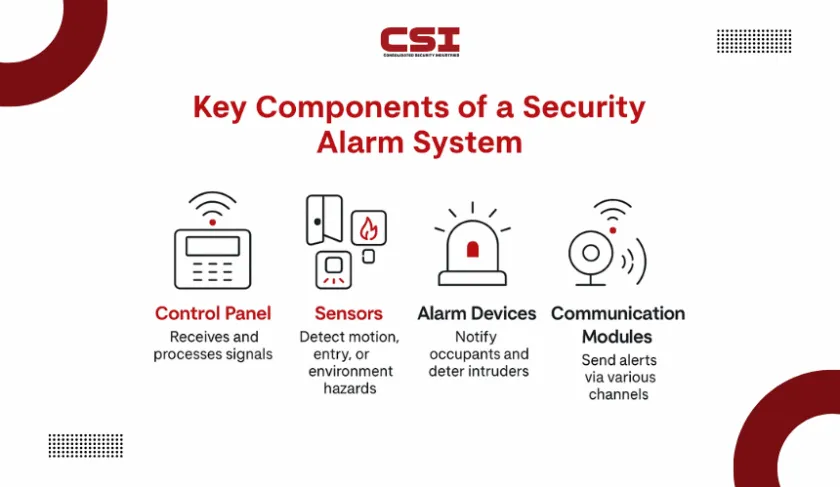
A security alarm system works as a connected unit, and each component plays a vital role in how effectively it detects and responds to threats. Understanding these parts helps you choose a system that fits your property and lifestyle.
1. Control Panel
The control panel is the central hub. It receives signals from sensors and decides what action to take, whether to sound an alarm, notify you, or contact emergency services. Most modern panels include touchscreens, keypads, and wireless connectivity for easy operation.
2. Sensors
Sensors are responsible for detecting unusual activity. Each type is designed to respond to specific actions:
- Door and Window Sensors detect when entry points are opened or tampered with.
- Motion Detectors sense movement in rooms or hallways, especially when no one should be there.
- Glass Break Sensors identify the sound frequency of breaking glass.
- Environmental Sensors can detect fire, smoke, carbon monoxide, and even water leaks.
3. Alarm Devices
Once a threat is detected, alarm devices respond instantly. These include:
- Sirens to scare off intruders
- Strobe Lights to alert neighbors
- Silent Alarms that notify monitoring services without tipping off the intruder
4. Communication Modules
These modules allow the system to send alerts. Depending on the setup, they may use:
- Cellular networks
- Wi-Fi
- Ethernet
- Landlines
This ensures that even during a power outage or internet failure, the system can still alert authorities or you directly.
5. Surveillance Cameras
While not always included, many modern systems integrate cameras. They offer live streaming, motion-activated recording, and cloud storage for video footage. Some even use AI to distinguish between a human, a pet, or a vehicle.
6. Mobile App or Monitoring Interface
Mobile apps give you remote access to your system. You can arm or disarm the system, check sensor status, view live camera feeds, and receive real-time notifications. All from your smartphone.
How Does a Security Alarm System Work?
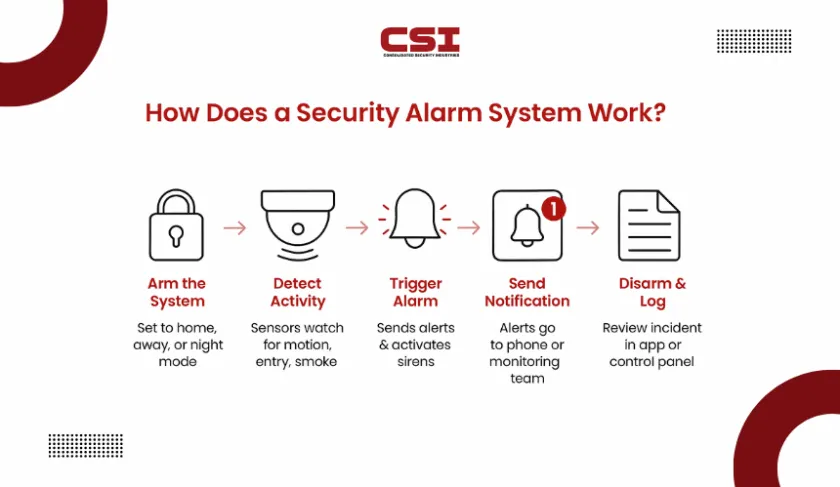
A security alarm system operates through a coordinated process where detection, communication, and response happen within seconds. The step-by-step working of security alarm system is explained below:
1. System Arming
The first step is activating the system. This can be done through a keypad, control panel, or mobile app. Depending on the mode you select, such as home, away, or night, different sensors are enabled to suit your environment and activity.
2. Monitoring for Breaches
Once armed, the system continuously monitors for any irregularities. Motion sensors scan designated areas for movement. Entry sensors watch for doors or windows opening when they shouldn’t. Advanced setups may also monitor for environmental triggers like smoke or carbon monoxide.
3. Triggering the Alarm
If a breach or hazard is detected, the system instantly initiates a pre-set response. This could involve:
- Activating audible alarms to deter intruders
- Sending push notifications to your phone
- Dispatching a signal to a monitoring center for emergency follow-up
4. Alert Transmission
The system uses a secure communication channel to send alerts. Whether it’s via a cellular network, internet connection, or backup line, the signal reaches either the user or a professional monitoring team without delay.
5. Emergency Response Activation
In professionally monitored systems, trained operators assess the situation and contact the appropriate emergency services, such as police, fire, or medical teams. For unmonitored systems, alerts go directly to the user, who can take action based on the information received.
6. System Disarming and Logging
If the situation is resolved or confirmed to be a false alarm, the system can be disarmed through authorized access. The incident is usually logged with timestamps and activity records, which can be reviewed later via the app or control panel.
What Are the Different Types of Security Alarm Systems?
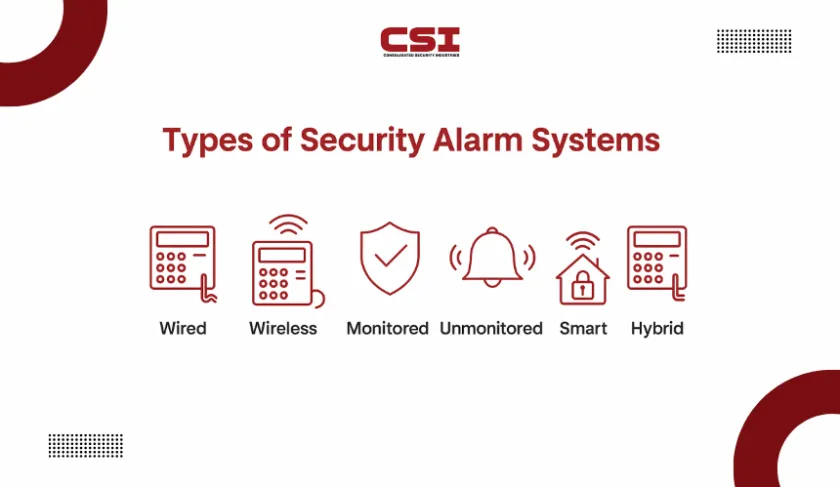
Security alarm systems come in various forms, each designed to meet specific needs based on property size, user preference, and budget.
1. Wired Alarm Systems
These systems rely on physical cables to connect sensors and devices. They are known for stability and are often used in larger homes or commercial properties where wiring is already in place.
Wired systems are less vulnerable to signal interference and hacking attempts. Once installed, they require little maintenance and deliver long-term reliability.
2. Wireless Alarm Systems
Wireless systems use radio signals or Wi-Fi for communication. They are easier to install, ideal for renters, and offer flexible placement of devices.
These systems are battery-powered and portable, making them easy to relocate or expand. However, regular battery checks are essential to ensure performance.
3. Monitored Systems
Connected to a 24/7 monitoring service, these systems automatically alert a control center during emergencies. Operators then contact emergency services if needed.
This type of system provides professional oversight and peace of mind, especially when you’re away. It often requires a monthly subscription for continuous support.
4. Unmonitored Systems
Unmonitored setups trigger alarms and send notifications directly to the user. These are typically more affordable but rely on the owner to take action.
They are well-suited for tech-savvy users who prefer full control. While cost-effective, they depend on your availability to respond in real time.
5. Smart Security Systems
These modern systems integrate with mobile apps, smart assistants, and home automation platforms. Users can control them remotely, receive real-time alerts, and view camera feeds on demand.
They support features like remote arming, motion-triggered video clips, and voice control. Smart systems are ideal for modern lifestyles and connected homes.
6. Hybrid Security Systems
Hybrid systems combine both wired and wireless elements. They offer the reliability of hardwired components with the flexibility of wireless upgrades.
This setup is perfect for larger or older properties that need customization. It allows homeowners to scale their system over time without replacing existing infrastructure.
What Features Should You Look for in a Security Alarm System?
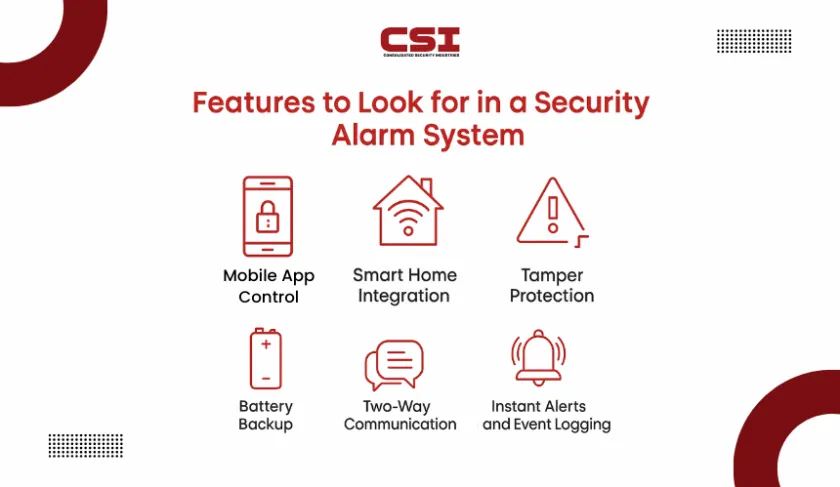
Choosing the right security alarm system comes down to more than just basic intrusion alerts. Modern systems offer a range of features that improve protection, usability, and responsiveness. These are seven features you should consider before choosing a security alarm system:
- Mobile App Control: A dedicated app allows you to arm, disarm, and monitor your system remotely. Look for real-time push notifications, camera access, and system logs available on your smartphone.
- Smart Home Integration: Systems that work with Alexa, Google Assistant, or Apple HomeKit offer seamless automation. You can trigger lights, locks, or cameras based on specific actions like motion detection or door entry.
- Battery Backup: In case of a power outage, battery backup ensures your system stays functional. This feature is essential for maintaining coverage during storms, outages, or tampering attempts.
- Tamper Protection: High-quality systems include tamper alerts for open panels, cut wires, or disabled sensors. It adds an extra layer of security against physical sabotage attempts.
- Two-Way Communication: Some systems allow direct communication with monitoring agents through the control panel. This is useful during emergencies when time is critical and speaking directly is faster than waiting for callbacks.
- Custom Zone Settings: Being able to program specific zones lets you secure different areas independently. For example, you can monitor the garage while disarming the living room at night.
- Instant Alerts and Event Logging: Look for systems that keep a detailed activity log and send instant alerts. This helps in reviewing past incidents and ensuring nothing goes unnoticed.
Looking to upgrade property protection with reliable technology? CSI Security offers tailored alarm solutions for residential and commercial spaces that combine smart features with trusted performance.
Frequently Asked Questions
Can a security alarm system work without the internet?
Yes, many systems can function without the internet by using cellular or landline communication. While smart features like app control may be limited, core functions like intrusion detection and alarm triggers will still operate reliably.
How loud is a typical alarm siren?
Most security alarms range from 85 to 120 decibels. That’s loud enough to alert neighbors and deter intruders but not harmful to hearing during brief exposure.
Investing in AI-enabled alarm systems that distinguish between real threats and harmless events can also reduce nuisance alarms.
Do pets trigger motion sensors?
Not necessarily. Many modern motion sensors are pet-immune and designed to ignore movement from animals under a certain weight, usually up to 40 or 80 pounds, depending on the sensor.
How often should I test my alarm system?
It’s recommended to test your system at least once a month. Regular checks ensure all sensors, batteries, and communication modules are functioning properly.
Can I use one alarm system for multiple buildings?
Some systems support multiple zones or properties under a single account. This is ideal for those managing several units, like homeowners with detached garages or business owners with multiple locations.