
- csi_security
What Is Perimeter Alarm Security? How It Works, Key Benefits & Installation Guide for 2025
A Short Answer: Perimeter alarm security refers to a system designed to detect and prevent unauthorized access to the outer boundary of a property. It uses a combination of advanced sensors, such as motion detectors, infrared, and vibration sensors, to monitor the perimeter, whether it’s a fence, wall, or open space. |
In 2025, these systems are integrated with intelligent monitoring, real-time alerts, and even smart home networks to provide enhanced protection. They’re crucial for residential, commercial, and industrial properties, offering a proactive approach to security rather than just reacting after a breach.
This guide explains what perimeter alarm security is, how it works, the benefits it delivers, and a clear installation roadmap tailored to today’s technology and risk environment.
How Perimeter Alarm Security Systems Work
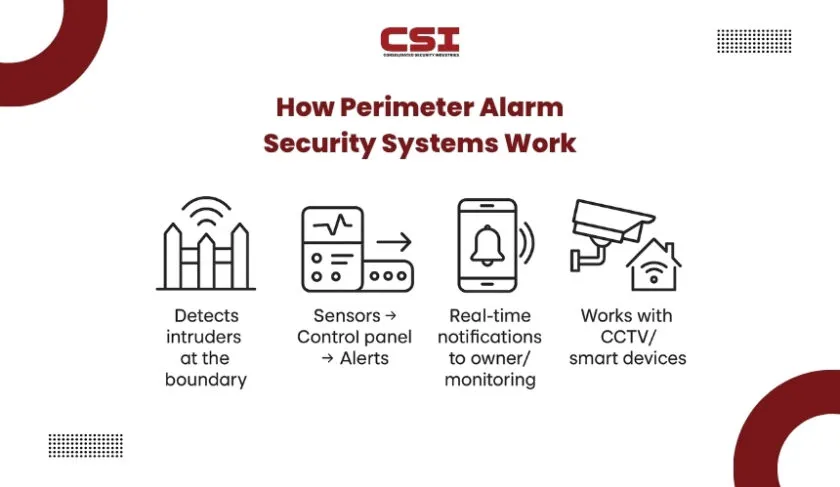
Perimeter alarm security systems operate by detecting and responding to threats at the outer boundary of a property. Here’s a breakdown of how these systems function:
Key Components of Perimeter Alarm Security Systems
The primary components include sensors, control panels, and notification systems. Sensors are placed around the perimeter to monitor activity, while the control panel processes sensor data and triggers alarms. Alerts are then sent to the property owner or monitoring service in real-time.
How Perimeter Security Sensors Detect Intruders?
Various sensor types are used for perimeter protection:
- Motion Sensors: These detect movement within a defined area, using infrared or ultrasonic technology to sense changes in heat or sound.
- Vibration Sensors: Placed on fences, gates, or walls, they detect disturbances or physical vibrations that indicate a breach attempt.
- Infrared Sensors: These create an invisible barrier and detect any disruption in the infrared light field when an intruder crosses the boundary.
- Microwave Sensors: Emit microwave signals and monitor changes in the reflected signal caused by moving objects.
What Happens After Perimeter Alarm Security Detects a Threat?
Once an intrusion is detected, the system triggers a response. This can include:
- Sounding an Alarm: A loud siren or audio alert that deters intruders and alerts occupants or passersby.
- Sending Notifications: Alerts are sent via SMS, email, or through a mobile app to the owner, notifying them of a breach in real-time.
- Integration with Other Security Systems: Many perimeter alarm systems are connected to surveillance cameras or smart home devices, enabling remote monitoring.
Can Perimeter Alarm Security Systems Be Monitored Remotely?
Yes, many modern perimeter alarm systems are integrated with 24/7 alarm monitoring services or can be linked to apps, allowing users to manage and monitor their system from anywhere. These systems provide continuous surveillance and alert authorities if an emergency occurs.
Why Perimeter Alarm Security Systems Are Essential
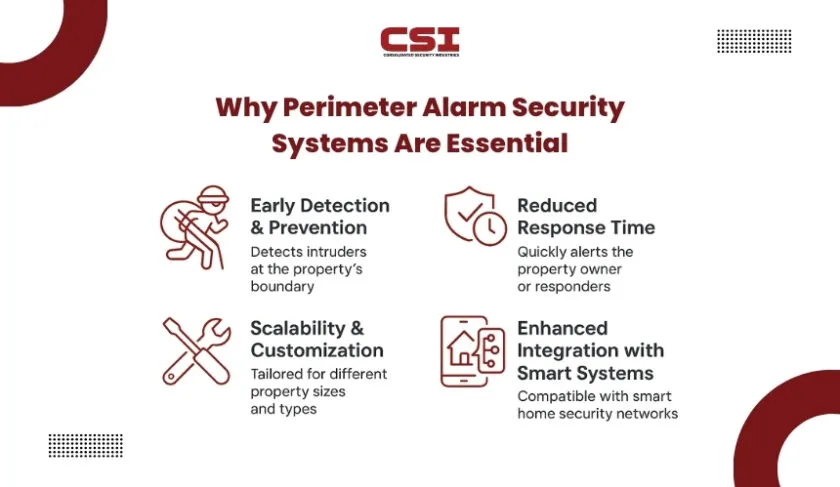
Perimeter alarm security systems are designed to stop threats before they enter your property, offering multiple advantages for both residential and commercial users. Here’s why these systems are becoming indispensable in modern security setups:
1. Early Detection and Prevention
By detecting intruders at the boundary, perimeter alarms act as a deterrent, preventing unauthorized access before it reaches vulnerable areas like entrances or windows. This proactive approach significantly reduces the risk of break-ins.
2. Reduced Response Time
Once an intruder is detected, the system immediately alerts the property owner or monitoring service. This fast response helps minimize the potential damage or theft, ensuring quicker intervention by security personnel or law enforcement.
3. Scalability and Customization for Different Properties
Whether you’re securing a small residential property or a large industrial facility, perimeter alarm systems are highly customizable. Sensors can be adapted for various perimeter types, including fences, walls, and open spaces, allowing for tailored protection.
4. Enhanced Integration with Smart Systems
Many perimeter alarm systems integrate seamlessly with smart home or business security networks, providing real-time monitoring and alerts via mobile apps. This gives property owners more control, even when they’re away from the premises.
5. Long-Term Cost Savings
Investing in perimeter security systems can ultimately save money by preventing theft, vandalism, and property damage. With lower insurance premiums and reduced risk of loss, the initial investment in these systems is a cost-effective solution in the long run.
What are the Types of Perimeter Alarm Systems
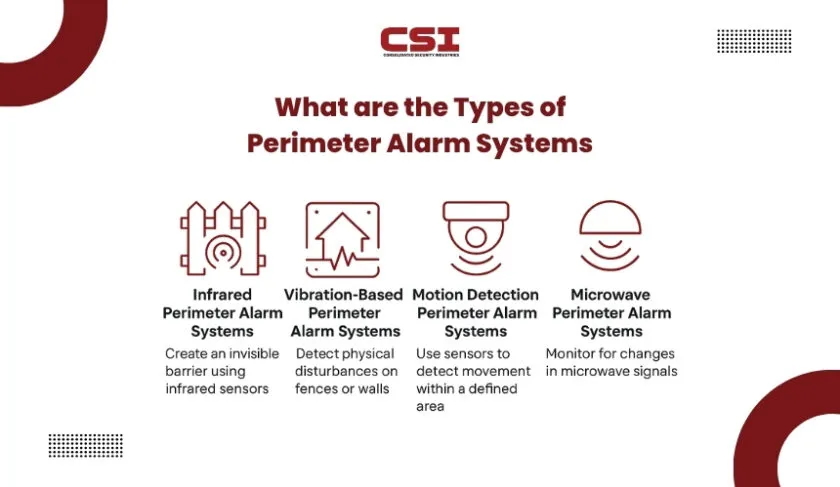
When choosing a perimeter alarm system, it’s important to understand the different types available, each designed to meet specific security needs. Here’s an overview of eight most common types of perimeter alarm systems:
1. Infrared Perimeter Alarm Systems
Infrared perimeter alarm systems use infrared sensors to create an invisible barrier around your property. These sensors detect disturbances in the infrared light field when an intruder crosses the boundary. Ideal for outdoor areas with clear sightlines, these systems work well at night or in low-light conditions, making them perfect for both residential and commercial applications.
2. Vibration-Based Perimeter Alarm Systems
Vibration sensors are commonly installed on fences, gates, or walls. These systems detect physical vibrations caused by an intruder attempting to breach the perimeter. They are particularly useful in environments where a solid barrier, such as a fence, is in place.
The vibration system triggers an alarm when there’s any physical impact, making it a great choice for high-security zones like industrial sites.
3. Motion Detection Perimeter Alarm Systems
Motion sensors are typically used to detect movement within a specified range. These can be infrared (PIR) or ultrasonic sensors that scan the area for physical motion. Motion detection systems are flexible and can be used for both large and small properties.
They are commonly used in both residential homes and businesses, offering wide-area coverage and reliable detection.
4. Microwave Perimeter Alarm Systems
Microwave sensors emit microwave signals that bounce off objects and return to the system. Changes in the signal, such as movement in the detection zone, trigger an alarm.
These systems are highly effective for large, open spaces like commercial or industrial properties, as they provide both detection and long-range coverage. Microwave sensors are also useful in harsh environmental conditions.
5. Fiber-Optic Perimeter Alarm Systems
Fiber-optic systems use cables that are placed along the perimeter or buried underground. These cables detect disturbances such as digging, climbing, or cutting, offering a high level of sensitivity. Known for their durability and accuracy, fiber-optic systems are typically used in high-security environments such as military bases, airports, and critical infrastructure.
6. Laser Perimeter Alarm Systems
Laser perimeter alarm systems operate by detecting disruptions in a laser beam placed across a designated area. These systems are highly precise and offer minimal false alarms. Laser sensors are often used for specialized applications, including museums, art galleries, or secure government buildings, where high accuracy is required.
7. Gate and Entry Point Sensors
These systems focus on the detection of movement or changes in status at entry points like gates, doors, or windows. Magnetic sensors or proximity detectors are typically used to monitor these areas. For properties with multiple access points, gate and entry sensors can be integrated with other perimeter security technologies to ensure comprehensive coverage.
8. Integrated Perimeter Security Systems
Some properties benefit from a combination of different technologies. Integrated perimeter security systems combine motion detection, infrared, video surveillance, and alarm systems into one cohesive solution. This approach ensures a high level of security by processing data from various sensors simultaneously.
Comparing Perimeter Alarm Security with Other Security Systems
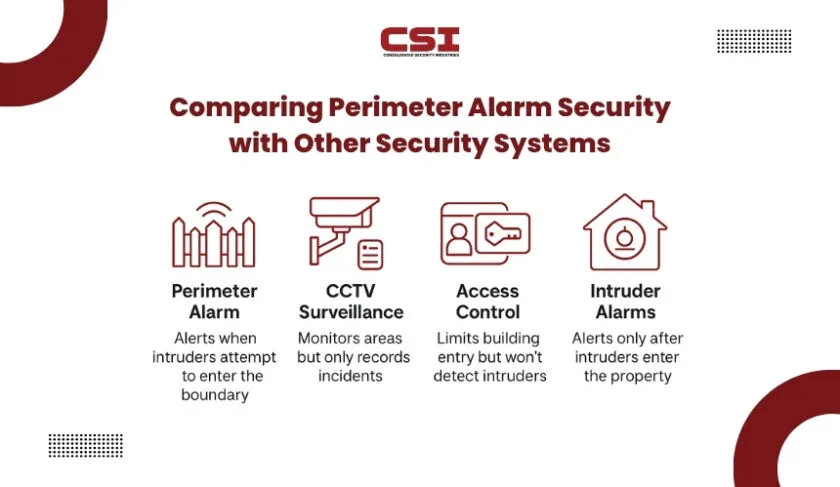
While perimeter alarm security systems provide specialized protection at the boundary of your property, it’s essential to understand how they stack up against other security systems. Here’s how perimeter alarm systems compare with common alternatives:
Perimeter Alarm vs. CCTV Surveillance Systems
CCTV cameras are often used for surveillance within a property, monitoring interior spaces or specific areas. While they offer a valuable visual record, they only provide information after an incident occurs.
In contrast, perimeter alarm systems focus on preventing the incident before it happens. Perimeter alarms alert you when an intruder is detected at the boundary, giving you a chance to intervene early, whereas CCTV footage can only help after the fact.
Perimeter Alarm vs. Access Control Systems
Access control systems are designed to limit entry to a building or specific areas, typically using keycards or biometrics. They are effective at managing who enters the premises but do not detect external threats.
Perimeter alarms, on the other hand, protect the outer perimeter of the property, providing a first line of defense against unauthorized access from the outside. Combining both systems, access control for internal security and perimeter alarms for external protection, creates a more robust security framework.
Perimeter Alarm vs. Traditional Intruder Alarms
Traditional intruder alarms typically activate when a breach occurs inside the building, alerting only after an intruder has entered the premises.
Perimeter alarms, however, focus on detecting intrusion attempts before they get that far. This early detection provides an added layer of defense, reducing potential damage and loss by addressing threats at the boundary rather than after the fact.
Why is a Combined Alarm System the Best Solution?
For optimal security, integrating perimeter alarm systems with CCTV, access control, and internal alarms is highly recommended. While each system has its strengths, together they create a multi-layered defense that maximizes protection at both the perimeter and interior levels. A comprehensive security strategy reduces vulnerabilities, making it more difficult for intruders to breach your property.
How to Choose the Right Perimeter Alarm Security System
Selecting the right perimeter alarm security system requires careful consideration of your property’s needs and the specific risks it faces. Here are the key factors to evaluate:
1. Property Size and Layout
The size and layout of your property play a significant role in determining the type of perimeter alarm system you need. Larger properties may require more sensors, longer detection zones, and specialized equipment to ensure full coverage. For smaller properties, a simpler system may suffice, but it’s crucial to ensure all vulnerable points are secured.
2. Type of Perimeter to Secure
Different sensor types work better with different perimeter types. For example, fences, gates, and walls may need vibration or infrared sensors, while open fields or large commercial sites could require microwave or motion sensors. Understanding your perimeter’s structure helps you choose the best sensors for detection.
3. Environmental Factors
Environmental conditions like weather, wildlife, and landscape can affect the performance of your perimeter alarm system. For instance, heavy rain or wind may trigger false alarms, while animals could interfere with motion sensors.
4. Monitoring and Alert Preferences
Decide if you want your system to be self-monitored or if you prefer a professional monitoring service. Many modern systems offer remote monitoring through mobile apps, while others provide integration with 24/7 monitoring services for immediate responses in case of a breach.
Need Help Choosing the Best Perimeter Alarm System?
At CSI Security, we specialize in providing both commercial and residential alarm system installations tailored to your unique needs. Our experts can help you evaluate your property, understand your specific risks, and select the perfect perimeter alarm system for optimal protection. Contact us today to schedule a consultation and take the first step toward securing your property.
Installation Guide for Perimeter Alarm Security Systems (Step-by-Step)
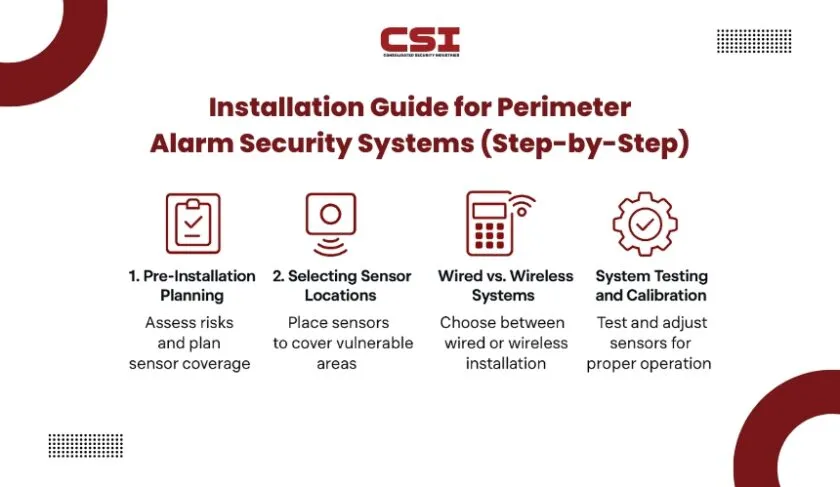
1. Pre-Installation Planning and Risk Assessment
Before installing the system, conduct a thorough risk assessment. Identify vulnerable areas around your property, such as gates, fences, and other entry points. Consider factors like visibility, environmental conditions, and potential weak spots where an intruder could bypass sensors. Create a detailed layout of the property, outlining all zones to be covered by the alarm system.
2. Selecting Sensor Locations
Proper sensor placement is critical to ensure effective coverage. Install motion sensors along high-risk areas such as fences and entryways. Vibration sensors should be mounted on fences or gates, while infrared or microwave sensors are ideal for covering larger open spaces. Avoid areas with potential obstructions that might interfere with sensor signals.
3. Wired vs. Wireless Systems
Decide whether to install a wired or wireless perimeter alarm system. Wired systems may require more labor-intensive installation but are often more reliable and secure. Wireless systems, on the other hand, offer flexibility and ease of installation, especially for properties where running wires would be difficult.
4. Connecting the System to a Control Panel
Once sensors are in place, connect them to the control panel, which processes signals from all the sensors and triggers alarms when necessary. Ensure that the control panel is located in an easily accessible, secure area where it’s protected from tampering.
5. System Testing and Calibration
After installation, test each sensor to ensure it’s working correctly. Walk around the perimeter to activate motion or vibration sensors and check if the control panel responds appropriately. Calibrate the system to avoid false alarms, adjusting sensor sensitivity if needed.
6. Post-Installation Maintenance and Monitoring Setup
Once the system is installed and tested, set up any remote monitoring options, such as app notifications or professional monitoring services. Establish a routine maintenance schedule to keep sensors clean and functioning at peak performance. Regular testing and updates ensure long-term reliability and effectiveness.
Frequently Asked Questions
Can Perimeter Alarm Systems Detect Drone Intrusions?
Yes, modern perimeter alarm systems are increasingly equipped with technologies capable of detecting drone intrusions. These systems utilize radar sensors and advanced analytics to identify the unique signatures of drones, including their size, speed, and flight patterns.
When a drone enters a restricted airspace, the system can trigger alerts, allowing security personnel to respond promptly. This capability is particularly valuable for protecting critical infrastructure and sensitive areas.
How Do Perimeter Alarm Systems Perform in Extreme Weather Conditions?
Perimeter alarm systems are designed to operate effectively in various environmental conditions. Advanced sensors are built to withstand extreme temperatures, heavy rainfall, snow, and fog. For instance, thermal and infrared sensors can detect heat signatures even in low-visibility situations.
Additionally, systems with weather-resistant enclosures ensure that electronics remain protected from moisture and debris, maintaining reliable performance during adverse weather events.
Are There Perimeter Alarm Systems Suitable for Coastal or Saltwater Environments?
Yes, there are specialized perimeter alarm systems designed for coastal and saltwater environments. These systems feature corrosion-resistant materials, such as marine-grade stainless steel and specialized coatings, to withstand the corrosive effects of saltwater.
Additionally, sensors are sealed to prevent damage from humidity and salt exposure. These enhancements ensure the longevity and reliability of the system in challenging coastal conditions.
What Role Do Artificial Intelligence (AI) and Machine Learning Play in Perimeter Security?
Artificial Intelligence (AI) and Machine Learning (ML) are revolutionizing perimeter security by enabling systems to learn and adapt to new threats. AI algorithms analyze data from sensors and cameras to identify patterns and detect anomalies that may indicate a security breach.
Over time, the system becomes more adept at distinguishing between normal activities and potential threats, reducing false alarms and improving response times. This intelligent approach enhances the overall effectiveness of perimeter security systems.
Can Perimeter Alarm Systems Integrate with Existing Building Management Systems (BMS)?
Absolutely. Many modern perimeter alarm systems are designed to integrate seamlessly with existing Building Management Systems (BMS). This integration allows for centralized control and monitoring, enabling security personnel to manage all aspects of building operations from a single interface.
For example, upon detecting an intrusion, the perimeter system can trigger the BMS to lock doors, adjust lighting, or activate surveillance cameras, providing a coordinated response to security events.