
- csi_security
NFPA 72 Explained: Fire Alarm System Standards & Code Compliance
NFPA 72, also known as the National Fire Alarm and Signaling Code, is a comprehensive set of standards that ensures fire alarm systems are installed, maintained, and tested correctly to protect lives and property.
Whether you are a building owner, safety professional, or contractor, understanding NFPA 72 is crucial for compliance with fire safety regulations and maintaining a high standard of protection.
In this article, we will explore the essential aspects of NFPA 72, including its fire alarm system standards, installation requirements, compliance measures, and more.
What is NFPA 72?
NFPA 72, formally known as the National Fire Alarm and Signaling Code, is the standard for the installation, maintenance, and testing of fire alarm systems in the United States. It provides clear guidelines to ensure that fire alarm systems effectively detect and signal fires in a timely manner, saving lives and minimizing property damage.
As a foundational framework in fire safety, NFPA 72 plays a critical role in the design, operation, and maintenance of fire alarm systems across various types of buildings, including residential, commercial, and industrial.
The core purpose of NFPA 72 is to enhance fire alarm system performance and to standardize practices for installation, testing, and maintenance. It is a vital component of a broader fire safety strategy, which includes fire detection, notification, and emergency response.
Why Does NFPA 72 Matter?
Did you know? In 2022, U.S. fire departments responded to an estimated 1.5 million fires, resulting in 3,790 civilian fire deaths and 13,250 injuries, with property damage totaling $18 billion. |
NFPA 72 serves as the blueprint for fire alarm system compliance and is often referenced by building codes and fire regulations at local, state, and federal levels.
Its guidelines are used by fire safety professionals, contractors, and building owners to ensure that fire alarm systems are effective, reliable, and compliant with the law. This is crucial not only for life safety but also for avoiding penalties related to non-compliance.
The significance of NFPA 72 extends beyond just the technicalities of alarm systems. Ot establishes a consistent approach to safety across the United States, including alignment with the National Fire Alarm Code.
Compliance with NFPA 72 ensures that systems are installed and maintained according to the highest safety standards, protecting both people and property in the event of a fire.
What Are the Key Components of Fire Alarm Systems in NFPA 72?
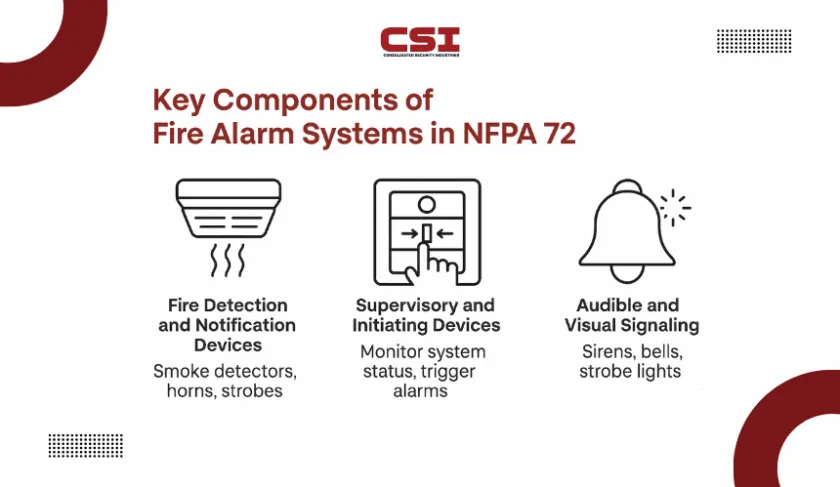
The main components covered by NFPA 72 include fire detection and notification devices, supervisory and initiating devices, and audible and visual signaling systems. Let’s explore each of these critical elements in more detail to understand their role in ensuring a reliable and effective fire alarm system.
1. Fire Detection and Notification Devices
Fire detection devices, such as smoke detectors, heat detectors, and flame detectors, are the first line of defense in identifying the presence of fire. These devices are designed to detect early signs of a fire, whether through smoke, heat, or changes in air quality, and trigger an alert.
According to NFPA 72, detectors must be installed in locations where they will effectively detect fire hazards and activate the system promptly.
Once a fire is detected, notification devices such as horns, bells, or strobes sound alarms to alert building occupants of the danger. These alarms should be loud enough to be heard throughout the building and visually striking to ensure people with hearing impairments are also notified.
2. Supervisory and Initiating Devices
Supervisory devices monitor the status of the fire alarm system and ensure it is functioning properly at all times. These devices include things like supervisory circuits that check for system integrity and health.
If a fault or malfunction is detected, such as a wiring issue or low battery, supervisory devices alert maintenance personnel to address the issue before it can affect the system’s performance.
Initiating devices, on the other hand, allow individuals to manually trigger the fire alarm system. These devices include manual pull stations, typically located where building occupants can activate the alarm in case they witness a fire or emergency situation. According to NFPA 72, proper placement of these devices is crucial to ensuring timely and efficient fire alerts.
3. Audible and Visual Signaling
In any fire alarm system, audible signaling devices (such as sirens or bells) and visual signaling devices (such as flashing strobes) must work together to ensure that everyone is notified of an emergency.
NFPA 72 specifies the required volume levels and intensity for audible signals to ensure they are effective in various building types and environments, while visual signals are essential for individuals with hearing impairments or in noisy environments.
These components should be strategically placed throughout the building for maximum coverage, ensuring that no area is left without a warning. This setup is not only about meeting code compliance but ensuring a high level of safety for everyone in the building.
What Are the NFPA 72 Installation Requirements?
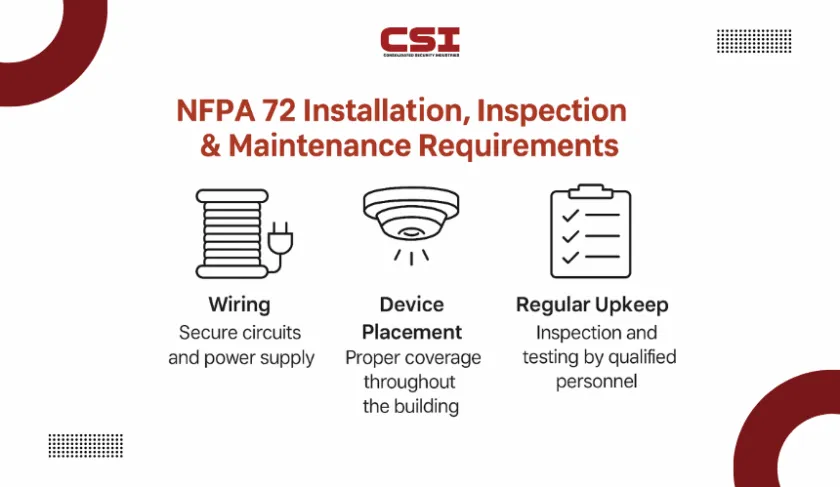
NFPA 72 sets specific installation guidelines for fire alarm systems to ensure they function effectively in a wide range of buildings. These requirements cover various aspects, including wiring, device placement, power supply, and circuit protection, ensuring that fire alarm systems are both reliable and efficient.
1. Wiring and Power Supply
One of the most critical elements of installing a fire alarm system is ensuring that the wiring and power supply are both secure and compliant with NFPA 72 guidelines. According to the code, fire alarm systems must use wiring that is durable, protected from physical damage, and able to carry signals effectively without degradation.
Wiring must be installed with the correct insulation and routed in a way that minimizes the risk of fire damage or disruption. Additionally, power supplies should be both reliable and have a backup system in place, such as batteries or generators, to ensure the alarm system remains operational during a power outage.
2. Device Placement and Coverage
NFPA 72 provides specific guidelines on where to place fire detection and notification devices within a building to ensure maximum coverage and effectiveness. The code specifies the optimal locations for smoke detectors, heat detectors, manual pull stations, and notification devices, such as alarms and strobes.
For example, smoke detectors must be installed on the ceiling in areas where smoke is most likely to accumulate. Similarly, audible signaling devices should be placed where the sound can be heard clearly by occupants, while visual signals should be installed in locations that ensure they are visible to everyone, including individuals with hearing impairments.
Did you know? Smoke alarms are installed in approximately 96% of U.S. homes, but around 20% of these alarms fail to operate properly in fire situations, underscoring the importance of inspection and maintenance per NFPA 72 requirements by a residential alarm installer. |
What Are NFPA 72 Inspection, Testing, and Maintenance Requirements?
To ensure that a fire alarm system remains operational and effective throughout its lifespan, NFPA 72 outlines specific inspection, testing, and maintenance requirements. These measures help ensure that the system remains compliant with safety standards and continues to perform optimally in the event of a fire emergency.
NFPA 72 Inspection Requirements
NFPA 72 requires that fire alarm systems undergo regular inspections to assess their condition and operational readiness. These inspections should be carried out by qualified professionals and generally occur annually or at intervals specified by local building codes. Key components that must be inspected include:
- Detection Devices: Smoke detectors, heat detectors, and other sensors must be checked to ensure they are clean, unobstructed, and properly aligned. Inspecting these devices ensures that they will trigger an alarm as soon as a fire hazard is detected.
- Notification Devices: Audible and visual alarms, including horns, bells, and strobes, must be inspected to verify their effectiveness and volume levels. It’s important to check that these devices are loud enough to be heard throughout the building and that the visual indicators are visible from all key areas.
- Control Panels: The fire alarm control panel is the brain of the system, so it’s essential to inspect it regularly. The inspection should verify that the panel is functioning correctly, without any faults or issues in communication.
NFPA 72 Testing Requirements
In addition to routine inspections, NFPA 72 mandates periodic testing to ensure all components of the fire alarm system are operating as intended. Testing must be carried out by trained personnel at intervals defined by the code and should include the following:
- Functional Testing of Detectors and Alarms: Each detection device and notification alarm should be tested to confirm it responds properly. For instance, smoke detectors should be activated with a test smoke or other appropriate substance, and notification devices should be checked to ensure they are heard or seen throughout the building.
- Signal Communication Testing: The communication between devices, such as detectors and the control panel, should be tested to verify that alerts are transmitted correctly. This ensures there is no delay or failure in sending critical signals to building occupants or emergency responders.
- Backup Power Testing: Fire alarm systems must have reliable backup power sources to function during power outages. These sources, including batteries or generators, must be tested to ensure they are capable of supporting the system during an emergency.
NFPA 72 Maintenance Requirements
Ongoing maintenance is a crucial part of NFPA 72 compliance, ensuring that the fire alarm system remains in top condition year-round. Maintenance tasks should be completed regularly, with parts being repaired or replaced as necessary to maintain system integrity. Maintenance duties include:
- Cleaning and Calibration: Dust, dirt, and other debris can interfere with the proper functioning of fire detection devices. Regular cleaning and recalibration ensure these devices remain sensitive and effective.
- Battery and Power Supply Checks: Batteries in the control panel and backup power systems must be checked and replaced regularly to ensure they are capable of powering the system when needed.
- Software and Firmware Updates: Many modern fire alarm systems use software to control various functions. Ensuring the software is up to date is vital for system performance and security. This includes making updates to the control panel or any connected systems to ensure compatibility with current fire safety standards.
Regular inspection, testing, and maintenance are necessary not only for code compliance but also to provide peace of mind that the fire alarm system will function properly in the event of an emergency.
What Are Fire Alarm Control Panels and Circuits in NFPA 72?
Fire alarm control panels (FACPs) and circuits are integral components of any fire alarm system. According to NFPA 72, the control panel is the central hub of the fire alarm system, responsible for receiving signals from detection devices, processing them, and activating notification devices.
Fire Alarm Control Panels (FACPs) in NFPA 72
The fire alarm control panel is essentially the “brain” of the fire alarm system. It communicates with various components such as detectors, notification devices, and supervisory equipment. The control panel processes the information from these devices and initiates the appropriate actions, such as triggering alarms or notifying emergency services.
NFPA 72 outlines several key requirements for control panels:
- Location: The control panel must be installed in a location that is easily accessible for fire personnel or authorized personnel to monitor, test, and maintain the system.
- Power Supply: The control panel must be powered by a reliable source, and it must include a secondary power source (such as a battery or generator) to ensure functionality during power outages.
- Display and Indicators: The control panel should include clear visual indicators that show the status of the system, such as active alarms, faults, or maintenance needs. It should also provide means to activate or silence alarms and reset the system.
- Alarm Zones: For larger buildings, the system may be divided into multiple alarm zones. The control panel must be able to display which zones are affected and allow personnel to isolate or address specific areas.
Fire Alarm Circuits in NFPA 72
The circuits in a fire alarm system are responsible for transmitting signals between the control panel and the various detection and notification devices.
These circuits must be installed following NFPA 72 standards to ensure they remain operational during a fire or emergency situation.
Key points to consider for fire alarm circuits include:
- Wiring: NFPA 72 requires that fire alarm circuits be properly insulated, routed, and protected from physical damage. This ensures that the wiring will not be compromised in a fire, allowing the system to continue functioning.
- Circuit Integrity: The wiring and components of the circuits must be maintained in good condition and regularly checked for faults or degradation. Supervisory devices, which monitor circuit integrity, should be installed to alert personnel if a circuit fails or becomes damaged.
- Redundancy: For critical circuits, NFPA 72 recommends installing redundant wiring or backup systems to ensure the alarm system remains operational even if one circuit is damaged. This is especially important in large or complex buildings where system failure could have serious consequences.
Understanding the California Fire Code and NFPA 72 Compliance
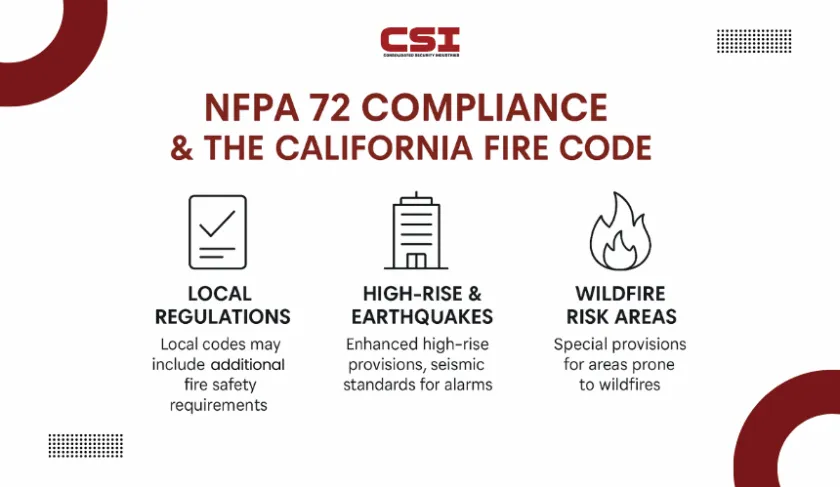
While NFPA 72 provides a nationwide framework, it’s important to be aware of local fire safety codes and regulations. Local jurisdictions may have specific requirements that go beyond NFPA 72, particularly in areas with unique fire safety needs.
The California Fire Code has specific provisions for fire alarm system installation in certain building types, such as schools, hospitals, and high-rise buildings.
The California Fire Code (CFC) is a state-specific regulation that supplements NFPA 72 with additional requirements to address California’s unique fire safety concerns. Some key differences include:
- Enhanced requirements for high-rise buildings: In California, fire alarm systems in high-rise buildings are required to include additional features, such as the integration of emergency voice/alarm communication systems and more frequent testing.
- Earthquake considerations: Given California’s seismic activity, the CFC requires fire alarm systems to be designed with earthquake safety in mind, ensuring that devices remain functional during an earthquake and that building evacuations can proceed effectively.
- Special provisions for wildfires: Areas prone to wildfires have additional standards for fire alarm systems, such as higher sensitivity for smoke detectors and more robust notification devices that can quickly alert occupants in case of a fire spread.
It’s essential to ensure that your fire alarm system not only meets NFPA 72 but also complies with the additional provisions outlined in the California Fire Code to avoid fines, legal issues, or delays in occupancy approvals.
Hiring a licensed alarm installer in California ensures that the system is properly installed and regularly maintained according to NFPA 72 guidelines and California guidelines.
If you want to ensure your fire alarm system is fully compliant with NFPA 72 and operates at peak efficiency, CSI Security is here to help. Our team of certified professionals specializes in the installation, inspection, and maintenance of fire alarm systems, ensuring that your property stays safe and secure. Contact us today to schedule a consultation and ensure your fire alarm system meets all necessary standards.
Frequently Asked Questions
How can I upgrade my existing fire alarm system to meet NFPA 72 standards?
Upgrading an existing fire alarm system to meet NFPA 72 standards may involve replacing outdated components such as detectors, control panels, or notification devices.
Consulting with a certified fire alarm professional is essential for identifying areas of the system that need updating. They will help ensure your system meets current code requirements for installation, wiring, testing, and maintenance.
What are the penalties for not complying with NFPA 72 in commercial buildings?
Failure to comply with NFPA 72 in commercial buildings can result in significant penalties, including fines, legal action, and possible shutdowns. In the event of a fire, non-compliance may also lead to increased liability, insurance claims denials, and worse, a failure to protect lives and property. Regular inspections and adherence to NFPA 72 guidelines can help avoid these risks.
Are there different NFPA 72 requirements for new versus retrofitted buildings?
Yes, there are often different requirements for new constructions and retrofitted buildings. New buildings must comply with the latest edition of NFPA 72, while retrofitted buildings may need to follow updated guidelines specific to their modifications. Retrofitting can involve significant upgrades to fire alarm systems to meet current standards while balancing cost and compliance.
Can NFPA 72 compliance help reduce insurance premiums?
Many insurance providers offer discounts to buildings that are compliant with fire safety codes like NFPA 72. Maintaining a compliant fire alarm system demonstrates proactive risk management and reduces the likelihood of fire-related damages. It’s worth consulting your insurance company to see if compliance with NFPA 72 can result in lower premiums.
How often do NFPA 72 code revisions occur, and how can I stay updated?
NFPA 72 is typically revised every three to five years, with updates addressing changes in technology, fire safety research, and industry best practices. Staying updated requires reviewing the latest editions of the code and attending training or webinars on fire safety.
You can also join professional associations that provide updates on NFPA regulations and offer certification courses.
What is the role of fire alarm monitoring systems in NFPA 72 compliance?
Fire alarm monitoring systems play a critical role in NFPA 72 compliance by ensuring that alarms and notifications are transmitted to emergency personnel, even if the building’s occupants are unable to respond.
These systems must be reliable and have backup power to operate continuously, even during power outages. Monitoring also helps maintain system integrity by notifying authorities of faults or malfunctions.
Does NFPA 72 cover fire alarms in high-rise buildings differently?
Yes, NFPA 72 includes specific provisions for high-rise buildings due to the unique challenges they present, such as longer evacuation times and the need for enhanced communication. Fire alarm systems in high-rise buildings may require additional features like emergency voice communication systems, more robust notification devices, and compliance with more stringent fire resistance standards.
Can fire alarm systems be integrated with other building systems under NFPA 72?
NFPA 72 allows for integration with other building systems, such as security, HVAC, and access control systems. Integration enhances the effectiveness of fire safety by enabling systems to work together during an emergency.
For example, when a fire alarm is triggered, the HVAC system can shut down to prevent the spread of smoke, and access control systems can unlock doors to aid in evacuation.