
- csi_security
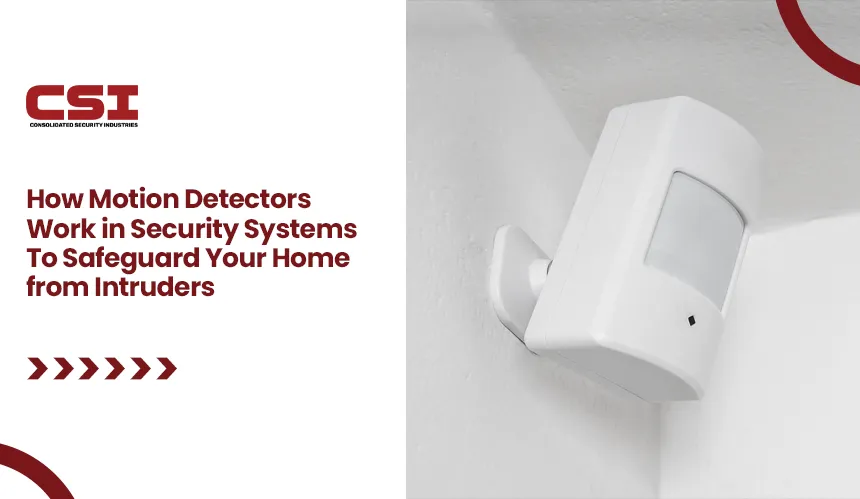
How Motion Detectors Work in Security Systems To Safeguard Your Home from Intruders
In today’s world, ensuring the safety of your home is more important than ever. With increasing concerns about burglary and break-ins, homeowners are turning to advanced security systems to protect their loved ones and valuables. Motion detectors act as a crucial first line of defense against intruders by detecting unauthorized movement around a property.
In this article, we will delve into how motion detectors work, the different types available, and why they are indispensable for safeguarding your home.
What are Motion Detectors?
Motion detectors are devices designed to sense movement within an area. In home security systems, these detectors identify any unusual motion or presence, triggering an alarm or alert to notify homeowners of potential intrusions. The technology behind motion detectors is highly specialized, relying on various methods to detect changes in the environment.
Motion detectors come in several types, each employing unique technology to increase detection accuracy. Some systems use microwave motion detectors or ultrasonic sensors, which send out waves that bounce back when interrupted by movement, while others combine multiple technologies to reduce false alarms.
How Do Motion Detectors Work?
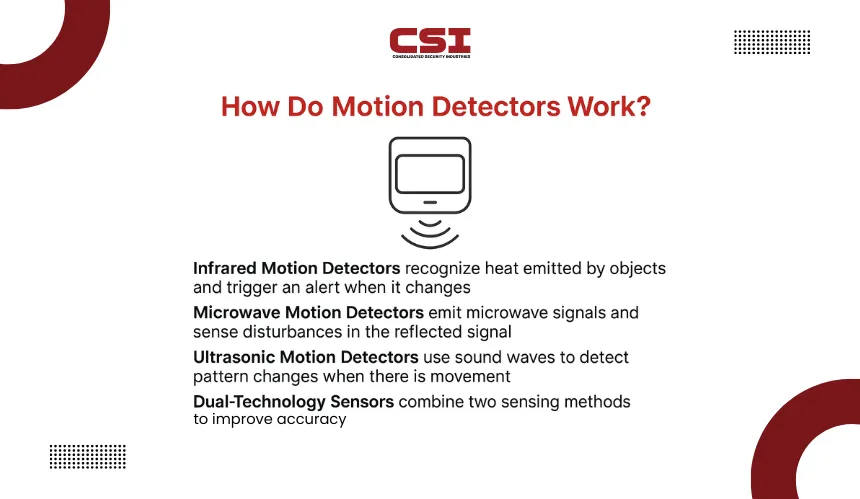
Motion detectors use different technologies to detect movement within a designated area, each with its own unique method of operation. Let’s explore the four main types of motion detectors and how they function.
1. Infrared Motion Detectors (Passive Infrared - PIR)
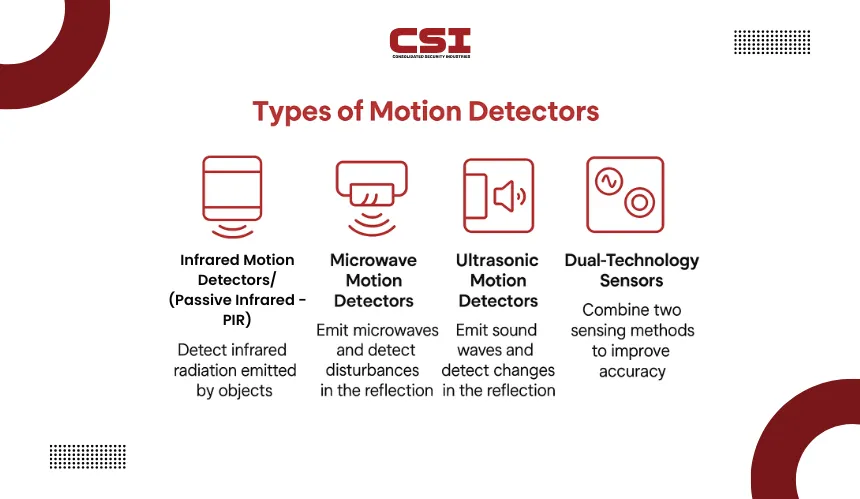
PIR sensors are the most commonly used type of motion detector in home security systems. These sensors detect infrared radiation, or heat, emitted by objects in their field of view. These sensors are highly effective for indoor security, especially in low-light conditions.
Since all living things (including humans) emit infrared radiation, PIR sensors can identify when a person enters their detection range. When the infrared signal changes, the detector sends a signal to the alarm system, triggering an alert.
2. Microwave Motion Detectors
Microwave sensors operate on the principle of emitting microwave signals and measuring the reflection of these signals from objects in their environment. When an object moves, the microwave signal is disturbed, and the detector can sense the change.
These sensors are typically more sensitive than PIR sensors and can detect motion at a greater range. However, they are also more likely to trigger false alarms due to interference from environmental factors.
3. Ultrasonic Motion Detectors
Ultrasonic sensors work by emitting sound waves at a frequency above the human hearing range. These waves bounce off objects in the area, and when there is motion, the pattern of the reflected waves changes.
The detector picks up on these changes and triggers an alert. Ultrasonic detectors are often used in combination with other types of sensors to improve accuracy and reduce false alarms, making them ideal for both indoor and outdoor use.
4. Dual-Technology Sensors
To increase detection accuracy and minimize false alarms, many security systems use dual-technology motion detectors. These combine two different sensing methods, such as PIR and microwave or PIR and ultrasonic, to ensure that motion is detected accurately.
By requiring both sensors to be triggered before activating an alarm, dual-technology sensors can differentiate between real threats and harmless movement, making them an excellent choice for high-traffic or sensitive areas.
The Role of Motion Detectors in Home Security Systems
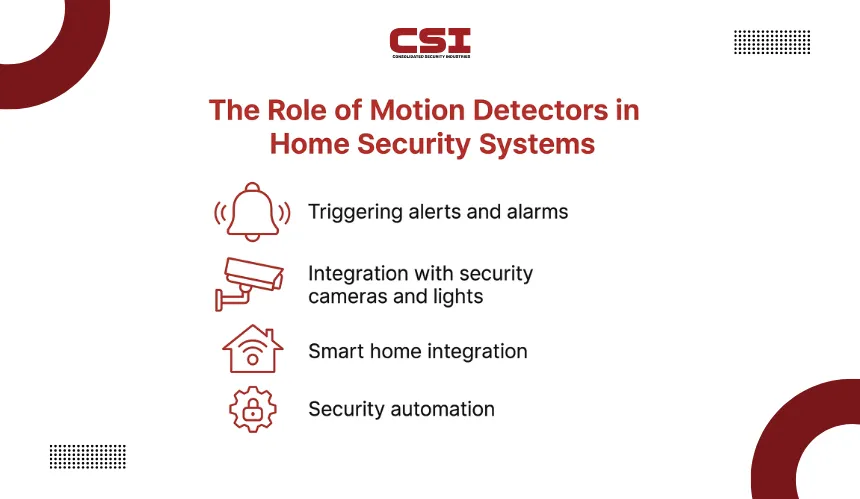
Motion detectors are more than just components in home security systems; they are the backbone of an effective, responsive security strategy. The role of motion detectors in protecting your home is explained below:
Triggering Alerts and Alarms
When motion is detected, the sensor activates the alarm system, sending notifications to homeowners or security companies. This can include loud sirens, phone alerts, or even direct contact with local authorities, depending on the system setup.
Integration with Security Cameras and Lights
In modern home security systems, motion detectors are often integrated with security cameras and smart lights. When motion is detected, cameras can automatically begin recording or send real-time video feeds to your phone. Similarly, lights can be triggered to turn on, illuminating dark areas and potentially deterring intruders who may be trying to hide.
Smart Home Integration
The integration of motion detectors with smart home systems has become increasingly common. With platforms like Google Home or Amazon Alexa, motion detectors can be linked to other smart devices, such as smart locks, thermostats, or doorbell cameras.
For example, if motion is detected near your front door, your smart lock might automatically engage, or your thermostat may adjust to ensure optimal temperature when you return home.
Security Automation
Motion detectors also contribute to the automation of security measures. In the event of an alarm, additional actions can be triggered automatically, such as locking doors, closing blinds, or activating other security features. This seamless automation helps create a cohesive, self-sustaining security system that minimizes the need for constant manual intervention.
Common Applications of Motion Detectors in Home Security
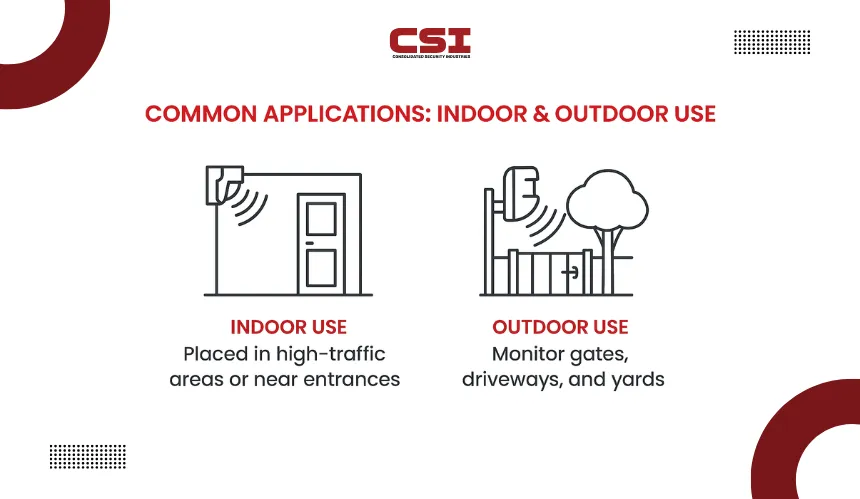
Motion detectors serve various roles in home security, both inside and outside the home, ensuring comprehensive protection.
Indoor Use
Motion detectors inside the home are typically placed in high-traffic areas or near entrances, such as hallways and doorways. When they detect movement, they immediately trigger an alarm or activate security cameras to record any suspicious activity.
Outdoor Use
Outside the home, motion detectors are positioned to monitor entry points like gates, driveways, and yards. These sensors often have a wider detection range and can trigger floodlights to illuminate areas, deterring burglars and making it harder for them to remain unnoticed.
How to Choose the Right Motion Detector for Your Home Security System
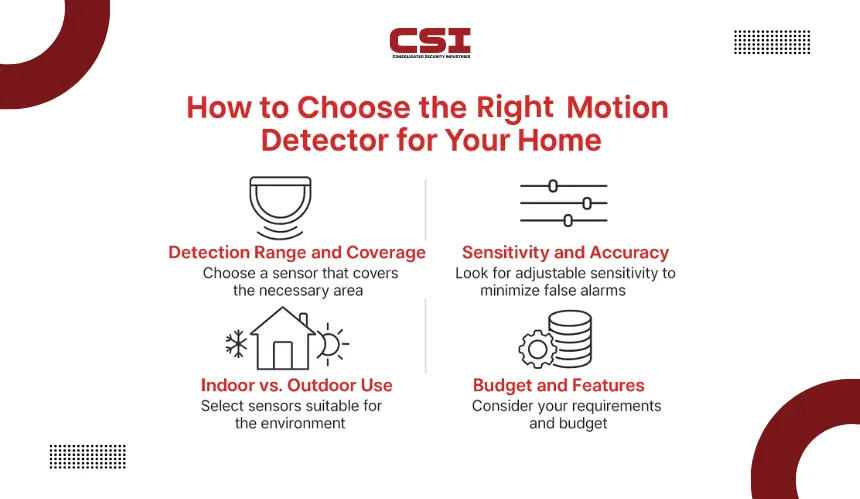
Selecting the right motion detector for your home security system is crucial to ensure maximum protection. Several factors should be considered to match the sensor to your needs, including detection range, sensitivity, and the environment in which it will be used.
Detection Range and Coverage
Motion detectors come with varying ranges, typically between 10 to 100 feet. When choosing a sensor, consider the size of the area you need to monitor.
Larger spaces, such as hallways or outdoor areas, may require detectors with a longer range and wider coverage. Be sure the sensor can cover the entry points or vulnerable areas around your home.
Sensitivity and Accuracy
The sensitivity of the motion detector determines its ability to detect movement. Sensors with adjustable sensitivity levels allow you to fine-tune the detector based on the environment, reducing the likelihood of false alarms.
For example, outdoor detectors may need to be less sensitive to avoid being triggered by small animals or wind.
Indoor vs. Outdoor Use
The sensitivity of the motion detector determines its ability to detect movement. Sensors with adjustable sensitivity levels allow you to fine-tune the detector based on the environment, reducing the likelihood of false alarms.
For example, outdoor detectors may need to be less sensitive to avoid being triggered by small animals or wind.
Budget and Features
While it may be tempting to choose the most advanced motion detector, consider your budget and the features you truly need. Basic models typically range from $20 to $50 and are sufficient for most homeowners. More expensive systems, ranging from $100 to $300, offer advanced features like dual-sensor technology or higher sensitivity for larger areas.
For top-quality motion detectors and reliable home security solutions, trust CSI Security. Explore advanced protection options today and safeguard your home with cutting-edge technology.
Frequently Asked Questions
Can motion detectors work in complete darkness?
Yes, motion detectors, especially PIR (Passive Infrared) sensors, are designed to detect infrared radiation emitted by living beings, which makes them functional even in complete darkness. They do not rely on visible light to operate, making them ideal for nighttime security.
Can motion detectors detect movement through walls?
No, motion detectors cannot typically detect movement through solid walls. However, some advanced sensors like microwave detectors can cover larger areas and may detect movement in adjacent rooms through thin walls, but their effectiveness is still limited by the material.
Can motion detectors differentiate between humans and animals?
While most standard motion detectors cannot specifically differentiate between humans and animals, some advanced models, like dual-technology sensors, are more capable of filtering out non-human movements by combining two sensing methods (like PIR and microwave).
How long do motion detectors last before needing a replacement?
The lifespan of a motion detector depends on the model and usage, but typically, well-maintained detectors can last 5 to 10 years. Regular battery checks and cleaning the sensor lenses can extend their effectiveness.
How can motion detectors help with home energy efficiency?
Motion detectors can automatically control lighting and HVAC systems. They turn off lights when no one is present and adjust thermostats based on room occupancy, which helps reduce unnecessary energy consumption.
Are there any motion detectors that work with outdoor security cameras?
Yes, many modern outdoor motion detectors are designed to integrate directly with security cameras. When motion is detected, these sensors can automatically trigger cameras to start recording or send live video feeds to your phone.
Do motion detectors work in extreme weather conditions?
Outdoor motion detectors are designed with features to ensure reliable performance in harsh conditions:
- Weatherproof Housing: Built with water-resistant materials and high IP ratings (IP65 or higher) to protect against rain, snow, and moisture.
- Temperature Tolerance: Designed to operate in extreme temperatures, from -20°F (-29°C) to 140°F (60°C).
- High-Quality Sensors: Equipped with infrared or microwave sensors that are heat-resistant and perform reliably in various environments.
- Adjustable Sensitivity: Allows customization to reduce false alarms caused by wind, snow, or small animals.
- Anti-Fogging Lenses: Prevents condensation buildup, ensuring the sensor’s detection field stays clear.
- Secure Mounting: Strong brackets prevent misalignment or movement due to heavy wind or rain.
- Low Power Consumption: Ensures long-lasting operation, even during power outages.
However, extremely harsh weather, such as heavy snow or high winds, may impact their effectiveness. It’s essential to choose weatherproof models if you’re placing sensors outdoors.