
- csi_security
How Access Control and Alarm Systems Work Together for Total Building Security
Modern buildings require more than just locks and standalone alarms to remain secure. Today, access control and alarm systems are designed to work in tandem, forming a single, coordinated security network.
This integration allows restricted entry points to automatically trigger alarms when unauthorized access is attempted, while real-time data flows between both systems for faster detection and response. Together, they create a seamless layer of protection that safeguards people, assets, and operations across an entire facility.
This article explains how these two technologies complement each other, what benefits this brings to different types of properties, and how decision-makers can plan for an integrated security approach that is proactive rather than reactive.
What are Access Control Systems?
Access control systems form the backbone of modern building security. At their core, these systems regulate who can enter specific areas and when, replacing traditional locks with digitally managed credentials.
Access control systems create a controlled environment that’s both more secure and more adaptable than physical keys by verifying identities before granting entry.
Unlike stand-alone solutions, access control systems also provide a centralized way to monitor entry points and maintain records of access events. This foundation makes it easier to integrate with other security technologies, such as alarm systems, to create a seamless and proactive defense across a building.
Alarm Systems Explained
Alarm systems act as the immediate responders in a building’s security framework. Their primary role is to detect unusual or unauthorized activity and alert the right people or systems so action can be taken quickly.
At a basic level, these systems rely on sensors and monitoring devices to identify potential threats such as forced entry, movement in restricted areas, or other emergencies. They then trigger alerts to security teams, authorities, or integrated systems.
Because of this real-time detection and notification, alarm systems form the second essential layer of building security. They complement access control systems by ensuring any breach or incident does not go unnoticed.
Why Integration Matters: Access Control and Alarm Systems
Individually, access control and alarm systems are powerful security tools. When combined, they transform into a single, coordinated defense system that improves both prevention and response.
Many organizations work with a security alarm installation company to implement these technologies and create a unified security environment where access permissions and alerts work together in real time.
How Integrated Systems Create a Unified Security Network
When an unauthorized attempt to enter occurs, the access control system can immediately trigger the alarm system, notifying security personnel or emergency responders.
This instant connection between entry management and threat detection reduces response times and closes gaps that could be exploited if the systems operated separately.
Four Benefits of Linking Access Control with Alarm Systems
- Faster Incident Response: Automatic alerts follow any access breach, helping teams act quickly.
- Centralized Monitoring: Both systems can be managed from a single dashboard, improving oversight.
- Improved Compliance: Integration simplifies record-keeping for audits and regulatory requirements.
- Enhanced User Experience: Employees and visitors encounter a seamless security process without unnecessary barriers.
By combining these two technologies, building owners and security managers gain a proactive, interconnected approach to protecting people, property, and data.
Real World Use Cases of Integrated Security
Understanding how integrated access control and alarm systems function in practice helps decision makers see their true value.
These systems are not limited to one type of property. They are adaptable and can meet the needs of very different environments, as explained below.
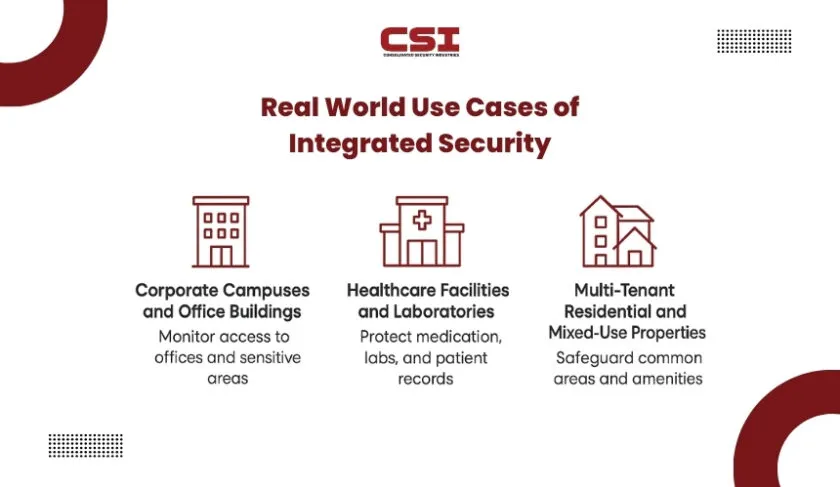
1. Corporate Campuses and Office Buildings
Large workplaces often have multiple entry points and sensitive areas. Integrated systems allow security teams to restrict access to confidential zones while receiving instant alerts if someone attempts to bypass credentials. This improves both compliance and employee safety.
2. Healthcare Facilities and Laboratories
Hospitals, clinics, and research centers deal with high volumes of staff and visitors. Combining access control with alarm systems makes it easier to protect medication stores, laboratories, and patient records while responding quickly to emergencies.
3. Multi-Tenant Residential and Mixed-Use Properties
Apartment complexes and mixed-use developments benefit from integrated security by allowing residents easy access to shared amenities while maintaining a clear audit trail and fast response to unauthorized entry.
These examples show that integration is not only a technology choice but also a strategy for improving safety, efficiency, and trust across diverse property types.
Buyer’s Guide: Choosing the Right Integrated System
Selecting an integrated access control and alarm system begins with understanding your building’s unique security requirements. Look for solutions that can scale with your property size, offer cloud-based or mobile management, and support future upgrades.
A reputable security alarm installation company can also help assess whether a proprietary or open-platform system will better fit your long-term goals. Prioritizing reliability, ease of use, and compliance features ensures the system will deliver consistent protection without overcomplicating daily operations.
If you’re ready to explore options, CSI Security offers expert guidance and tailored solutions for integrating access control with alarm systems. Our team can help evaluate your needs, recommend the right technology mix, and oversee a smooth installation process so you achieve maximum protection from day one.
Implementation Roadmap: From Assessment to Deployment
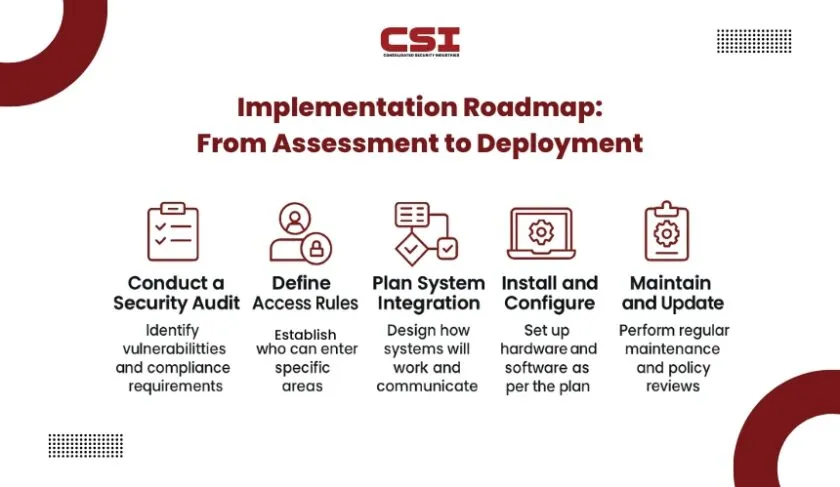
Rolling out an integrated security system works best when done in clear stages. These steps help ensure a smooth implementation and long-term success:
- Conduct a Security Audit: Identify vulnerabilities, access points, and regulatory requirements.
- Define Access Rules: Establish who needs entry to which areas and under what conditions.
- Plan System Integration: Map how the access control and alarm systems will communicate and where monitoring will take place.
- Install and Configure: Work with trusted professionals to set up hardware and software according to the plan.
- Train Staff: Provide training on dashboards, alerts, and emergency procedures so everyone understands their role.
- Maintain and Update: Schedule regular maintenance and review access policies to keep the system effective against evolving risks.
Frequently Asked Questions
What is the difference between access control systems and alarm systems?
Access control systems regulate who can enter or exit specific areas using credentials like keycards, biometrics, or mobile apps. Alarm systems detect unauthorized or unusual activity and trigger alerts. Together, they create a layered security approach where entry is controlled and breaches are immediately flagged.
Can an existing system be upgraded to an integrated platform?
Yes. Many older access control and alarm systems can be upgraded or linked through modern integration software and hardware. Working with a professional installer or a security alarm installation company can help determine compatibility and oversee the transition.
How much does integration typically cost?
The cost varies depending on building size, number of access points, type of alarm technology, and whether new hardware is needed. Most providers offer site assessments and tailored quotes to help budget accurately.
What are the main benefits of integrating these systems?
Integration provides faster incident response, centralized monitoring, stronger compliance reporting, and a seamless user experience for staff, tenants, and visitors.
Do integrated systems improve compliance with regulations?
Yes. Integrated systems create detailed logs of access attempts and alarm events, making it easier to produce reports for audits and meet industry or government standards.