
- csi_security
How Residential Alarm Monitoring Works to Keep You and Your Home Safe
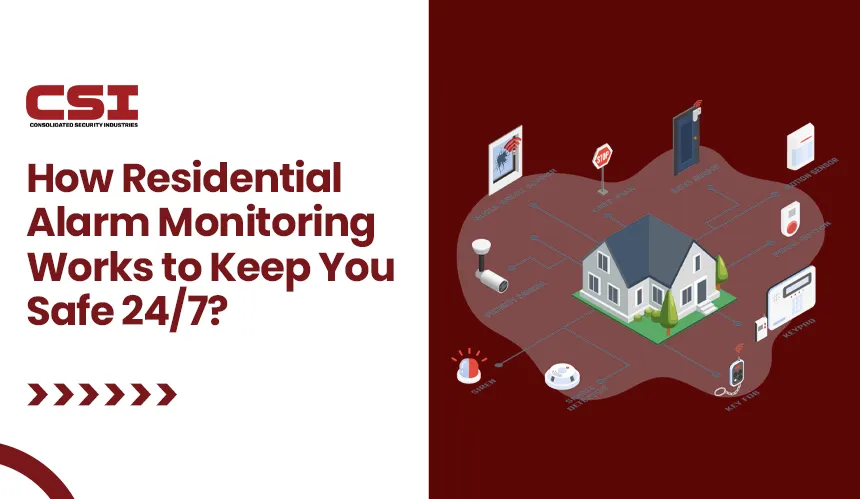
Residential alarm monitoring is a real-time protection system that automatically alerts a professional monitoring center the moment your home’s sensors detect threats like break-ins, fires, and gas leaks.
Unlike standalone alarms that rely on you being present or checking your phone, a monitored system ensures trained specialists are always watching, even when you’re not.
Interesting information: A comprehensive five-year study by Rutgers University found that homes with burglar alarms experience fewer break-ins, and neighborhoods with more alarm users see a decrease in residential burglaries without displacing crime to nearby areas. |
In this guide, you will learn exactly how residential alarm monitoring functions, what key technologies make it reliable, and why more homeowners are turning to professional monitoring for peace of mind, insurance benefits, and faster emergency response.
What Is Residential Alarm Monitoring?
Residential alarm monitoring is a professional service that connects your home’s security system to a UL-listed central monitoring station, staffed 24/7 by trained operators.
When an alarm event occurs, such as a window sensor being tripped or smoke being detected, your system sends a real-time signal to the monitoring center via a secured communication channel, typically over cellular, broadband, or dual-path transmission.
Once the signal is received, monitoring agents follow strict response protocols. They verify the alarm using available data such as device type, system history, and sometimes even two-way voice communication or live video, depending on system capabilities.
If a threat is confirmed or if there’s no response during verification, emergency services are immediately dispatched to your address.
This continuous connection between your home and the monitoring center ensures that threats are identified and acted upon faster than self-monitoring solutions, reducing risk during emergencies like burglary, fire, carbon monoxide leaks, or medical incidents.
Core Components of a Monitored Security System
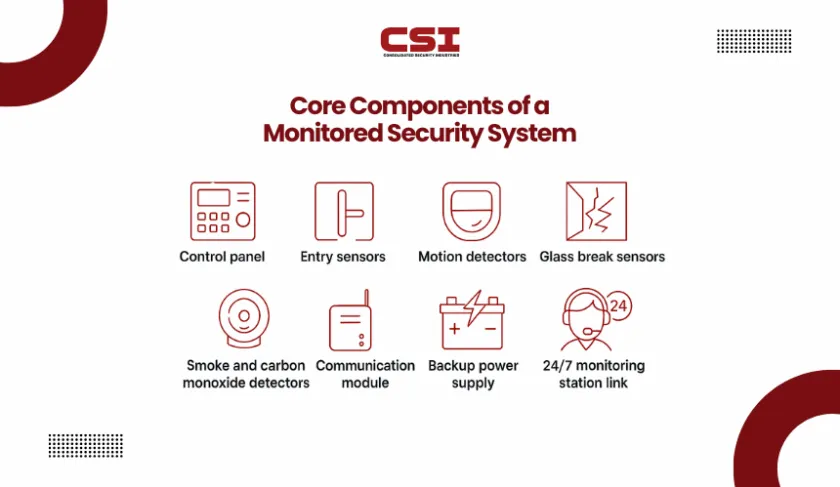
A professionally monitored home alarm system is made up of several integrated components, each designed to detect, communicate, and respond to specific threats.
There are eight core components that work in real time to ensure that any security or life-safety event is instantly reported to the central monitoring station for rapid action.
Here’s a breakdown of the essential elements:
- Control Panel: The control panel is the central hub of your home security system. It receives data from all sensors and communicates with the monitoring center via encrypted protocols. Modern panels also include touchscreens, cellular backup, and Z-Wave integration for smart home control.
- Entry Sensors: Also known as door and window contacts, these devices detect when a protected entry point is opened. If triggered while the system is armed, they immediately send a signal to the control panel.
- Motion Detectors: These sensors use passive infrared (PIR), microwave, or dual-technology to detect movement within a protected area. They are designed to ignore pets while still detecting human motion accurately.
- Glass Break Sensors: Tuned to the specific acoustic frequency of breaking glass, these sensors cover multiple windows in a single room, alerting the system to forced entry attempts.
- Smoke and Carbon Monoxide Detectors: Life-safety devices that detect smoke, heat, or carbon monoxide and immediately trigger a monitored fire or gas emergency signal, often prioritized over intrusion alerts for faster emergency response.
- Communication Module: This is the hardware that transmits alarm signals to the monitoring station. Depending on your setup, it could be a cellular transmitter, IP communicator, or a dual-path system combining both for redundancy.
- Backup Power Supply: A tamper-resistant battery backup ensures the system stays operational during power outages, which is critical for maintaining protection in storms or grid failures.
- 24/7 Monitoring Station Link: All alerts are routed to a UL-certified central monitoring station, where trained professionals evaluate and respond to threats using verified dispatch protocols.
- Indoor and Outdoor Cameras: An indoor camera helps you monitor high-traffic areas, entry points, or valuables, while an outdoor camera provides visibility of driveways, yards, and exterior doors, often deterring threats before they reach your home.
For added perimeter defense, many homeowners are now integrating Active Guard Outdoor Protection. It is a specialized layer of sensor technology designed to detect suspicious movement before an intruder reaches the entry points. This is especially useful for yards, driveways, and exterior zones that standard indoor motion detectors can’t cover.
How the Monitoring Process Works
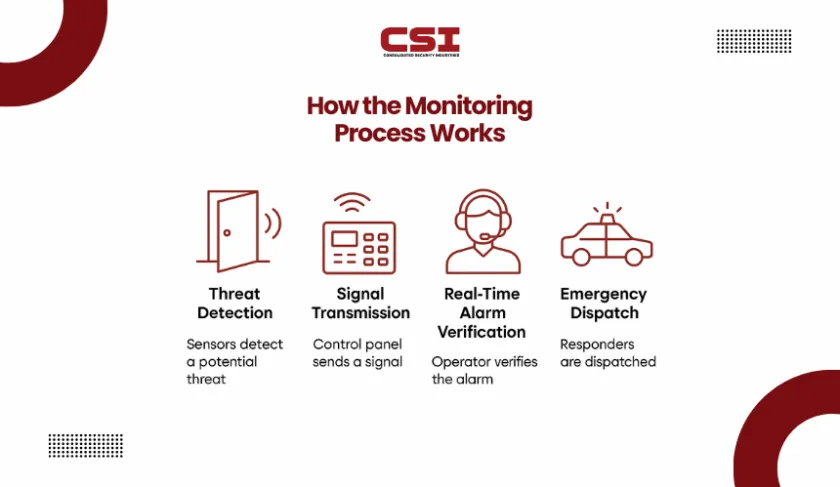
1. Threat Detection
2. Signal Transmission
The control panel springs into action, instantly transmitting a signal to the central monitoring station. This is done over a secured communication path, typically cellular, broadband (IP), or a dual-path setup that uses both for added reliability.
3. Real-Time Alarm Verification
Once the signal reaches the UL-listed monitoring center, a trained operator receives detailed information about the event, such as the type of sensor triggered, its location, and whether the system is armed.
At this point, they may:
- Attempt to contact you via phone or two-way audio from the panel
- Check live camera feeds if video verification is enabled
- Cross-reference the event with previous false alarms or sensor activity
This step is critical for reducing false alarms while ensuring real emergencies get top priority.
4. Emergency Dispatch
If the operator confirms the threat or if no one answers during verification, they immediately notify local emergency services. Whether it’s police, fire, or EMS, the right responders are sent to your location with all the details they need.
Did You Know? Verified alarms often receive faster responses from law enforcement than unverified ones, especially in jurisdictions with false alarm penalties.
5. Homeowner Notification
At the same time, you receive instant alerts on your smartphone via app, text, or email. You will know what happened, which zone was triggered, and whether help is already on the way.
Types of Residential Monitoring Services
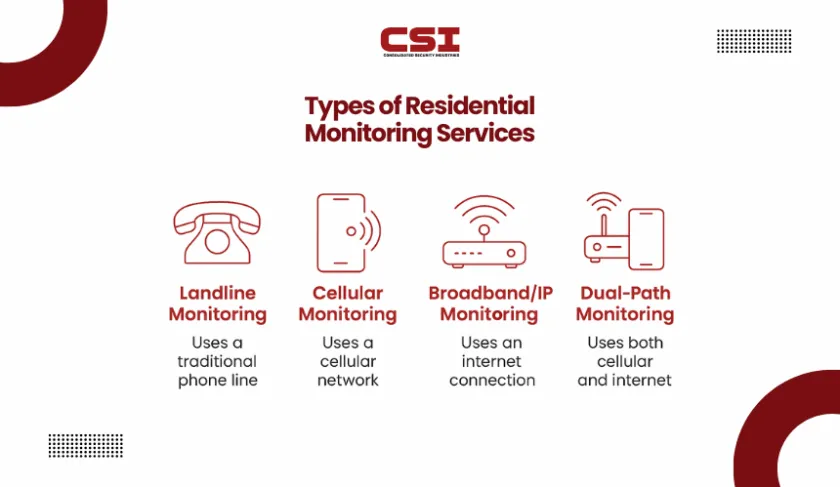
Not all alarm monitoring is the same. Depending on how your system is set up and how much reliability you want, there are a few different ways your home can connect to a monitoring station.
Let’s walk through the main types of residential monitoring services so you can get a clear idea of the pros and cons of each.
1. Landline Monitoring (Traditional Phone Line)
This is the most basic and the oldest way to monitor your home. Your alarm system uses a regular phone line to send signals to the monitoring center.
- What’s good about it: It’s usually affordable and easy to set up if you already have a phone line at home.
- What’s not good about it: It’s vulnerable if someone cuts the phone line, it’s slower, and there’s no backup if your phone service goes down.
2. Cellular Monitoring (Wireless GSM/LTE Connection)
With this method, your system uses a built-in cellular module to send encrypted signals, kind of like a text message or mobile data, to the monitoring station.
- Pros: It’s faster, more secure, and harder for intruders to disable since it doesn’t rely on wires.
- Cons: It costs a bit more because of the cellular plan subscription you need.
3. Broadband/IP Monitoring (Internet-Based)
Here, your alarm system connects through your home’s internet router and sends signals over your internet connection.
- Advantages: It’s the fastest method, supports smart home features, and comes built-in with many modern systems.
- Disadvantages: If your internet or power goes out, the system might not send alerts unless there’s a backup in place.
4. Dual-Path Monitoring (Cellular + IP Combined)
Think of this as the “best of both worlds.” It uses both your internet and cellular connection to send signals. If one fails, the other kicks in automatically.
- What’s good: It’s the most reliable option with built-in backups, often recommended for fire alarms and life-safety systems.
- What’s not so good: It costs a bit more upfront, but it is worth it for the extra peace of mind.
5. Interactive or Smart Monitoring (App-Based Control)
This one adds a modern twist. You can interact with your security cameras right from your smartphone. Arm or disarm your system, get instant alerts, and even view live video if you have cameras connected.
- Advantage: Total control at your fingertips with real-time updates and smooth smart home integration.
- Disadvantage: It still relies on professional monitoring for emergency response; otherwise, it’s more like self-monitoring.
Benefits of Professional Monitoring vs. Self-Monitoring
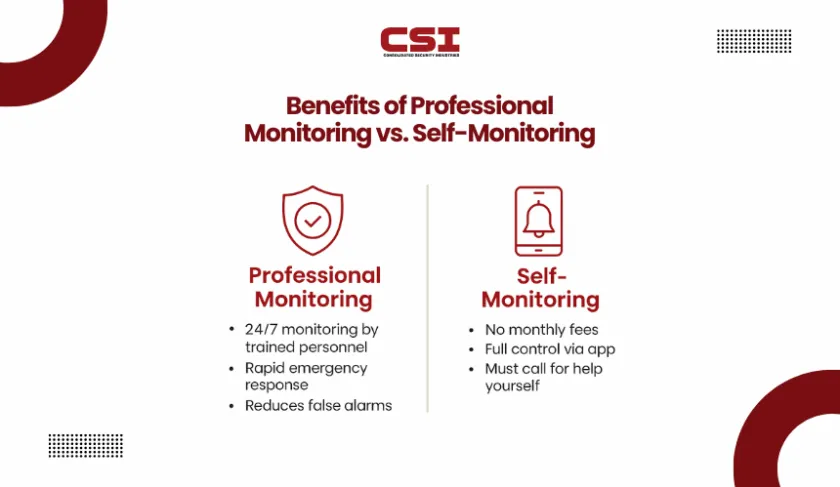
When it comes to keeping your home safe, you’ve got two main choices: either monitor your security system yourself or leave it to the pros.
Both have their place, but they offer very different levels of protection. Let’s break it down so you can decide what works best for your lifestyle and risk tolerance.
Self-Monitoring: You’re in Control, But Also on Duty
Self-monitoring means you’re the one who receives alerts, checks cameras, and decides when (or if) to call for help. Most smart home security systems offer this option through mobile apps that send real-time notifications when motion is detected or a door is opened.
Pros:
- No monthly monitoring fees.
- Full control via the app.
- Instant access to video feeds, alerts, and smart home features.
Cons:
- If you miss an alert, no one else is responding.
- Delayed reactions can mean missed emergencies.
- High chance of panic or indecision during an actual threat.
Professional Monitoring: Constant Oversight and Fast Response
Professional monitoring is the best home security system if you want to take the pressure off yourself. A team of trained security professionals monitors your system every second of the day. If a sensor or camera is triggered, they verify the event and contact emergency services on your behalf, often within seconds.
Pros:
- 24/7 coverage, even when you’re sleeping or away.
- Faster emergency dispatch with verified events.
- Reduced false alarms through professional triage.
- Insurance discounts are available in many cases.
Cons:
- Monthly fees (usually between $15–$40/month).
- May require a contract, depending on the provider.
Why It Matters for Modern Home Security Needs
In real emergencies, like a break-in at 3 a.m. or a fire while you’re out of town, professional monitoring gives you response power when you’re not available to act yourself. It’s not just about watching your phone; it’s about having a trained team ready to intervene the moment something goes wrong.
If you’re looking for professionally monitored home security systems in Los Angeles, our team at CSI Security is here to help. We offer fully integrated, around-the-clock protection tailored to the needs of local homeowners in Los Angeles.
Frequently Asked Questions
Can hackers intercept wireless sensor signals to disable my alarm?
Yes, it is possible. Some older systems transmit unencrypted RF signals, which skilled attackers can intercept or jam. Modern systems use rolling codes and encryption to prevent this. Always choose a system compliant with current encryption standards.
How long does my system’s backup power last during a blackout?
Most monitored systems include battery backups that can keep things running for 12–24 hours, sometimes longer depending on usage and battery condition. Regular testing and replacing old batteries ensures you’re protected until power is restored.
Does live video monitoring count as “verified” alarm to dispatch police?
Yes! If your system includes live video or two-way audio that monitoring agents access during an event, it can serve as verified alarm evidence; accelerating emergency dispatch by reducing false alarms.
Can I move my monitored system to a new house?
Absolutely. Wireless alarms are designed to be portable. Components can be disconnected and re-paired easily. You’ll just need to update your address with the monitoring provider and possibly reconfigure zones for your new layout.