
- csi_security
How Fire Alarm Systems Integrate with Building Management Systems (BMS)
A Quick Answer: Fire alarm systems integrate with Building Management Systems by sharing real-time alerts, equipment statuses, and emergency triggers through communication protocols that allow the BMS to respond automatically during a fire event. This connection gives the building a coordinated safety response while keeping all critical data on a central platform. |
Many facility managers look for clear explanations because modern buildings rely on interconnected systems that must communicate instantly during emergencies. When the fire alarm panel transmits information to the BMS, the building can shift from normal operation to protective mode within moments, which supports more reliable life-safety performance.
This article will provide readers with a deeper technical breakdown of communication methods, integration pathways, automation sequences, standards, and practical considerations that shape how fire alarms work within a unified building management environment.
Understanding Fire Alarm Systems and Building Management Systems
Modern buildings depend on two core technologies that work together to maintain safety and operational stability. Before exploring how integration happens, it helps to understand the basic roles each system performs on its own.
What Functions Do Fire Alarm Systems Handle Inside a Building?
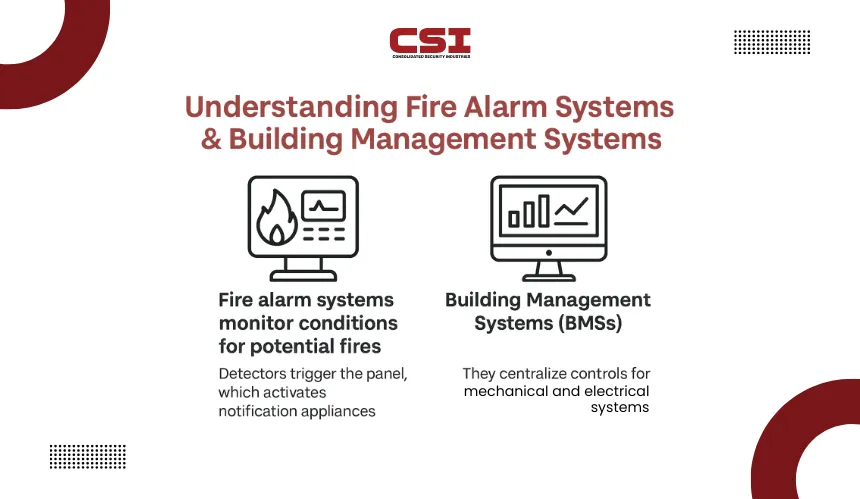
Fire alarm systems monitor conditions that signal a potential fire through smoke detectors, heat sensors, pull stations, and addressable devices linked to a central control panel. These panels track alarm events, supervisory conditions, trouble alerts, and communication faults.
They also activate audible and visual notification appliances during emergencies. Each component works together to create a structured pathway from hazard detection to occupant alerting.
What Core Operations Does a Building Management System Oversee?
A Building Management System manages critical building functions such as HVAC control, energy usage, access permissions, elevator movement, and lighting schedules. Its software interface collects data from sensors and field controllers throughout the facility to improve performance, comfort, and operational efficiency.
By maintaining oversight of mechanical and electrical systems, the BMS becomes the primary management hub for daily building operations.
Why Integrating Fire Alarm Systems with BMS Matters
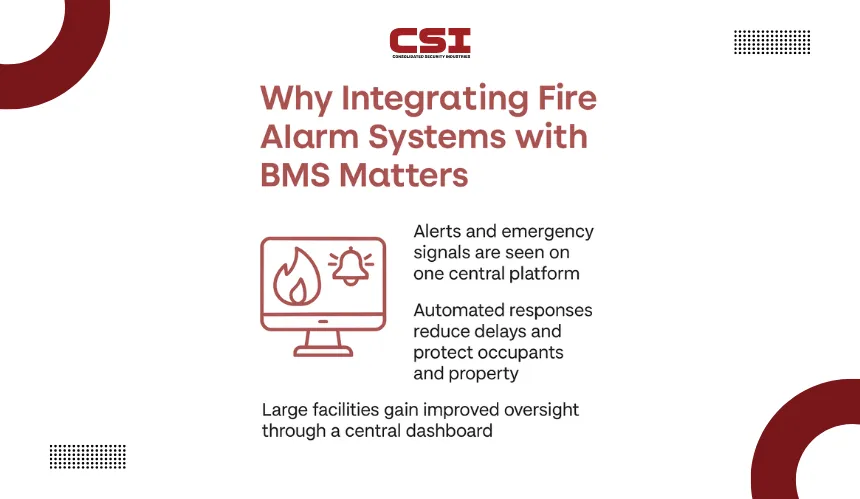
Integrating fire alarm systems with a Building Management System creates a unified safety environment where alerts, device statuses, and emergency signals reach operators through one central platform.
This connection improves situational awareness because staff can see real-time fire events alongside HVAC data, access activity, and other building conditions without switching between separate interfaces.
The integration also supports smoother emergency management. Automated responses such as ventilation adjustments, access changes, and equipment shutdowns activate without waiting for manual intervention, which reduces delays and helps protect both occupants and property.
Large facilities benefit the most since a connected BMS allows teams to monitor multiple buildings through a central dashboard, offering consistent oversight and a clearer understanding of developing conditions across the entire site.
Working with a commercial fire alarm installation company can help building owners set up these connections correctly, especially in large or multi-site facilities where consistent oversight and reliable communication are essential.
How Fire Alarm Systems Communicate with a Building Management System
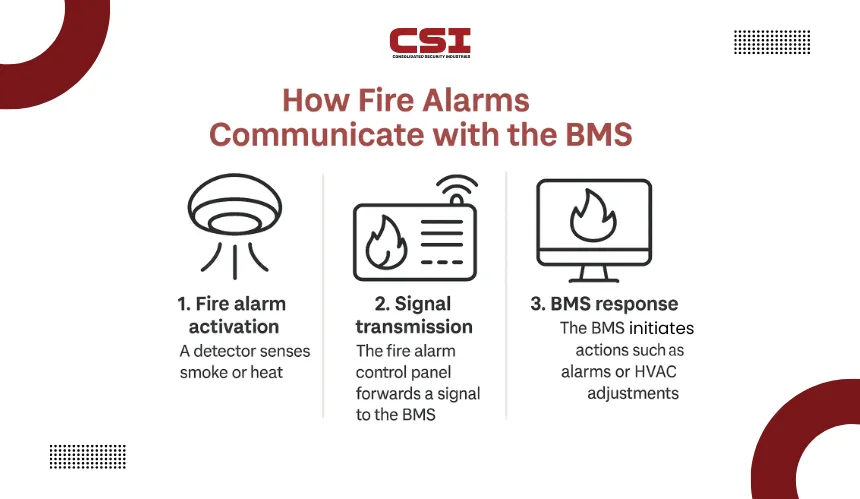
Fire alarm systems and Building Management Systems rely on structured communication pathways that allow both platforms to share information instantly.
This connection is made possible through hardware interfaces, software protocols, and data signals that help the BMS interpret what the fire alarm panel is reporting.
What Hardware Interfaces Fire Alarms and BMS to Connect?
Many buildings use interface modules, relays, and communication cards that act as the physical bridge between the fire alarm control panel and the BMS. These components transmit alarm states, trouble alerts, and supervisory signals in a format the BMS can read. Systems may use RS-485 cabling, network interface modules, or dedicated gateway hardware, depending on the building’s infrastructure and the type of fire panel in use.
Which Software Protocols Support Reliable Data Exchange Between Fire Alarm Systems and BMS?
Software protocols standardize how information moves from the fire alarm to the BMS. BACnet and Modbus are the most common options because they allow multi-vendor equipment to communicate clearly.
Through these protocols, the BMS can receive event codes, device statuses, and system conditions without misinterpretation. Some buildings rely on OPC or KNX to support specialized integration needs.
Which Software Protocols Support Reliable Data Exchange Between Fire Alarm Systems and BMS?
The fire alarm panel communicates a variety of signals to the BMS, including alarm activation, supervisory warnings, device trouble alerts, and equipment status reports. These data points help the BMS determine which automated responses to activate and how the building should adjust its mechanical and electrical systems during an incident.
How the BMS Responds Automatically During a Fire Event
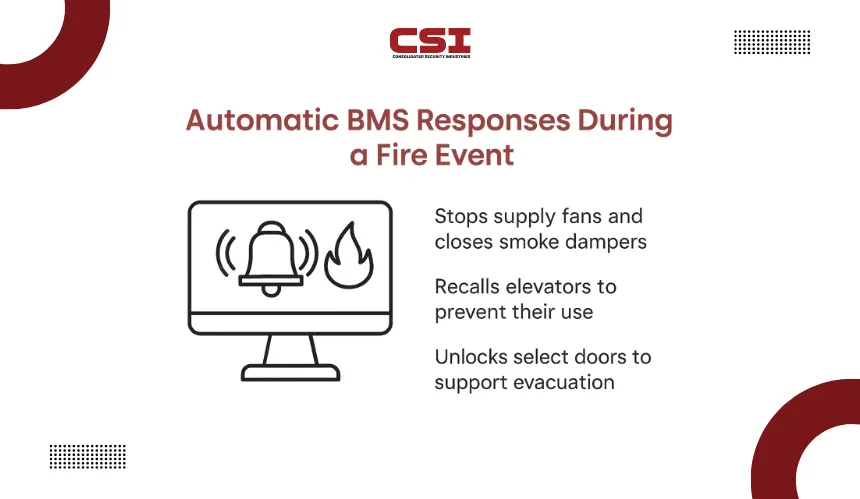
When the fire alarm panel sends an emergency signal to the Building Management System, the building shifts from routine operation to protective mode. The BMS activates a series of coordinated actions that help control smoke, support safe evacuation, and protect equipment until responders arrive.
How the BMS Adjusts HVAC Systems to Control Smoke Movement
One of the first automated responses involves the heating and cooling equipment. The BMS can stop supply fans, close smoke dampers, and activate pressurization controls to limit the spread of smoke. These adjustments help contain hazardous air movement and support safer evacuation paths for occupants.
How the BMS Manages Elevators and Access Points During an Alarm
When a fire event is detected, the BMS can place elevators in recall mode and redirect them to designated floors to prevent unsafe use. Access control systems may also shift into emergency settings by unlocking specific exit routes or restricting entry to hazard zones. These automated actions help maintain orderly movement throughout the building.
How Lighting Adjustments Support Safe Evacuation During a Fire Event
The BMS can brighten corridors, stairwells, and exit paths to improve visibility. Emergency lighting and signage may also activate automatically, guiding occupants toward safe routes. These lighting changes help reduce confusion and improve navigation during stressful moments.
Compliance Standards That Support Safe Integration Between Fire Alarms and The BMS
Integration between fire alarm systems and a Building Management System must follow recognized safety codes to ensure reliable performance.
These standards define how equipment should communicate, how systems must behave during emergencies, and what documentation is required at different stages of the project.
Which Regulations Guide Fire Alarm and BMS Connectivity Requirements?
Codes such as NFPA 72 and NFPA 92 define how fire alarm signals must be transmitted and how smoke control systems should operate during an emergency. UL 864 and UL 268 also influence panel performance and device sensitivity.
These guidelines help ensure that information sent to the BMS is accurate and that the building’s emergency functions activate as intended.
What Documentation and Testing Steps Are Required After Integration?
Most jurisdictions require verification of alarm functions, smoke control responses, and communication signals between the fire panel and the BMS. This often includes acceptance testing, sequence of operations validation, and record keeping for annual inspections. These steps confirm that integration supports safe building operation at all times.
Integration Options Between Fire Alarms and The BMS for Different Types of Buildings
Fire alarm and BMS integration can vary depending on the age of the building, the type of fire panel installed, and the complexity of the automation platform. Each environment requires a unique approach to ensure smooth communication and dependable performance.
System Architecture
Newer facilities often use IP-based fire alarm panels that communicate easily with centralized building automation systems. These panels support BACnet, Modbus, and other open protocols that simplify data exchange. Smart buildings benefit from these connections because sensors, controllers, and devices work together through a unified software interface.
How Older Buildings Connect Legacy Fire Panels to Modern BMS Platforms?
In older facilities, outdated fire panels may lack direct protocol support. Integrators often use gateway modules or relay interfaces to convert fire alarm signals into a format the BMS can interpret. This approach allows owners to improve oversight without fully replacing the fire alarm system.
Choosing the Right Fire Alarm Systems and The BMS Integration Strategy for Your Facility
Selecting the best integration method requires a clear understanding of the building’s infrastructure and safety priorities. Owners and managers often evaluate several factors before determining how the fire alarm and BMS should interact.
System Architecture
Key considerations include the age of the building, the sophistication of the existing fire alarm panel, the capabilities of the current BMS, and the emergency actions the facility needs. Some buildings require simple alarm monitoring, while others need complex automation sequences that involve ventilation control, access management, and equipment shutdowns.
Which Questions Should Be Asked When Hiring an Integration Contractor?
Owners should confirm whether the contractor supports BACnet, Modbus, or other relevant protocols. It is also important to understand how fail-safe behavior is configured and how the sequence of operations will be documented. These questions help ensure the contractor understands the building’s safety needs.
How Can Integration Improve Long-Term Operational Costs?
Integrated systems reduce unnecessary equipment use, minimize human intervention, and streamline ongoing maintenance. Better coordination between the fire alarm system and the BMS can also help prevent costly downtime and extend the life of mechanical and electrical components.
How a Fire Alarm and BMS Integration Project Is Planned and Executed
Integration projects move through a set of coordinated steps that ensure both systems communicate clearly and respond correctly during emergencies. The process typically includes:
- Initial assessment where technicians review the fire alarm panel, BMS controllers, wiring paths, and compatibility concerns to determine the right communication approach.
- Integration design that outlines how signals will travel between devices, which interface modules to use, and how the communication layout will function within the building.
- A sequence of operations development that documents how the BMS should respond to each fire alarm event, including ventilation changes, access control actions, and equipment behavior.
- Installation and testing where hardware installation, software settings configuration, and each alarm signal is verified to ensure accurate communication.
- Commissioning and training that confirm system performance and provide staff with guidance on monitoring and managing the integrated features.
If your building needs a safer and more reliable connection between the fire alarm system and the BMS, working with trained specialists can make a measurable difference.
CSI Security helps property managers integrate life safety and automation systems with precision, ensuring fast communication and dependable performance. Reach out today to plan a solution that supports both safety and long-term operational confidence.
Frequently Asked Questions
How does the BMS receive fire alarm information?
It receives signals through communication protocols such as BACnet or Modbus, which allow the fire alarm panel to send event data to the BMS interface. These protocols help the system translate alarm, supervisory, and trouble conditions into clear information that operators can view in real time. This ensures the BMS reacts correctly to every fire-related event.
Can older fire alarm systems still integrate with modern BMS platforms?
Yes, older panels can be connected through relay modules or gateway devices that convert signals into readable data for the BMS. This allows facilities to benefit from improved visibility without replacing their entire fire alarm system. It also supports phased upgrades when building plan long-term modernization.
Does integration improve how quickly a building responds to an emergency?
It helps the building react faster by automating ventilation changes, access adjustments, and equipment shutdowns based on the fire alarm signal. These automated actions reduce manual intervention and help teams maintain safer conditions during fast-changing situations.
Does integrating fire alarms and the BMS affect daily operations?
Daily operations remain unchanged, but the BMS gains additional insight into fire alarm activity, which helps teams manage building conditions more efficiently. This added visibility supports better decision-making, especially in large buildings with many interconnected systems.