
- csi_security
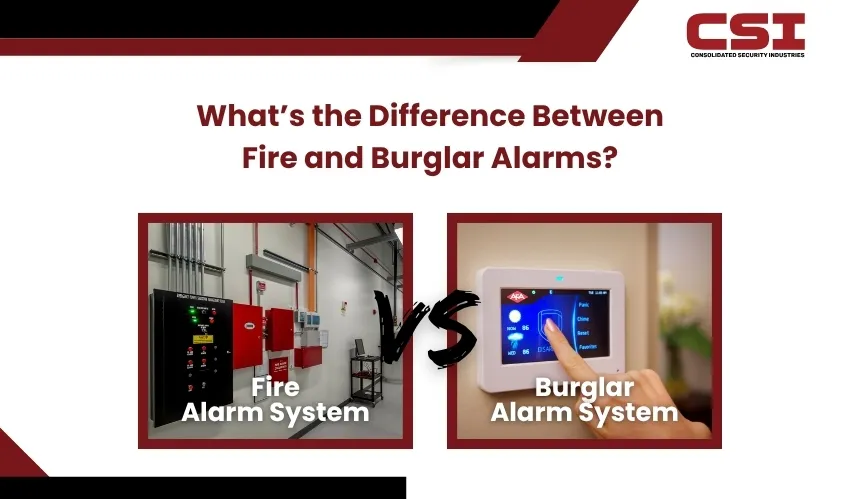
What’s the Difference Between Fire and Burglar Alarms?
When thinking about home safety, two of the most important systems that come to mind are fire alarms and burglar alarms. But do you know the key differences between them? While both play essential roles in protecting your property and loved ones, their functions and the way they safeguard your home are fundamentally different.
In this article, we will delve into the specifics of each type of alarm system, highlighting how they work, the different types available, and their unique benefits.
Key Differences Between Fire Alarms and Burglar Alarms
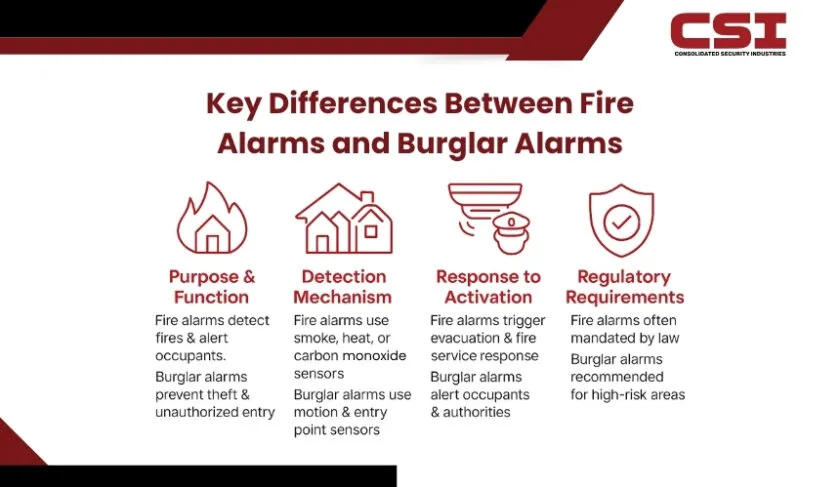
Now that we’ve defined both systems, let’s highlight the key differences between fire alarms and burglar alarms:
Purpose and Function
- A fire alarm is a life-saving system designed to detect early signs of a fire, such as smoke, heat, or carbon monoxide, and alert occupants. These alarms are essential in preventing injuries and limiting property damage by providing early warnings, especially in large buildings or homes.
- A burglar alarm is a security system aimed at protecting a property from unauthorized entry. Their main role is to prevent theft, intrusions, or vandalism by alerting property owners or authorities when a security breach occurs.
Detection Mechanism
- Fire Alarms utilize sensors like smoke detectors, heat sensors, and carbon monoxide detectors. They rely on detecting specific signs of a fire, such as rising temperatures or the presence of smoke or hazardous gases.
- Burglar Alarms use sensors such as motion detectors, door/window contacts, and glass break detectors. These sensors are activated when movement is detected, doors/windows are opened, or glass is broken.
Response to Activation
- Fire Alarms immediately sound an alarm and often notify emergency services. The primary goal is to alert people to evacuate quickly and to call for fire-fighting assistance.
- Burglar Alarms may sound a loud siren to deter intruders and alert the occupants, but they can also be connected to a monitoring service or law enforcement for immediate intervention if an intrusion is detected.
Regulatory Requirements
- Fire Alarms are often required by law in most buildings, including homes, workplaces, and public buildings, with specific regulations about where and how they must be installed.
- Burglar Alarms, while important for security, are not typically mandated by law. However, they are often recommended for higher-value properties or areas with higher crime rates.
How to Choose the Right Alarm System for Your Home or Business

When it comes to protecting your home or business, choosing the right alarm system is crucial. Both fire alarms and burglar alarms are essential for safety, but selecting the most appropriate system requires understanding your specific needs.
Let’s discuss the key factors to consider when choosing between a fire alarm and a burglar alarm, or when integrating both into your security strategy.
Evaluate Your Safety Needs
The first step in choosing the right system is assessing the risks and safety needs of your property.
- For Fire Protection: If you live in an area prone to fires, have a home with multiple levels, or have young children, elderly individuals, or pets, fire alarms should be your top priority. The presence of flammable materials, old wiring, or heating systems also increases the need for reliable fire detection systems.
- For Theft Prevention: If you live in a high-crime area, have valuable items, or run a business with valuable assets, a burglar alarm will offer protection against theft, break-ins, and vandalism. Properties with multiple entry points or larger square footage may benefit from advanced burglar alarm systems.
Consider the Type of Property
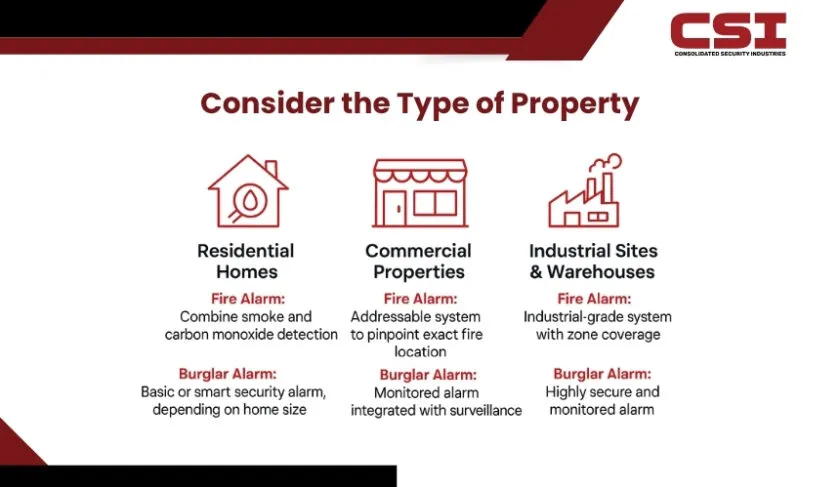
Different properties have different needs when it comes to alarm systems. Let’s look at a few scenarios:
For Residential Homes
- Fire Alarm: If you’re a homeowner, ensure smoke detectors are installed in key areas such as bedrooms, hallways, and kitchens. Combination home alarms with both smoke and carbon monoxide detection are often recommended.
- Burglar Alarm: For added security, a basic burglar alarm with door/window sensors and motion detectors can suffice, but larger homes might benefit from more complex systems integrated with smart technology.
For Commercial Properties
- Fire Alarm: Commercial spaces, particularly those with high foot traffic or sensitive equipment, require sophisticated commercial alarm systems, such as addressable systems, that can pinpoint exact fire locations and notify emergency responders immediately.
- Burglar Alarm: Businesses often opt for more robust, monitored burglar alarms. These systems not only deter intruders but also integrate with surveillance systems to provide a comprehensive security solution.
Industrial Sites and Warehouses
- Fire Alarm: Industrial sites should have industrial-grade fire alarm systems, including heat detectors and smoke detectors, that can cover vast areas and specific zones.
- Burglar Alarm: If dealing with valuable equipment or inventory, installing a highly secure and monitored burglar alarm system is recommended to prevent theft and ensure a quick response to potential breaches.
Budget Considerations
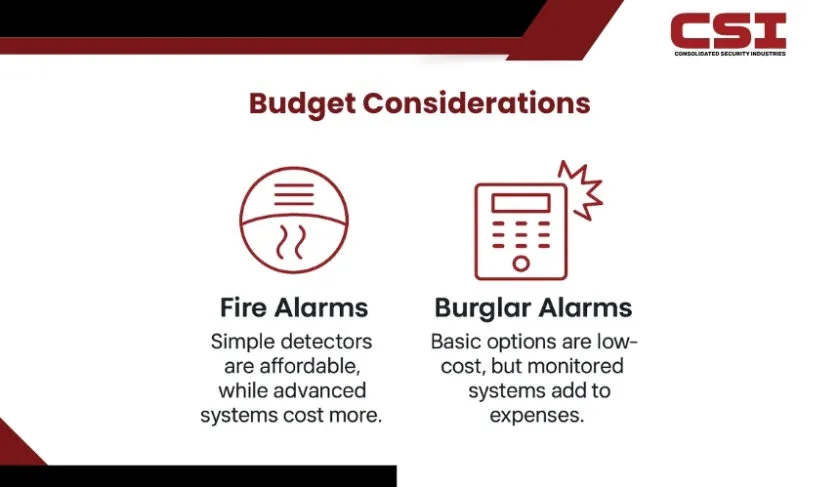
The cost of installing and maintaining an alarm system is a significant factor in the decision-making process.
- Fire Alarm Costs: Simple smoke detectors are relatively inexpensive, while more advanced systems, such as addressable or smart alarms, come at a higher cost due to their additional features and functionality.
- Burglar Alarm Costs: Basic burglar alarms with door/window sensors and motion detectors are affordable, but if you opt for a monitored or wireless system, the costs can rise. Monitoring services often come with monthly fees, while wireless systems might have higher upfront installation costs.
Maintenance and Testing Requirements
Both fire alarms and burglar alarms require regular maintenance to ensure they function properly in emergencies.
- Fire Alarms: Smoke detectors need to be tested monthly, and batteries should be replaced every six months. Also, fire alarm systems should be professionally serviced at least once a year to ensure they are in optimal condition.
- Burglar Alarms: Regularly test sensors, check batteries, and ensure connections between devices and the control panel are working. For monitored systems, maintenance may include verifying the connection to the monitoring service.
Ensure your peace of mind by protecting both property and loved ones today. Trust CSI Security for reliable commercial and residential security alarms.
Frequently Asked Questions
Can a single system detect both fires and break-ins?
Yes, combination home alarm systems are available that integrate fire detection and burglary protection. These systems typically include smoke detectors, heat sensors, and motion detectors, providing comprehensive coverage for both fire hazards and unauthorized entries.
Are there any privacy concerns with smart alarm systems?
Smart alarm systems can collect data about your daily routines and activities. To mitigate privacy risks, choose devices from reputable manufacturers, regularly update software, and adjust privacy settings to limit data sharing.
What should I do if my alarm system isn't working properly? (H3)
If your alarm system isn’t functioning correctly, check for common issues like low batteries or disconnected sensors. If problems persist, contact a professional technician to inspect and repair the system to ensure it’s operating effectively.
What is the difference between a fire alarm and a smoke detector?
A smoke detector senses smoke particles in the air and triggers an alarm. A fire alarm system is a more comprehensive setup that includes smoke detectors, heat detectors, and manual pull stations, all connected to a central control panel to provide coordinated alerts during a fire emergency.
Do I need a carbon monoxide detector if I have a fire alarm?
If your fire alarm system includes a combined smoke and carbon monoxide detector, you do not need a separate carbon monoxide detector. However, if your fire alarm system does not have CO detection, it is important to install a separate carbon monoxide detector.