
- csi_security
Fire Alarm vs. Smoke Detector: What’s the Difference in Installations?
Fire alarms and smoke detectors are often confused, yet they serve different purposes and require distinct installation methods.
A fire alarm operates as a full system designed to alert and coordinate responses, while a smoke detector is a standalone device focused solely on identifying smoke.
Knowing which one suits your property is crucial, as building size, occupancy, and regulations determine whether basic detection is enough or a comprehensive alarm system is required.
This article breaks down their differences with a clear focus on installation, helping you make an informed choice for reliable fire protection.
What is a Fire Alarm System?
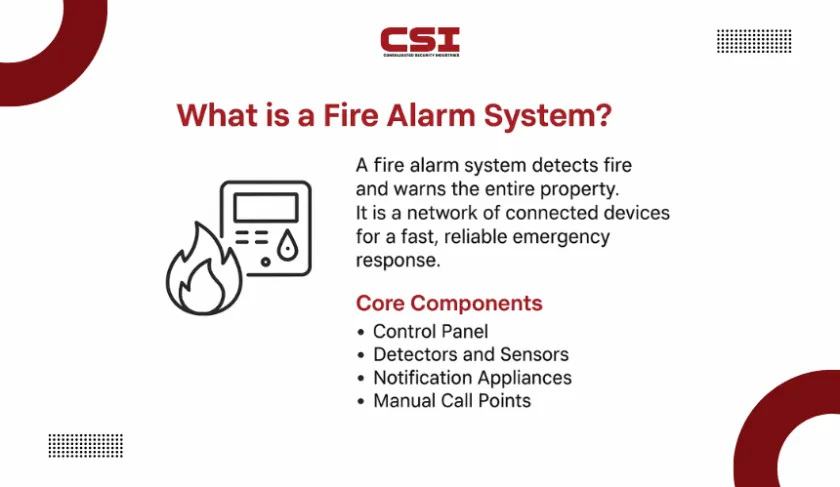
A fire alarm system is a complete setup designed to detect early signs of fire and warn people across an entire property.
Unlike a single smoke detector, it works as a connected network, bringing together multiple devices that communicate with each other to create a fast and reliable emergency response.
Its main purpose is to make sure no area of the building is left unprotected and that everyone inside gets a clear warning when danger is detected.
Core Components of a Fire Alarm System
- Control Panel: The main brain of the system that receives signals from detectors and sends out alerts.
- Detectors and Sensors: Devices that pick up smoke, heat, or flames.
- Notification Appliances: Alarms, sirens, and flashing lights that alert people to evacuate.
- Manual Call Points: Pull stations or break-glass units that let people trigger the alarm themselves.
What is a Smoke Detector?
A smoke detector is a compact device that senses smoke particles in the air and sounds an alarm to warn occupants of a possible fire.
Unlike a fire alarm system, it usually works as a standalone unit, making it common in homes and smaller properties where full-scale systems may not be required. Its main role is to provide early detection, giving people valuable time to respond or evacuate.
Core Types of Smoke Detectors
- Ionization Smoke Detectors: Detect small, fast-moving smoke particles, typically from flaming fires.
- Photoelectric Smoke Detectors: Respond to larger smoke particles, often produced by smoldering fires.
- Dual-Sensor Detectors: Combine both ionization and photoelectric technologies for broader coverage.
Key Features of Smoke Detectors
- Usually battery-powered or hardwired with a backup battery.
- Designed for specific placement in bedrooms, hallways, and near kitchens.
- Compact, affordable, and easy to install compared to full alarm systems.
What are the Functional Differences Between Fire Alarms and Smoke Detectors?
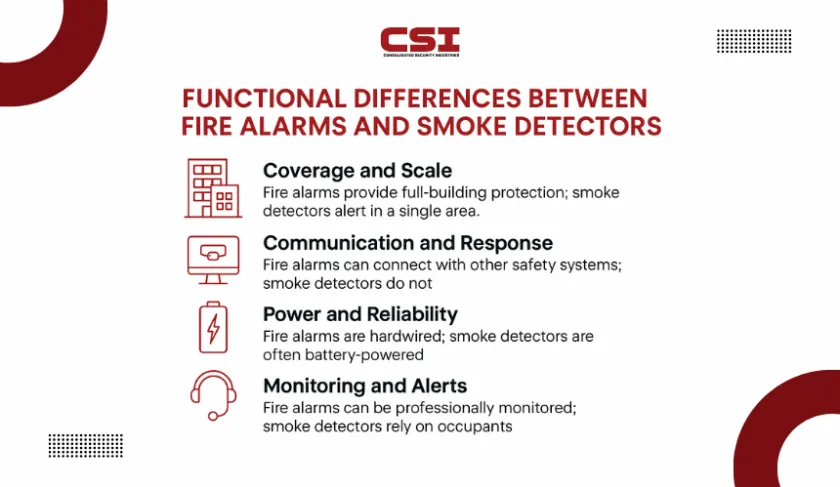
Although both devices contribute to fire safety, their functionality and scope are very different. Understanding these differences makes it easier to decide which option fits a home, office, or larger building.
Coverage and Scale
- Fire Alarm System: Designed for full-building protection. Multiple devices are connected to a central panel, so when one detector senses danger, the entire system responds and alerts every area.
- Smoke Detector: Works as a single unit. It only sounds an alarm in the immediate space where smoke is detected, without reaching other rooms or floors.
Communication and Response
- Fire Alarm System: Can link with other safety features like sprinklers, emergency lighting, and elevators. This creates a coordinated response that helps people exit the building quickly and safely.
- Smoke Detector: Sounds a local alarm only. It does not connect with other devices or activate wider safety measures.
Power and Reliability
- Fire Alarm System: Usually hardwired into the building’s electrical system, with backup batteries or emergency power connections. This setup ensures it keeps working even during outages.
- Smoke Detector: Often battery-powered or installed as individual hardwired units. It works reliably as long as batteries are checked and replaced on time.
Monitoring and Alerts
- Fire Alarm System: Many systems are linked to external monitoring centers. If a fire breaks out when no one is around, the system can automatically notify emergency services.
- Smoke Detector: Relies on people inside the property to hear the alarm and take action. If the building is empty, the alarm will go unnoticed.
Installation Process of Fire Alarm Systems
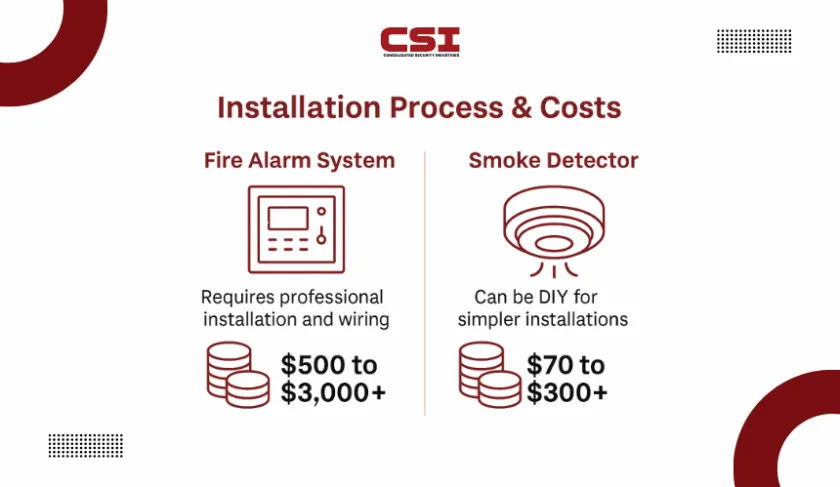
Installing a fire alarm system is a structured process that requires planning, technical expertise, and compliance with fire safety regulations. Because these systems cover entire buildings, the installation goes beyond mounting devices and involves careful coordination.
Pre-Installation Planning
Before any equipment is installed, professionals carry out a fire risk assessment. This step determines the number of devices required, the best locations for detectors, and how the system should be zoned for maximum coverage.
Professional Setup and Wiring
Unlike standalone smoke detectors, fire alarm systems are hardwired into the building’s electrical infrastructure.
A commercial alarm installation company connects detectors, notification appliances, and manual call points back to the central control panel for communication between all components.
Integration with Other Safety Features
Many systems are designed to work in harmony with sprinklers, ventilation controls, and emergency lighting. This integration ensures that when the alarm activates, the building responds as a whole. This guides occupants to safety while containing the fire.
Compliance with Codes and Standards
Every fire alarm installation must meet local building codes and national safety standards such as NFPA guidelines. Inspections and testing are carried out after installation to confirm the system functions as required.
Installation Process of Smoke Detectors
Installing smoke detectors is generally simpler than setting up a fire alarm system, but placement and maintenance are critical for them to work effectively. Even small mistakes in installation can reduce their ability to provide early warnings.
Placement Guidelines
Smoke detectors should be installed on ceilings or high on walls, since smoke rises. Bedrooms, hallways, stairways, and living areas are priority locations, while kitchens and bathrooms require careful positioning to avoid nuisance alarms from cooking smoke or steam.
DIY or Professional Setup
Many homeowners choose the do-it-yourself approach for battery-powered detectors because they only require mounting brackets and batteries. Hardwired detectors, however, are best installed by a trusted home alarm installer for proper wiring and connection to backup power.
Power Source Options
Most smoke detectors are battery-operated, making them easy to install without wiring. Hardwired versions provide more reliability and often include backup batteries to keep them functional during power outages.
Ongoing Maintenance
Testing smoke detectors monthly and replacing batteries at least once a year keeps them dependable. Entire units should be replaced every 8–10 years, since sensors become less effective over time.
Cost Considerations in Installation
The cost of fire safety installations can vary widely depending on the type of system, property size, and level of coverage required. Understanding the cost differences between fire alarms and smoke detectors helps property owners plan budgets realistically.
Fire Alarm System Installation Costs
Fire alarm systems are larger investments because they include multiple components, wiring, and integration with other safety features.
A full fire alarm system for a small home typically costs between $500 and $3,000, depending on how many detectors, alarms, and manual pull stations you put in.
For larger commercial buildings, costs often fall between $1,800 and $20,000+, depending on complexity, building size, and whether it includes features like integration with sprinklers or remote monitoring.
Smoke Detector Installation Costs
Smoke detectors are comparatively inexpensive. Battery-powered units can be purchased and installed at a very low cost, often with no professional labor required.
For a single, basic smoke detector installation, expect roughly $70 to $150, with an average around $110-$115, including labor and materials.
Hardwired detectors or units with extra features (interconnection, smart alerts) can cost $150 to $300+ per unit when installation is done professionally.
Long-Term Maintenance Expenses
- Fire Alarm System: Requires professional inspections, annual servicing, and occasional part replacements, which add to ongoing expenses.
- Smoke Detector: Costs mainly include batteries and unit replacements every 8–10 years, making upkeep far more budget-friendly.
Safety and Regulatory Compliance

Proper installation is not just about convenience. It is about meeting legal and safety obligations. Both fire alarm systems and smoke detectors must comply with building codes, fire safety standards, and insurance requirements to be considered reliable.
National Standards and Guidelines
In the United States, the National Fire Protection Association (NFPA) provides the most widely accepted rules. For example, NFPA 72 outlines how fire alarm systems should be designed, installed, and tested.
Smoke detectors are also subject to these standards, particularly in residential settings, where codes require detectors in bedrooms, hallways, and every level of a home.
Local Building Code Requirements
Cities and states often adapt NFPA standards into their own building codes. These regulations may dictate the type of system required based on the property’s size, purpose, and occupancy.
For instance, a small home may only need a few smoke detectors, while a hospital or school must install a fully networked fire alarm system.
Insurance Implications
Insurance companies often check compliance before issuing or renewing policies. A properly installed and regularly maintained fire alarm system or smoke detector network may lower premiums, while failure to meet code can lead to denied claims after a fire.
Conclusion: Making the Right Installation Choice
Fire alarms and smoke detectors both play crucial roles in fire protection, but they serve different needs.
Fire alarm systems deliver comprehensive, building-wide safety with integrated alerts, while smoke detectors provide simple, localized detection that works best in smaller spaces.
The right choice depends on property type, regulatory requirements, and the level of protection you want in place.
For expert guidance and professional installation, trust CSI Security. Our team specializes in tailored fire safety solutions that meet strict compliance standards to keep your property safe. Contact us today to schedule a consultation and ensure your building has the protection it deserves.
Frequently Asked Questions
Can modern fire alarm systems include smart home integration and mobile alerts?
Yes. Many modern fire alarm systems offer features like Wi-Fi or cellular connectivity so that alerts can be pushed to your smartphone or smart home hub.
These systems may also support voice alerts or integration with home automation (lights, locks) for faster evacuation and response.
Are there specific smoke detectors or fire alarms designed for people with hearing impairments?
Absolutely. There are alarms with strobe lights, vibrating pad attachments, or bed shakers designed for individuals who are deaf or hard of hearing. Such units are part of compliance in many building codes to ensure safety for everyone.
How do optical beam smoke detectors differ and where are they used?
Optical beam smoke detectors use a projected beam of light across large open areas. When smoke blocks or scatters that beam, the alarm triggers. They are ideal for large spaces like warehouses or atriums where many point detectors would be impractical or too expensive.
What is the lifespan of a fire alarm panel or system, and when should it be upgraded or replaced?
A fire alarm control panel often lasts 10-15 years depending on usage, environment, and maintenance. If you notice frequent faults, outdated technology, or lack of support for newer compliance codes, that’s a sign to consider upgrading or replacing it.
Do fire alarm systems require regular testing, and if so, how often?
Yes. Standard best practices include monthly visual checks, bi-annual testing of detectors and sensors, and a full inspection and test of all devices (alarms, panels, manual call points) at least once a year to ensure full system functionality.
What happens during a power outage? Will fire alarm systems still work?
Good fire alarm systems include battery backup or secondary power sources (like generators). That ensures the system remains operational during power failures. Smoke detectors that are hardwired also generally have backup batteries.