
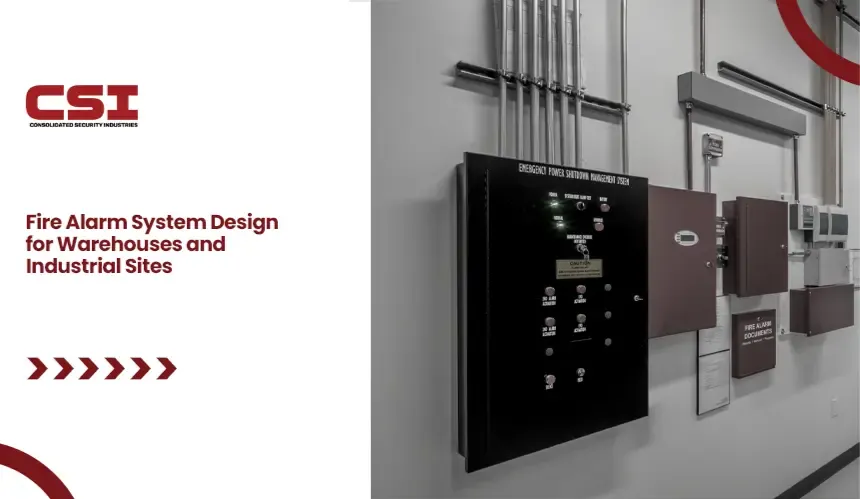
- csi_security
Fire Alarm System Design for Warehouses & Industrial Sites
Fire alarm system design for warehouses and industrial sites requires a specialized approach because these facilities have larger volumes, higher ceilings, complex storage patterns, and unique fire risks. The goal is to detect hazards quickly, trigger accurate alerts, and support safe evacuation in environments where heat, smoke, and airflow behave differently than in standard buildings.
Warehouses often contain palletized loads, machinery, flammable materials, and high-airflow zones that influence how smoke moves. Industrial sites may include hazardous rooms, electrical equipment, battery storage, or production lines that demand tailored detection strategies.
This article will cover the key standards, system components, layout considerations, technologies, and maintenance requirements involved in designing reliable fire alarm systems for large industrial environments
Why Fire Alarm System Design Is Different in Warehouses and Industrial Facilities
Designing a fire alarm system for large industrial environments is not the same as designing one for offices or commercial buildings. The conditions inside warehouses and production floors create challenges that influence how heat forms, how smoke spreads, and how detectors respond.
Working with an expert commercial fire alarm system installer can help ensure that each design decision matches the unique risks, airflow patterns, and structural characteristics found in industrial spaces.
Environmental Factors that Make Industrial Fire Protection More Complex
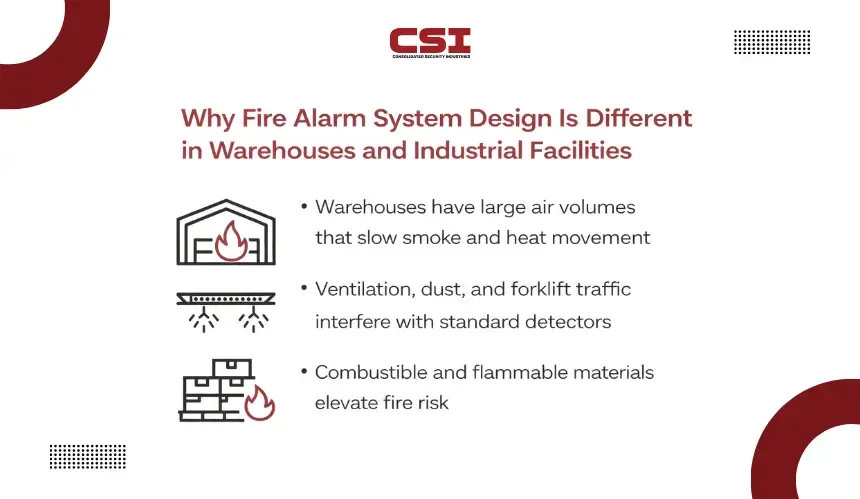
Warehouses contain large air volumes that slow the movement of smoke and heat. High ceilings allow hot air to rise and cool before reaching detectors, which affects response times. Strong airflow from ventilation systems, loading docks, and equipment can redirect smoke away from sensing paths.
Temperature swings, dust particles, and forklift traffic also interfere with traditional smoke detection methods. These conditions require technologies that can operate reliably in open spaces and active industrial zones.
Fire Risks Unique to Warehouses and Industrial Sites
Industrial facilities often store combustible goods, palletized materials, and packaging items that burn rapidly once ignited. Production machinery can generate heat, friction, or sparks that increase ignition likelihood. Battery storage rooms and electrical panels introduce risks of thermal runaway or electrical fires.
Some warehouses also handle chemicals, oils, or flammable liquids that require rapid and accurate detection. Each risk category influences how detection zones are created and which sensors are appropriate for safe and consistent performance.
NFPA, OSHA, and UL Standards Governing Industrial Fire Alarm Design
Fire alarm systems in warehouses and industrial facilities must follow strict codes to ensure reliable detection, safe evacuation, and proper equipment performance.
These standards define how systems are installed, tested, and maintained so that every component works as intended during an emergency.
How NFPA 72 Shapes Detection, Notification, and Monitoring Requirements in Industries
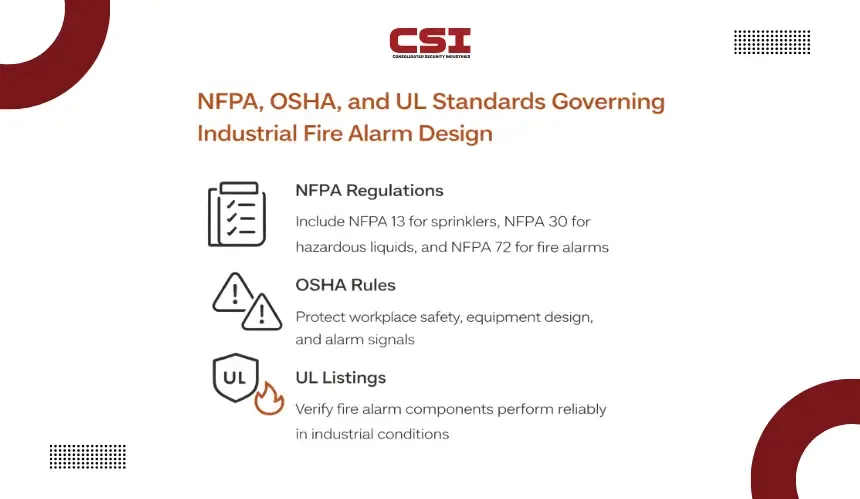
NFPA 72 provides the core rules for fire alarm system design. It outlines detector spacing, acceptable mounting heights, wiring practices, notification appliance placement, and monitoring requirements. The code also guides sensitivity settings, audibility levels in loud industrial zones, and the use of remote annunciators.
Main NFPA 72 Requirements for Industries:
- Minimum detector spacing based on ceiling height, environmental conditions, and airflow patterns
- Approved mounting heights for smoke, heat, beam, and multi-criteria detectors
- Proper wiring methods for initiating device circuits and notification appliance circuits
- Required audibility and visibility levels for horns, strobes, and voice communication systems in noisy environments
- Sensitivity testing schedules for smoke detectors to maintain response accuracy
- Mandatory installation of remote annunciators at approved entry points for fire department access
- Continuous monitoring of sprinkler system switches, supervisory signals, and system faults
- Secondary power supply requirements that ensure critical equipment operates during outages
- Documentation of detector placement, testing intervals, and system programming for code compliance
NFPA and OSHA Standards that Influence Overall Fire Protection in Industrial Sites
NFPA 13 guides the installation of sprinkler systems. It affects warehouse fire alarm design because sprinkler layouts and detection strategies must work together. NFPA 30 regulates flammable liquid storage, which impacts sensor selection in hazardous rooms.
NFPA 70 provides electrical safety requirements for wiring methods, grounding, and panel connections. OSHA 1910 adds rules for workplace safety, employee evacuation, and emergency signaling. Together, these standards shape the full safety framework for industrial buildings.
What UL Listings Are Required for Fire Alarm Equipment in Industrial Environments
UL listings verify that fire alarm components perform reliably in demanding environments. UL 864 covers control units and control panels. UL 268 applies to smoke detectors used in commercial and industrial spaces.
UL 521 defines testing for heat detectors used in high-temperature or dusty conditions. Using UL-listed equipment ensures compliance and reduces the risk of malfunction in large industrial facilities.
Smoke Detection Technologies Used in Warehouses
Warehouses rely on specialized smoke detection technologies because smoke behaves differently in large, high-ceiling environments.
The size of the space, air movement, equipment activity, and storage density all influence which detection method delivers the most reliable performance.
1. Beam Smoke Detectors
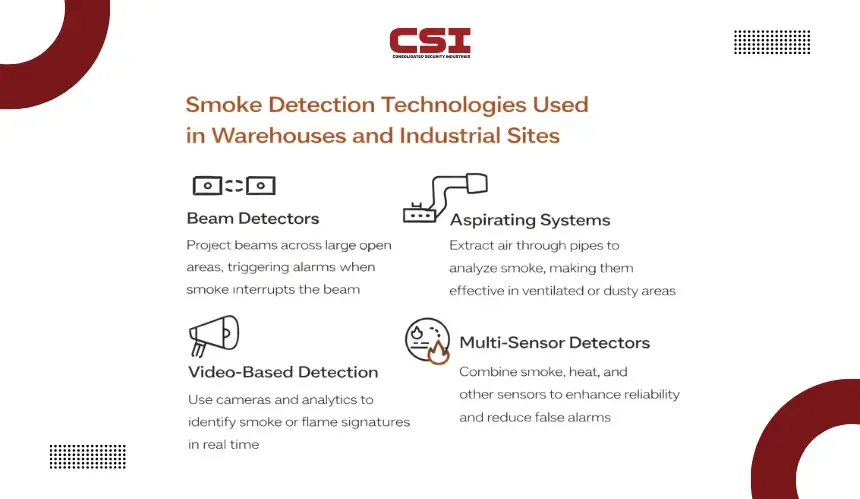
Beam detectors are ideal for wide open areas with tall ceilings. They project an infrared beam across long distances, and an alarm is triggered when smoke disrupts the beam.
This approach works well in spaces where spot detectors are impractical or too slow to respond. Designers also consider alignment stability, reflective surfaces, and potential obstructions from moving equipment or storage changes.
2. Aspirating Smoke Detection Systems
Aspirating smoke detection systems draw air samples through a network of pipes and analyze them using a highly sensitive detection chamber. They provide early warning in areas with challenging airflow or dust, such as loading docks, cold storage rooms, and manufacturing zones.
These systems are effective for detecting small amounts of smoke before it becomes visible, which is valuable in facilities that require fast intervention.
3. Video-Based Detection
Video-based fire detection uses camera analytics to identify smoke or flame patterns within the monitored area. It works well in spaces where traditional detectors may struggle due to air movement or ceiling height.
Conveyor systems, sorting lines, and active production areas benefit from this technology because it monitors fire signatures at ground level rather than waiting for smoke to rise.
4. Multi-Sensor Detection
Multi-sensor detectors use a combination of sensing elements, such as smoke, heat, and carbon monoxide. This approach improves accuracy and reduces the chance of false alarms in dynamic environments.
Industrial facilities that experience temperature fluctuations, equipment emissions, or intermittent dust often rely on multi-sensor units to maintain dependable detection performance.
Addressable Fire Alarm Systems
Fire alarm systems in warehouses and industrial facilities often connect with other safety technologies. These integrations help the building respond faster and create safer conditions for workers during an emergency.
How Do Fire Alarms Work with Sprinkler Systems
Fire alarm panels supervise flow switches, tamper switches, and pressure devices to verify that the sprinkler system is functioning correctly. Pre-action and deluge systems depend on detectors to release water or suppression agents. This coordination ensures that sprinkler activation is accurate and that any water flow is immediately detected and reported.
How Do Fire Alarms Connect with BMS, SCADA, and PLC Platforms
Linking the fire alarm system with building management systems, SCADA platforms, or programmable logic controllers allows the facility to monitor alarms, supervisory signals, and equipment faults in real time.
This connection can also shut down conveyors, machinery, or ventilation systems automatically when a fire is detected. These actions help prevent the spread of smoke and protect workers in active industrial zones.
What Automated Responses Are Triggered During a Fire
Integrated fire alarms can activate emergency actions such as HVAC shutdowns, damper closures, or emergency lighting sequences. Facilities that contain high-risk materials may rely on automatic gas suppression or foam activation. These coordinated responses support safer evacuation and help control fire growth in complex industrial environments.
Designing Alarms for Hazardous and Special Industrial Zones
Certain areas inside industrial facilities carry higher fire risks due to chemicals, electrical equipment, temperature variations, or specialized storage conditions. These locations require tailored alarm strategies that match the hazards present.
How Should Fire Alarms Be Designed for Flammable Liquid Storage Areas
Flammable liquid rooms need detection equipment that performs reliably in harsh conditions. NFPA 30 outlines safety rules for these areas, which often include explosion-proof devices, heat detectors, and specialized wiring methods.
Smoke detection may be limited due to vapors or ventilation patterns, so designers select sensors that can tolerate chemical exposure while still providing a fast response.
What Detection Methods Work Best for Battery Storage and Electrical Rooms
Battery rooms and electrical areas are prone to thermal runaway, overheating, and electrical faults. Heat detectors and multi-sensor devices help identify rising temperatures or combustion byproducts early.
These zones also benefit from dedicated monitoring because smoke may not form immediately during electrical failures. Proper zoning and separation ensure that alarms from these rooms receive immediate attention.
How Are Fire Alarms Adapted for Cold Storage and Refrigerated Warehouses
Cold storage environments create challenges such as ice buildup, condensation, and limited airflow. Detectors often require heated bases to prevent freezing and maintain sensitivity.
Aspirating smoke detection can perform well in these spaces because the sampling pipes remain outside the cold zone. Designers adjust placement to account for cold air stratification and slow smoke movement, ensuring accurate detection despite the harsh conditions.
Warehouse Fire Alarm Layout, Zoning, and Infrastructure Planning
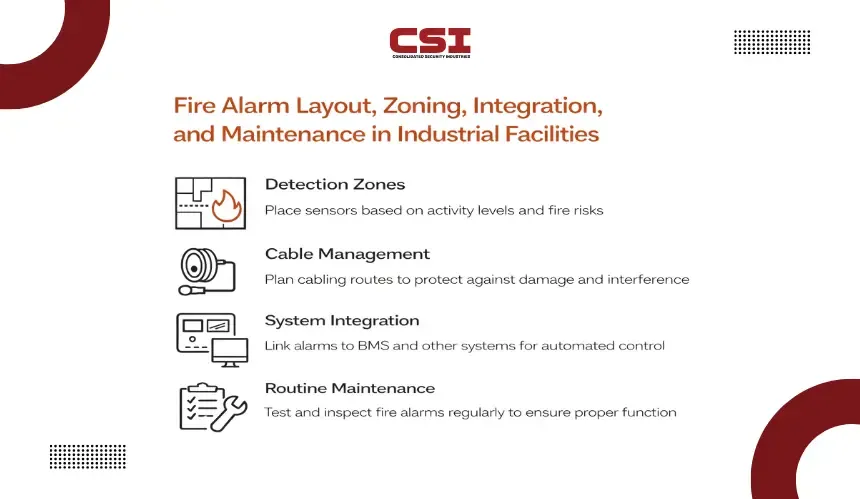
Fire alarm layout planning determines how quickly a system can locate a fire and how easily responders can identify the affected area. Warehouses require careful mapping because the building often contains long aisles, high storage racks, and multiple operational zones.
How Should Detection Zones Be Created in a Warehouse
Detection zones are designed around activity levels, storage layouts, and access points. Areas such as loading docks, pallet racking aisles, and production lines are separated into distinct zones so alarms can be traced to exact locations.
Clear zoning reduces response time and prevents confusion during evacuation because each alarm corresponds to a well-defined part of the building.
How Should Cabling Paths Be Planned for Industrial Facilities
Cabling routes must account for long distances, equipment movement, and environmental conditions. Designers use fire-resistant cable, conduits, and tray systems that protect wiring from heat, mechanical impact, or moisture.
Rigid or metal conduits are chosen in areas with forklifts or heavy machinery. Cabling paths are kept accessible for testing and maintenance while following electrical safety requirements.
Where Should Fire Alarm Panels and Annunciators Be Installed
Panels and annunciators are placed where emergency teams can reach them quickly. Many facilities position the main control unit in the riser room or a dedicated fire control room.
Annunciators are installed near primary entrances so responders can identify the alarm location before entering the building. These placements improve accuracy during emergencies and support faster decision-making.
Fire Alarm Monitoring and Emergency Communication Systems for Industrial Sites
Monitoring and communication systems ensure that alarms reach the right people without delay. Industrial facilities often require enhanced communication because workers may be spread across large areas or engaged in tasks that reduce situational awareness.
How Is Remote Monitoring Managed in Industrial Facilities
Industrial buildings typically use dual path monitoring through cellular and internet communicators. This approach reduces the risk of signal loss and ensures continuous connection to monitoring centers. Remote monitoring tracks alarms, supervisory conditions, and system faults, which helps facilities respond quickly to issues that might otherwise go unnoticed.
How Does Voice Evacuation Improve Safety in Noisy Environments
Voice evacuation systems use high-wattage speakers to deliver clear instructions during emergencies. Spoken messages are easier to understand than tones in loud spaces, especially in facilities with heavy equipment or ventilation noise. The system guides workers toward safe exits and helps prevent confusion during evacuation.
Maintenance, Inspection, and Testing Schedules for Industrial Fire Alarms
Routine maintenance helps industrial fire alarm systems remain reliable in environments where dust, airflow, and machinery can affect performance. Consistent inspection prevents missed detections and reduces the chance of system faults during critical moments.
1. Routine Inspection Practices
Weekly inspections verify that primary and secondary power supplies are functioning and that monitoring signals are reaching the panel. These quick checks also confirm that indicators on the control unit show normal operation. Routine oversight reduces the risk of unnoticed system issues.
2. Monthly Maintenance Tasks
Monthly tasks often include spot testing of initiating devices and checking the condition of visual notification appliances. Inspectors ensure that detectors are clean, unobstructed, and free from dust accumulation. This helps maintain accuracy in facilities where airborne particles can interfere with sensor performance.
3. Annual Testing Requirements
Annual testing follows NFPA 72 Chapter 14 and involves activating every detector, heat sensor, horn, strobe, and supervision device. Sensitivity testing verifies that smoke detectors respond within their approved range. Thorough system testing once a year ensures long-term reliability and code compliance.
4. False Alarm Prevention Tips
Reducing false alarms requires understanding the environmental factors that affect detectors. Dust, insects, and equipment emissions often trigger unwanted signals. Regular cleaning, updated sensitivity settings, and proper sensor selection help maintain accuracy.
Monitoring environmental changes also prevents unnecessary evacuations and improves overall system stability.
If your facility needs a safer and more reliable approach to fire detection, CSI Security can help you design a system that fits your warehouse or industrial environment. Their team supports facilities with tailored solutions that strengthen protection and improve compliance.
Frequently Asked Questions
What Type of Smoke Detection Is Fastest for Large Warehouses?
Aspirating smoke detection provides the earliest warning because it analyzes air samples continuously, even before smoke becomes visible. This technology is especially effective in high airflow or tall ceiling environments where traditional detectors respond slowly. Facilities that store high-value or sensitive inventory often use it to minimize fire spread.
How Does Ceiling Height Influence Detector Choice?
Tall ceilings delay smoke travel, which makes beam detectors or aspirating systems more effective than standard spot detectors. High-mounted spot sensors may respond too late because stratification slows smoke movement. Choosing the right technology helps ensure early detection even in open, high bay spaces.
Are Wireless Fire Alarms Suitable for Industrial Buildings?
Wireless systems can be used in certain zones, but many industrial sites prefer wired solutions due to long distances, metal structures, and environmental interference. Wired systems also offer greater stability in areas with heavy equipment or high temperatures. Wireless devices are typically reserved for locations where cabling is difficult or unsafe.
What Are the Most Common Fire Detection Mistakes in Warehouses?
Incorrect detector spacing, poor zoning, and using the wrong sensor type for dusty or high airflow environments are common mistakes. Inconsistent maintenance can also reduce sensitivity and delay alarm activation. Reviewing system performance regularly helps catch these issues before they affect safety.
How Often Should Warehouse Fire Alarm Designs Be Updated?
Many facilities review their designs every three to five years or whenever storage layouts or code requirements change. Updates are also necessary when new equipment, hazardous materials, or additional production areas are introduced. Periodic reviews help ensure the system remains aligned with current risks and operating conditions.