
- csi_security
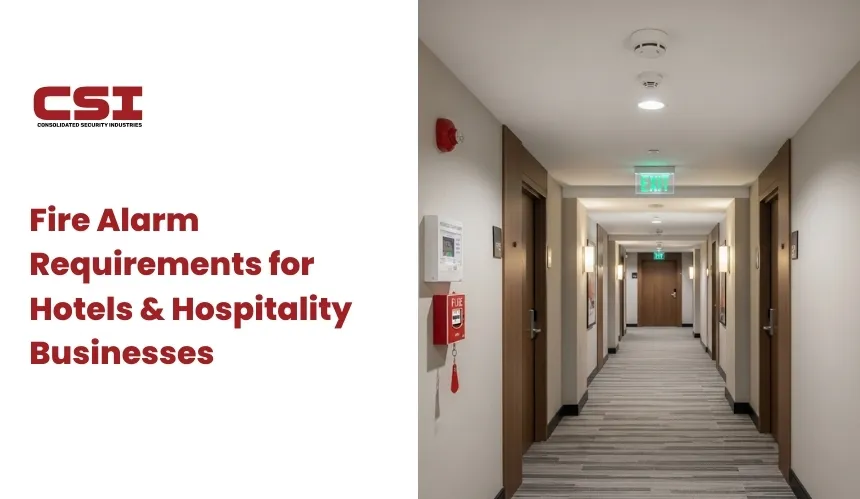
Fire Alarm Requirements for Hotels & Hospitality Businesses
A Quick Answer: Fire alarm requirements for hotels and hospitality businesses include mandatory smoke detection in guest rooms and corridors, approved notification appliances for occupants, code-compliant control panels, emergency communication capabilities, and routine inspection, testing, and maintenance based on NFPA, IBC, and local AHJ standards. |
Hotels depend on structured fire protection rules that outline how alarms must be installed, positioned, interconnected, and monitored across the property. These requirements exist because hotels accommodate large numbers of guests who may be unfamiliar with the building.
The hospitality environment also demands alarm systems that support clear communication, uninterrupted monitoring, and proper coordination with other life-safety components. This article covers the key codes, system components, and compliance that hotels must follow.
Why Fire Alarm Compliance Matters in the Hospitality Industry
Did you know? According to the National Fire Protection Association (NFPA), hotels and motels experience an estimated 3,900 structure fires every year, resulting in over $100 million in direct property damage. This highlights the need for proper compliance with fire alarm standards in the hospitality industry. |
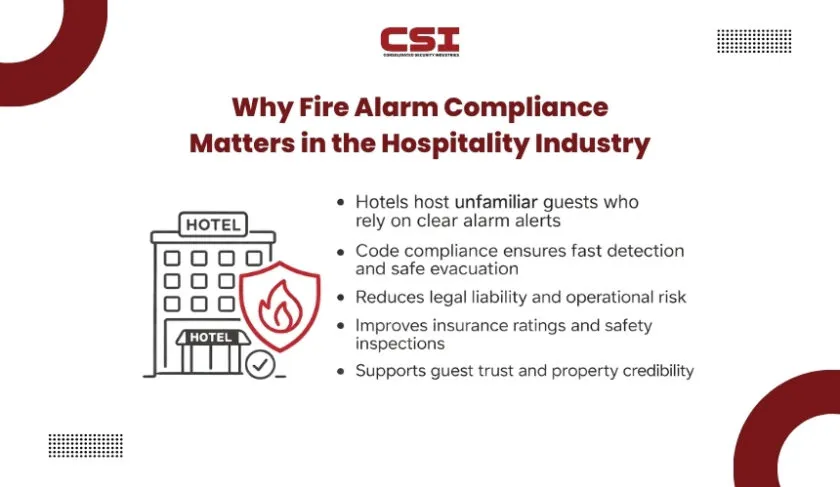
Fire alarm compliance is critical in hotels because it directly influences guest safety, operational reliability, and the property’s ability to meet regulatory expectations.
Hotels depend on highly coordinated safety systems, and any lapse in compliance can increase risks for both guests and staff.
How Do Fire Alarms Protect Guests and Reduce Hotel Liability?
Fire alarms give hotels a dependable way to detect hazards early, alert occupants, and guide people toward safe evacuation routes. This rapid response reduces injury risks and limits the likelihood of costly legal claims.
A compliant alarm system also helps demonstrate that the hotel took necessary steps to maintain a safe environment, which strengthens its defense during liability investigations.
How Does Fire Alarm Compliance Influence Insurance and Safety Ratings for Hotels?
Insurance providers evaluate the quality of a hotel’s fire alarm system when determining coverage terms and premium costs. Properties with up-to-date, code-compliant systems often receive more favorable rates because they present lower risk.
Compliance also supports stronger safety ratings from inspectors and boosts overall operational credibility, which helps hotels maintain trust with guests and regulatory bodies.
Important: Hotels with fully compliant fire alarm and detection systems reduce their risk of fatal fire incidents by up to 55%, based on NFPA life-safety findings related to early detection and occupant notification. |
Core Fire Alarm Requirements for Hotels
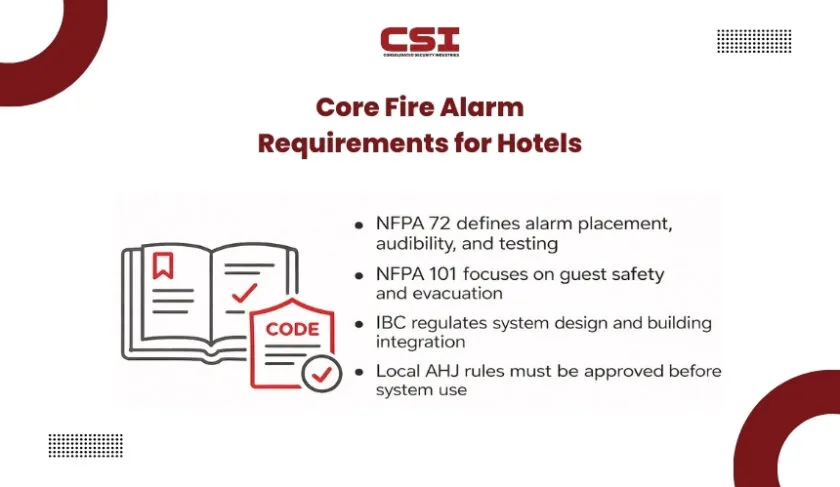
Hotels must follow formal fire protection standards that define how alarm systems are designed, installed, and maintained. These requirements come from national codes and local authorities, creating a structured framework that every hospitality property must meet to ensure safe operation.
1. NFPA 72
NFPA 72 outlines detailed criteria for system performance, including device placement, notification output, alarm audibility, and acceptable installation practices.
The standard specifies how smoke detectors must be spaced in corridors and shared areas, how notification appliances should reach occupants, and how control equipment must be configured for accurate monitoring. It also includes testing intervals to ensure that the system remains functional throughout the year.
2. NFPA 101
NFPA 101 focuses on occupant protection by defining how detection devices, corridor protection features, and guest room alarms must operate during an emergency. It includes rules for notification in sleeping rooms, acceptable routes for evacuation, and safety expectations for high-occupancy buildings. The code also guides how hotels must manage fire barriers and exit pathways to support safe movement during alarms.
3. International Building
The International Building Code sets structural and system requirements for new and renovated hotels. It classifies hotels under a specific occupancy type and outlines where detection devices, alarm panels, and notification appliances must be installed.
The code also addresses system integration, including connections to sprinklers, elevators, and ventilation controls, to ensure the building responds appropriately during a fire event.
4. Local AHJ Rules
Local Authorities Having Jurisdiction (AHJs) can add requirements that exceed national codes, and hotels must follow these rules to remain compliant during inspections. AHJs may dictate device placement adjustments, inspection frequencies, acceptable system types, and documentation expectations.
Since local conditions and regional risks vary, hotels must confirm approval from the AHJ before completing installation or upgrades.
Required Fire Alarm System Components for Hotels
Hotels rely on multiple interconnected fire alarm components that work together to detect hazards, notify guests, and support safe evacuation.
Each component serves a specific function, and code compliance depends on selecting the correct devices and placing them where they provide reliable coverage.
1. Detectors Used in Hotel Fire Alarm Systems
Hotels use a combination of smoke detectors, heat detectors, and multi-criteria sensors to identify fire conditions in different areas of the property. Smoke detectors are common in corridors, lobbies, and guest rooms, while heat detectors are used in kitchens, mechanical rooms, and spaces where smoke or steam may interfere with standard sensors.
Multi-criteria detectors offer enhanced accuracy by analyzing multiple signals at once, which helps reduce false alarms in busy hotel environments.
2. Notification Devices for Guest and Staff Alerts
Hotels must use a combination of horns, strobes, and speakers that provide clear and timely alerts throughout the building. Audible devices must reach the required sound levels, while visual appliances support guests with hearing impairments. Larger hotels may also use speaker systems that deliver evacuation instructions to help guide guests toward safe exits.
3. Fire Alarm Control Panels and System Management
A hotel’s fire alarm control panel manages communication between all detection and notification devices. Addressable panels help identify the exact location of an alarm, which improves response times and accuracy during emergencies.
Many panels also integrate with sprinklers, HVAC systems, elevators, and remote annunciators to coordinate building-wide responses when a fire condition is triggered.
4. Emergency Voice Communication Systems
Large hotels, high-rise properties, and resorts often require emergency voice communication to direct guests during an alarm. These systems allow staff to broadcast evacuation instructions that adjust to the situation.
Voice systems are especially important in buildings with multiple floors or complex layouts where guests may need clearer direction than audible tones alone can provide.
Fire Alarm Requirements for Hotel Guestrooms and Suites
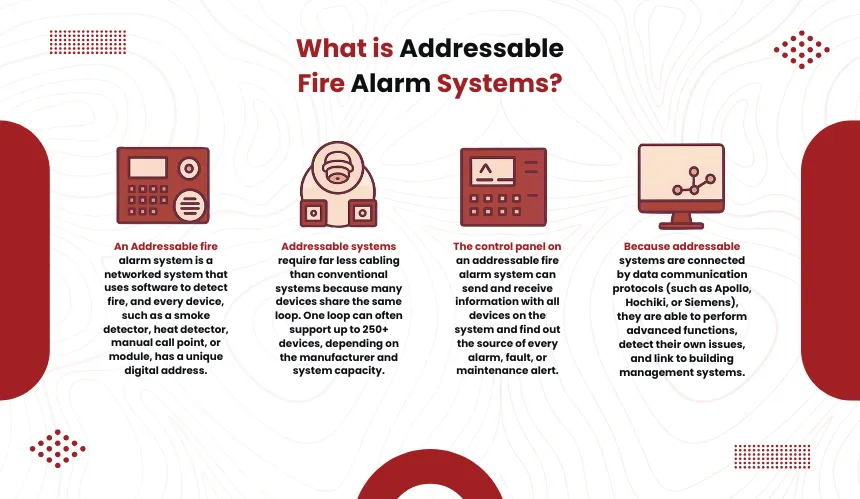
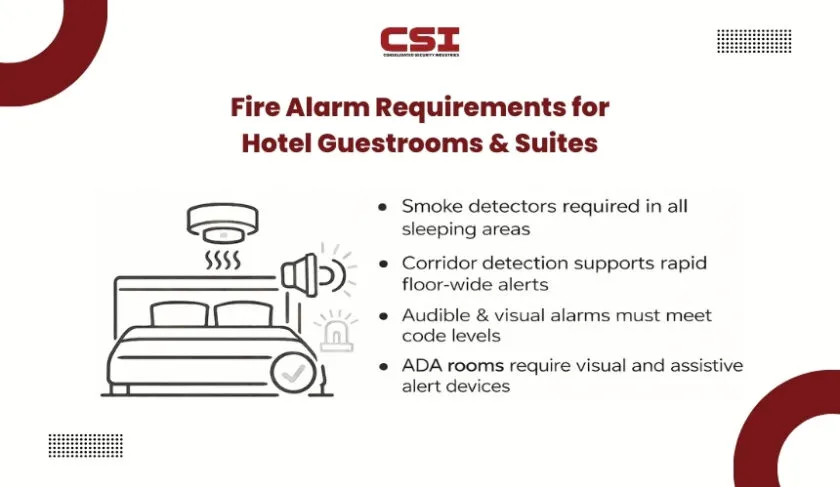
Guestrooms and suites require specialized fire protection features because they serve as sleeping areas where occupants are less aware of developing hazards.
Codes outline specific rules for device placement, notification visibility, and accessibility to ensure each room provides reliable early warning.
1. Smoke Detector Placement in Sleeping Areas
Smoke detectors must be positioned in locations that allow early detection without obstruction. Devices are typically installed on ceilings or high on walls, away from air vents and lighting fixtures that may interfere with airflow patterns.
Proper spacing ensures that smoke rising from different parts of the room reaches the detector quickly, giving guests enough time to respond. Detector spacing, ceiling/wall distance, and coverage area (NFPA 72 Chapter 17 & 18) should always be followed to meet code requirements.
2. Detection and Notification in Corridors and Adjacent Areas
Guestroom fire safety is supported by corridor detectors that activate when smoke travels outside the room. These devices help contain hazards and provide rapid notice to staff and guests on the same floor.
Corridor notification appliances also improve awareness by delivering consistent audible and visual alerts along evacuation routes. All notification devices should meet audible/visual appliance decibel/lumen requirements (NFPA 72 18.4, 18.5) to ensure effective alarm signaling.
3. Accessibility Requirements for ADA-Compliant Rooms
ADA-compliant rooms must include enhanced notification devices that accommodate guests with hearing impairments. Visual strobes, bed shakers, and other sensory alert systems help ensure all guests receive timely warning during an alarm. These devices must be interconnected with the room’s primary detection system to provide immediate activation.
Inspection, Testing, and Maintenance Requirements for Hospitality Properties
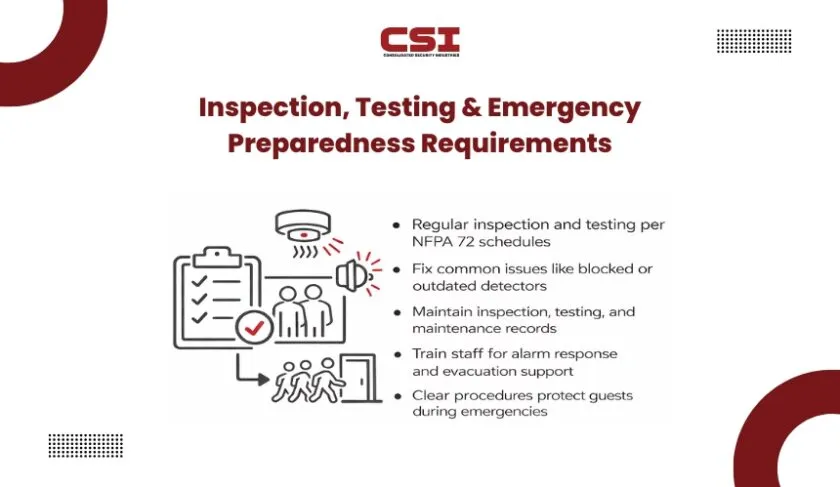
Did you know? NFPA data shows that smoke alarms operated in only 53% of hotel fires where alarms were present, often due to missing maintenance or outdated equipment. Proper inspection and testing dramatically improve reliability during emergencies. |
Hotels must follow consistent inspection and maintenance routines that keep their fire alarm systems reliable at all times. Working with a commercial alarm installation company helps ensure these tasks are completed correctly.
Trained technicians verify that detection and notification equipment perform as intended and that the property remains compliant with code expectations.
How Often Should Hotel Fire Alarm Systems Be Tested?
Hotels follow scheduled testing intervals that verify the functionality of detectors, notification appliances, control equipment, and communication pathways.
Weekly or monthly checks confirm basic readiness, while semiannual and annual evaluations provide a deeper review of device performance. These ongoing assessments help identify issues early and maintain dependable system operation.
What Problems Are Common During Hotel Fire Alarm Inspections?
Inspections often reveal problems such as outdated detectors, loose connections, blocked devices, or sensors that fail to meet sensitivity requirements. Environmental conditions like dust buildup or humidity fluctuations can also cause trouble signals.
Addressing these issues promptly helps prevent system failures and reduces the chance of unnecessary alarm activations.
What Documentation Must Hotels Maintain for Fire Alarm Compliance?
Hotels are required to maintain thorough documentation that includes inspection reports, maintenance logs, device inventories, and repair records. These documents verify compliance during audits and assist technicians during future service visits. Accurate records also support insurance reviews by demonstrating that required testing and repairs have been completed.
All inspection and maintenance schedules should follow documentation frequency (NFPA 72 10.6) to ensure proper compliance tracking.
Emergency Preparedness Requirements for Hotel Staff
Emergency preparedness is a critical part of hotel safety because guests depend on trained staff to guide them during fire events. Proper training and clear procedures help ensure that every team member understands their role in responding quickly and reducing risks. Staff training intervals should follow NFPA 101 requirements for fire safety education and drills.
What Training Should Hotel Staff Receive for Fire Alarm Response?
Hotel staff must be trained to recognize alarm signals, identify the source of activation, and follow established response steps. Training usually includes learning how to assist guests, communicate with emergency services, and handle evacuation duties.
Regular drills help staff stay familiar with these procedures, which improves response times and reduces confusion during real emergencies.
How Should Hotels Manage Guest Evacuation During Fire Alarms?
Hotels need clear evacuation protocols that guide guests from sleeping areas and common spaces to designated assembly points.
Staff members should know how to assist vulnerable guests, direct occupants toward safe routes, and maintain calm communication throughout the process. Effective evacuation plans help ensure guests understand where to go and how to move through the property safely.
How Do Hotels Support Special Populations During Emergencies?
Some guests may require additional assistance during evacuations, including older adults, children, individuals with disabilities, or travelers unfamiliar with the building layout.
Staff members should be trained to identify these guests quickly and provide the necessary support. This may involve offering physical guidance, locating accessible exits, or using approved evacuation devices when needed.
For hotels that want reliable fire protection and full code compliance, CSI Security offers professional fire alarm solutions tailored to the needs of the hospitality industry. Our team helps properties upgrade outdated systems, improve safety performance, and stay fully prepared for inspections.
Frequently Asked Questions
Do hotels need backup power sources for their fire alarm systems?
Yes. Hotels must use approved secondary power supplies such as backup batteries or generators, that keep the fire alarm system operational during outages. This ensures continuous monitoring and notification even when the main electrical source fails.
Are wireless fire alarm systems acceptable for hotel environments?
Some hotels use wireless fire alarm components, but approval depends on local codes and AHJ requirements. Wireless systems can help in retrofit projects or areas with structural limitations, but they must meet the same performance and reliability standards as wired systems.
How do hotels ensure reliable alarm communication with monitoring centers?
Hotels use communication methods such as cellular transmitters, IP-based connections, or dual-path systems to maintain stable contact with monitoring centers. These pathways ensure alarms reach responders quickly, even if one communication route fails.
What upgrades help older hotels improve their fire alarm systems?
Older hotels often upgrade to addressable control panels, modern detectors, and improved notification appliances. These updates enhance detection accuracy, reduce false alarms, and support integration with newer life-safety systems without requiring full system replacement.
How can hotels manage fire alarms during large events or peak occupancy periods?
Hotels should prepare for high-occupancy conditions by reviewing emergency staffing, reinforcing evacuation procedures, and verifying that all alarm devices are fully operational. This ensures that emergency communication remains effective even when guest traffic is at its highest.