
- csi_security
Understanding Fire Alarm Installations and Why Every Building Needs One
Fire emergencies escalate quickly, leaving little time to react. A fire alarm system acts as an early warning, giving people the crucial moments needed to evacuate safely and prevent major damage. Installing a reliable alarm is not just a safety measure; it is a legal requirement in most residential and commercial spaces.
Did you know? Fires can double in size every 30 seconds, making early detection by fire alarms critical for life safety. This rapid spread underscores why fast, reliable fire alarm systems are mandatory in most buildings, |
Without a fire alarm system, you risk property loss, higher insurance costs, and, most importantly, lives. In this guide, you’ll understand why fire alarm installations are essential, the options available, and how proper setup ensures compliance and peace of mind.
What Is a Fire Alarm Installation?
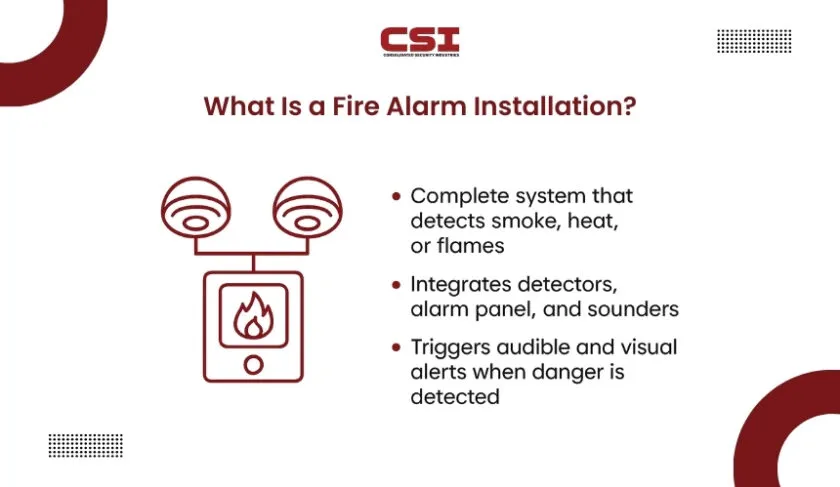
A fire alarm installation is the complete setup of a system designed to detect and alert occupants to smoke, heat, or flames. It involves more than placing a few devices on walls; it is an integrated network that connects detectors, alarm panels, sounders, and sometimes sprinklers to function as a single unit.
The system continuously monitors the environment for early signs of fire, triggering an audible and visual alarm when danger is detected.
Proper installation ensures that every component works together seamlessly, reducing response time during an emergency. In most cases, certified professionals handle the process to meet strict safety codes and ensure reliability.
Why Fire Alarm Installations Are Mandatory
Fire alarms are more than a precaution; they are a critical safety measure that saves lives and prevents catastrophic losses. Fires can spread at an alarming rate, often doubling in size within seconds. Without an early warning system, occupants may have little to no time to escape.
The impact of fire alarms goes beyond human safety. A small spark can cause extensive property damage if not detected in time. Fire alarms help minimize losses by alerting building occupants and emergency services before the situation becomes uncontrollable.
For your information: National Fire Protection Association (NFPA) data shows homes without working smoke alarms experience a fire death rate of 12.3 deaths per 1,000 reported fires, compared to 5.7 deaths per 1,000 in homes with working alarms. |
Another important factor is financial security. Many insurance providers view fire alarms as essential risk-mitigation tools. Properties equipped with reliable systems often qualify for lower premiums and faster claim approvals because the risk of severe loss is significantly reduced.
Key Components of Fire Alarm Installations
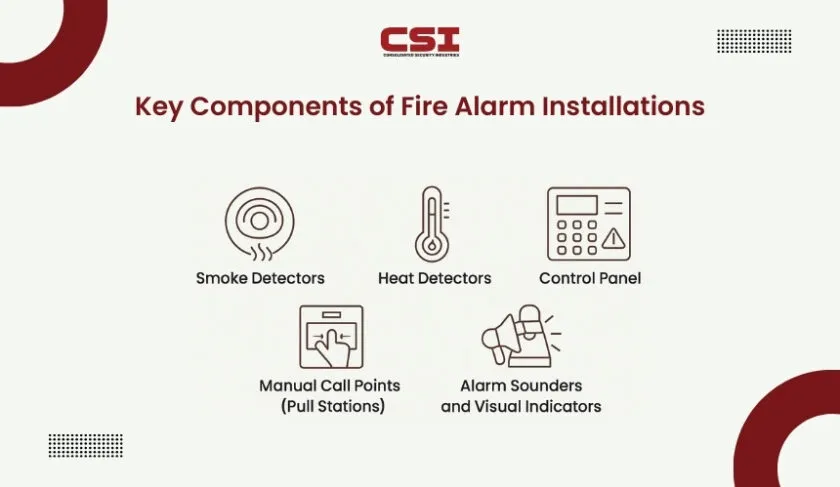
A fire alarm system is a network of carefully integrated devices, each with a specific role in detecting fire hazards and initiating an alert. Understanding these components not only helps you appreciate their importance but also highlights why proper installation is essential.
1. Smoke Detectors
Smoke detectors are the most common sensors in fire alarm systems. They operate by detecting particles created by combustion, using optical (photoelectric) or ionization methods to sense changes in air quality.
Optical detectors respond quickly to smoldering fires, while ionization detectors react faster to flaming fires. These devices are usually installed in hallways, bedrooms, and living areas to ensure early detection across critical points in a building.
This component is designed to give you the earliest possible warning, often before flames appear, so you can act quickly and keep everyone safe.
2. Heat Detectors
Heat detectors activate based on temperature changes rather than smoke. They either trigger when a fixed temperature is reached or when a sudden rise in heat is detected.
They are ideal for environments such as kitchens, garages, or boiler rooms, where smoke detectors might give false alarms due to cooking fumes or dust. These detectors work best as part of a comprehensive system that includes smoke detection in other areas.
Their main purpose is accuracy in high-heat zones, ensuring the alarm only sounds when there’s a real fire risk.
3. Control Panel
The control panel is the core of the fire alarm system. Acting as a central processor, it receives data from all connected detectors and manual call points.
When a threat is detected, it activates the alarm and sends alerts to monitoring stations or emergency services if the system is configured for remote response. Advanced models include LCD displays for detailed status updates and support functions like system testing and fault reporting.
Think of it as the brain of your system, managing communication and ensuring every part works in harmony during an emergency.
4. Manual Call Points (Pull Stations)
Manual call points provide a way for building occupants to trigger the alarm manually if they notice signs of fire before the detectors respond.
They are usually installed near exits and at eye level for quick and easy access during evacuation. Some models include protective covers to prevent accidental activation. Their main purpose is to let people take control and raise the alarm instantly when seconds count.
5. Alarm Sounders and Visual Indicators
These components are responsible for alerting everyone inside the building once the system detects a fire. Sounders produce loud alarms, while strobe lights or flashing indicators provide visual signals, which are especially important in noisy environments or for individuals with hearing impairments.
Some systems integrate voice evacuation messages for clearer and quick communication in large facilities.
When all these components function together, the system offers reliable, early warning against fire hazards, dramatically reducing risks to life and property.
Types of Fire Alarm Systems
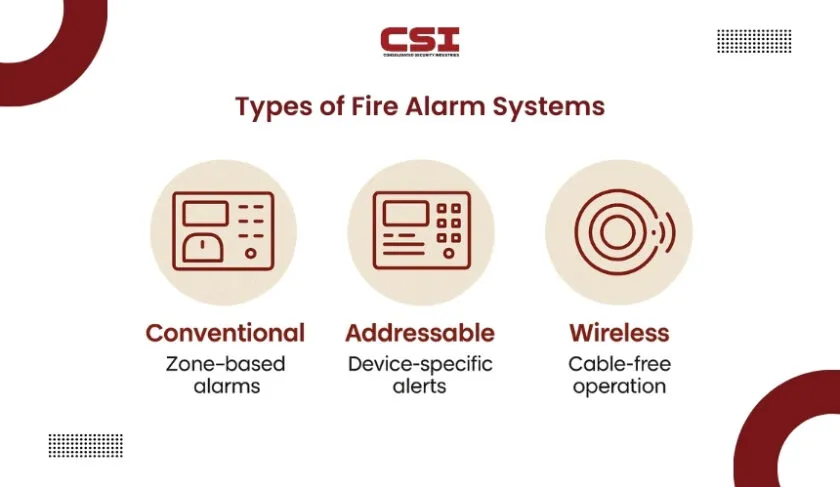
Fire alarm systems come in several configurations, each tailored to different property sizes, building layouts, and safety requirements. Understanding their distinctions helps you select the right solution for maximum protection and compliance.
1. Conventional Fire Alarm Systems
A conventional system divides a building into multiple zones, each linked to its own circuit. When an alarm is triggered, the control panel indicates the affected zone rather than the exact device. While not as advanced as other systems, it offers reliable basic protection.
Best suited for small-scale properties such as homes that require a dependable residential alarm system, as well as small offices and retail shops where pinpoint accuracy is less critical.
Key Advantages of Conventional Fire Alarm Systems:
- Cost-effective solution: Lower initial investment makes it ideal for budget-conscious projects.
- Simple design: Easy to install and maintain in buildings with fewer rooms or open floor plans.
2. Addressable Fire Alarm Systems
Addressable systems assign a unique digital address to every connected device, enabling the control panel to identify the exact location of an alarm or fault.
These systems provide detailed monitoring and advanced functionality, making them highly dependable in complex environments.
They are ideal for large facilities where a commercial alarm system is critical, including hospitals, educational institutions, and high-occupancy buildings that demand precise and advanced fire detection.
Key Advantages of Addressable Fire Alarm Systems:
- Immediate pinpointing: Identifies the exact device and location, allowing faster emergency response.
- Advanced diagnostics: Provides detailed system health reports, reducing downtime and maintenance costs.
3. Wireless Fire Alarm Systems
Wireless systems replace traditional wiring with secure radio signals for communication between devices and the control panel. They offer a modern, flexible alternative to wired setups and significantly reduce installation time.
They are best for historic buildings, temporary structures, and renovation projects where running cables is impractical or may damage the property’s structure.
Key Advantages of Wireless Fire Alarm Systems:
- Flexible deployment: Perfect for locations where wiring limitations exist or layout changes frequently.
- Minimal disruption: Quick installation without extensive drilling or structural modifications.
The right fire alarm system depends on building size, occupancy type, compliance requirements, and long-term maintenance considerations. Choosing the correct type ensures reliability and adherence to safety standards.
What Does the Law Say About Fire Alarm Systems?
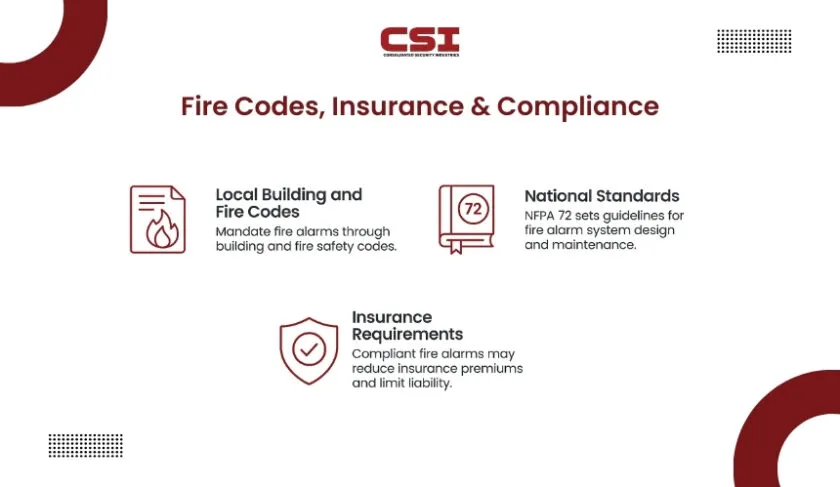
Fire alarm installations are a legal requirement in most regions, enforced through national standards and local building codes. These regulations ensure that every property has the necessary safety infrastructure to protect occupants and minimize fire-related risks.
Complete fire alarm systems are compulsory for commercial properties, multi-family housing, and high-occupancy buildings. These systems typically include smoke and heat detectors, manual call points, alarm sounders, and monitoring capabilities.
Local Building and Fire Codes
The International Building Code (IBC) and International Fire Code (IFC) establish when a fire alarm system must be installed. These codes consider factors such as occupancy type, building size, and level of fire risk.
- IBC primarily applies to new construction projects, outlining fire alarm requirements during design and permitting.
- IFC governs existing buildings, ensuring fire alarm systems remain operational through inspections, testing, and maintenance.
Local authorities adopt these model codes and often include additional provisions. Common amendments may require integration with sprinkler systems, third-party monitoring, or enhanced coverage in high-risk zones.
Non-compliance can result in fines, occupancy delays, or legal penalties, particularly for high-occupancy buildings like hospitals, schools, and high-rise facilities.
National Standards for Installation and Maintenance
Once a fire alarm system is required by IBC or IFC, its design and operation must comply with NFPA 72: National Fire Alarm and Signaling Code, published by the National Fire Protection Association. NFPA 72 sets the technical benchmarks for:
- System design and layout
- Detector and notification device placement
- Testing and inspection intervals
- System performance and reliability
This standard ensures that all installed systems function effectively during an emergency, providing early warning and proper signaling to protect life and property.
Insurance and Legal Liability
Insurance providers typically require documented proof of a compliant fire alarm system. Failure to meet these requirements may lead to denied claims or higher premiums.
Building owners may face legal action if injuries or fatalities occur due to inadequate fire protection. Maintaining compliance is essential for both safety and financial protection.
Following these codes ensures that your property remains legally operational while meeting the highest standards of fire safety.
Professional Installation vs. DIY
Installing a fire alarm system may seem like a straightforward task, but the reality is far more complex. From understanding wiring layouts to meeting legal requirements, the installation process involves more than mounting a few detectors.
Choosing between professional installation and a do-it-yourself approach can have a significant impact on system reliability and safety.
Why Professional Installation Matters
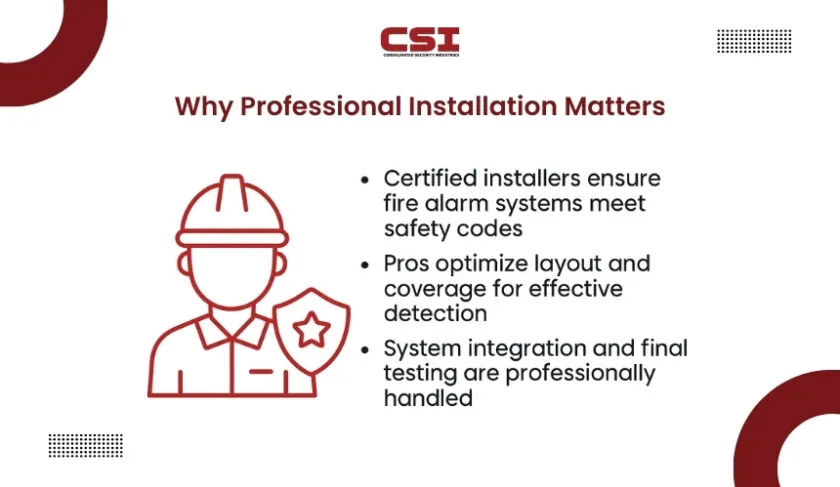
Certified fire alarm installers are trained to design and implement systems that comply with local codes and international standards. They evaluate your property layout, identify high-risk zones, and ensure detectors and alarms are placed in optimal positions for maximum coverage. This level of precision is difficult to achieve without specialized knowledge.
Professionals also handle system integration with other safety mechanisms, such as sprinklers or emergency lighting, and conduct final testing to confirm everything functions as intended. Their work is often backed by compliance certificates, which serve as proof for insurance companies and regulatory authorities.
The Risks of DIY Installation
A do-it-yourself approach might seem cost-effective at first glance, but it carries significant risks. Incorrect placement of detectors can delay smoke or heat detection, compromising early warning. Inadequate wiring or poor connections can cause frequent false alarms or complete system failure.
DIY installations also rarely meet the detailed requirements outlined in building codes. This non-compliance can result in denied insurance claims, legal penalties, or costly reinstallation work later. In the worst-case scenario, an improperly installed system may fail during an actual fire, leading to devastating consequences.
Did you know? Approximately 3 in 5 home fire deaths happen in houses without working smoke alarms. About 40% of these homes had no smoke alarms installed, while another significant share had non-functioning alarms. |
Making the Right Choice
If your goal is long-term safety, legal compliance, and peace of mind, professional installation is the clear choice. While DIY may save money upfront, the hidden costs and safety risks far outweigh the short-term savings. Trusting experts is not an expense, it is an investment in security and reliability.
For dependable fire alarm solutions tailored to residential and commercial properties, CSI Security delivers certified installation and maintenance with dedicated patrol units ready to respond to monitored alarms. Ensure compliance, safeguard assets, and maintain 24/7 security with systems designed for maximum performance and reliability.
Frequently Asked Questions
What’s the difference between a fire alarm system and a smoke detector?
A smoke detector senses smoke, whereas a fire alarm system includes smoke/heat detectors, control panels, notification devices, and sometimes monitoring.
When a detector triggers, it sends a signal to the control panel, which then activates alarms and alerts responders. A smoke detector alone can’t coordinate response actions like a full system does, making the latter essential for organized fire safety.
How often must fire alarm systems be tested and inspected?
According to NFPA 72, fire alarm systems must undergo:
- Monthly visual inspections,
- Semi-annual or annual functional testing,
- Periodic full-system maintenance
Maintenance logs must be kept, and failure to comply can lead to code violations.
Do fire alarm systems need to interconnect with sprinklers or emergency lighting?
Yes, local codes (IBC/IFC) often mandate integration of fire alarm systems with sprinklers, emergency lighting, and monitoring services. Such interconnections enhance occupant safety by ensuring a coordinated response. They automatically activate alarms, lights, and emergency services simultaneously during events.
Can I install a fire alarm system even if it’s not required?
Absolutely. A building owner may choose voluntary installation. However, once installed, NFPA 72 standards apply, which means detectors, wiring, controls, and testing must meet code requirements. This ensures systems are safe, reliable, and maintainable, even if not mandated by codes.