
- csi_security
How Fire Alarm Devices Communicate: From Sensors to Central Monitoring
A Direct Answer: Fire alarm devices communicate through wired or wireless networks that send signals from detection devices to a central control panel. The control panel triggers audible and visual alerts and can also send a signal to a remote monitoring station to notify emergency services. |
This article explores the inner workings of fire alarm communication, from signal processing in fire alarm systems to intelligent data flow between sensors, panels, and central monitoring systems for fire alarms.
Understanding the Core Function of Fire Alarm Communication Systems
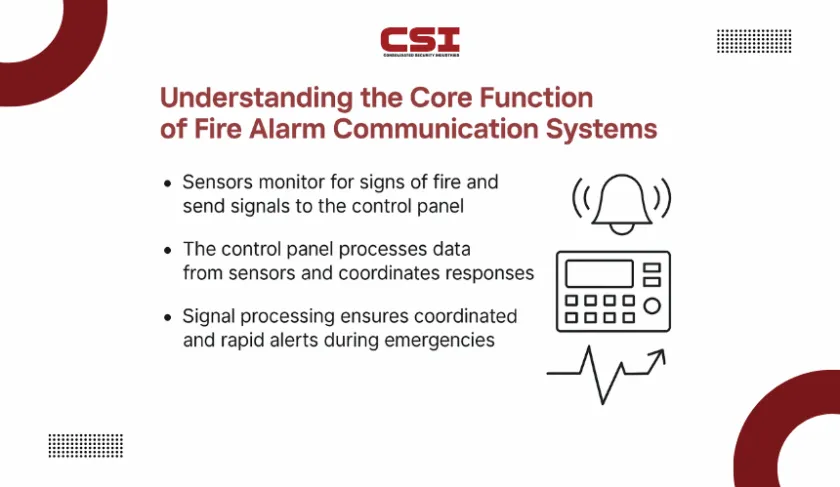
Before exploring how data travels through a fire alarm network, it is important to understand what enables that communication in the first place. The components of a fire alarm create an information pathway that detects, interprets, and responds to potential fire events.
What Are the Main Components of a Fire Alarm Communication System?
Every fire alarm communication system is built on three core components: sensors, control panels, and output devices.
- Sensors detect physical indicators of fire such as smoke, heat, or gas. Each sensor continuously monitors its environment and, upon detection, converts environmental data into an electronic signal.
- This signal travels to the control panel, which functions as the decision-making unit. The panel analyzes data from all connected sensors, determines whether an alarm condition exists, and sends appropriate responses to notification devices or the central monitoring system for fire alarms.
- Output devices, including sirens, strobes, and visual alerts, notify building occupants immediately once an alarm is verified
This coordinated response ensures that both local warnings and remote communications occur almost simultaneously.
How Does Signal Processing in Fire Alarm Systems Work?
The flow of data between devices is governed by precise fire alarm system communication protocols. When a sensor detects smoke or heat, the signal undergoes multiple verification stages inside the control panel to avoid false alarms.
Each piece of information is encoded into a digital message containing details such as the sensor address, event type, and signal priority. This process ensures that alarms, supervisory events, and trouble signals are accurately identified and transmitted without delay.
Modern systems often employ addressable communication loops where every device has a unique identifier. This allows the panel to pinpoint the exact location of a triggered device, improving both response speed and maintenance efficiency.
In larger facilities, these signals can be automatically sent to 24/7 alarm monitoring services for fire alarms using fire alarm communication standards such as NFPA 72 and UL 864. This ensures that the system meets safety codes, maintains consistent performance, and allows all connected devices to work together reliably.
How Fire Alarm Devices Communicate Within a Building
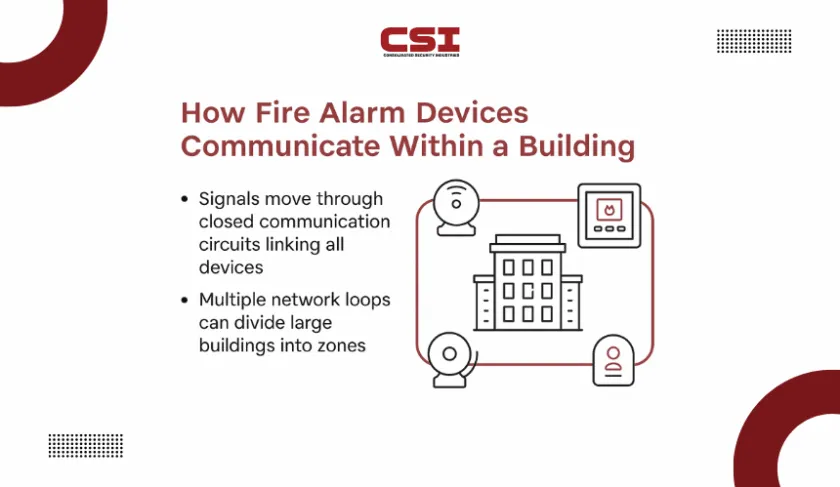
When a fire-related event occurs, signals move through a closed communication circuit that links all devices together. These pathways form a loop or network where messages travel in both directions, ensuring that data can still reach the control unit even if one segment becomes damaged.
Large buildings often rely on multiple network loops that divide the structure into zones. Each loop operates independently but reports back to the same control system. This structure helps localize potential issues, prevents full-system downtime, and keeps communication intact across the rest of the property.
How Do Wired and Wireless Systems Differ Inside a Building?
Traditional systems use hardwired circuits that transmit signals through copper connections. These are valued for their stability and resistance to interference. In contrast, modern facilities frequently use wireless or hybrid setups that combine radio frequency links with wired lines.
This configuration simplifies installation, especially during upgrades, while maintaining strong communication reliability. A commercial alarm installer typically evaluates which setup best fits the building’s layout and regulatory requirements, ensuring the system maintains full communication efficiency.
Wireless networks also allow easier expansion when new devices are added. The control system automatically recognizes these additions, ensuring that each new device becomes part of the active communication pathway without major reconfiguration.
How Do Fire Alarms Communicate with Central Monitoring Services?
After the control panel verifies an alarm condition, it sends an outbound signal to a central monitoring system for fire alarms. This external center, often referred to as a supervising or monitoring station, receives alarm data instantly through dedicated communication channels.
These channels can include cellular networks, internet-based IP connections, or radio frequency transmitters, depending on how the system is configured. Older systems relied heavily on traditional phone lines, but modern facilities have transitioned to faster and more reliable digital methods.
The monitoring center’s software continuously listens for signals, ensuring that alarms, supervisory alerts, and system trouble notifications are received without delay. Once an alarm arrives, trained operators verify the event and immediately contact emergency responders such as the fire department or local safety authorities.
What Role Does Data Transmission Play in Remote Communication?
Reliable fire alarm data transmission methods are the foundation of remote monitoring. When a signal leaves the building, it carries encoded information that identifies the property, the event type, and the location of the triggering device. This data helps operators understand whether the alert is a genuine emergency or a maintenance-related signal.
To maintain high performance, most modern systems use encrypted or redundant communication paths that guarantee delivery even if one connection fails. Backup transmitters, dual-path cellular links, or IP failover options ensure that the system remains functional under all conditions.
Why Are Communication Standards Important for Remote Monitoring?
The transmission of fire alarm signals to external centers must comply with strict fire alarm communication standards. Standards such as NFPA 72, UL 864, and SIA DC-09 define how data is formatted, transmitted, and verified. They also set performance benchmarks for response times, redundancy, and supervision intervals.
NFPA 72: National Fire Alarm and Signaling Code
Defines the installation, performance, testing, and maintenance requirements for fire alarm systems in the United States. It ensures that all components communicate reliably and that signals reach monitoring stations within the required time frame.
UL 864: Control Units and Accessories for Fire Alarm Systems
Sets performance and safety requirements for fire alarm control panels and related equipment. It verifies that control units can handle power interruptions, signal overloads, and environmental stresses without losing communication integrity.
SIA DC-09: Alarm Industry Communications Standard
Establishes digital communication formats for transmitting alarm data between fire alarm systems and central monitoring stations. It ensures compatibility among devices from different manufacturers and supports encrypted, error-free data transfer.
Modern Communication Technologies Transforming Fire Alarm Systems
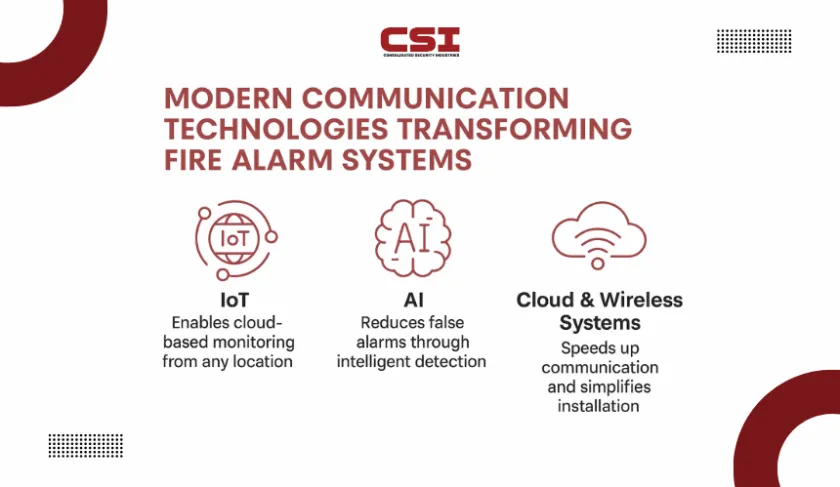
Fire alarm communication has evolved far beyond wired circuits and traditional phone-line monitoring. Today’s systems use advanced technology that enhances speed, reliability, and integration with other safety infrastructures.
Did you know? Industry benchmarks show that smart building fire integrations can reduce false alarms by 60% and improve emergency response coordination by 30% compared to outdated systems. |
What Is the Role of IoT in Fire Alarm Communication?
The Internet of Things (IoT) enables fire alarm devices to connect over cloud-based platforms where data from multiple sites can be managed in real time. This allows safety teams to monitor alarms, maintenance alerts, and battery levels remotely from mobile or desktop dashboards.
IoT-enabled devices also provide predictive insights, identifying potential faults before they trigger alarms. This makes the entire safety system proactive rather than reactive, reducing downtime and improving overall protection for high-occupancy or multi-site properties.
What Role Does AI Play in Modern Fire Detection?
Artificial intelligence is transforming how fire alarms detect and interpret signals. AI-powered systems analyze sensor data to distinguish between real fire conditions and harmless triggers such as dust or steam. This capability significantly reduces false alarms and ensures that response teams are only dispatched for verified emergencies.
AI also supports advanced signal processing in fire alarm systems, allowing faster decision-making and adaptive sensitivity based on environmental conditions.
How Do Cloud and Wireless Systems Improve Fire Alarm Communication?
Cloud-based monitoring systems allow communication between buildings and remote centers without the need for physical servers. Data is stored and processed online, providing access to historical event logs and compliance records.
In addition, wireless fire alarm communication enhances scalability and flexibility in complex environments. Wireless devices communicate through encrypted radio frequency signals, making installation easier and signal transmission faster, even in large industrial or commercial properties.
Should You Choose Wired, Wireless, or Hybrid Communication for Fire Alarms?
Selecting an appropriate communication setup requires balancing performance, cost, and compatibility with a facility’s infrastructure.
Choose wireless communication if:
- The building layout makes cable installation difficult or expensive.
- The project involves retrofitting an older property or expanding an existing system.
- Rapid installation and scalability are key requirements.
- You need a modern system that meets code standards while minimizing disruption.
Choose wired communication if:
- The environment demands maximum reliability, such as hospitals or industrial facilities.
- There is potential for signal interference from electronic or structural elements.
- The system must maintain continuous power and consistent communication under all conditions.
- The infrastructure already supports conduit and wiring networks.
Choose hybrid communication if:
- You want the stability of wired systems with the flexibility of wireless connections.
- The site includes a mix of open and restricted areas where both technologies can complement each other.
- The goal is to expand a wired system without major reconstruction.
- Compliance with NFPA 72 and UL 864 standards is required while optimizing cost and installation time.
Reliable fire alarm communication is the foundation of every safe facility. CSI Security offers expert installation and maintenance services for commercial and residential alarm systems. Contact us to schedule a consultation and ensure your building’s fire alarm communication system meets the highest standards of safety and reliability.
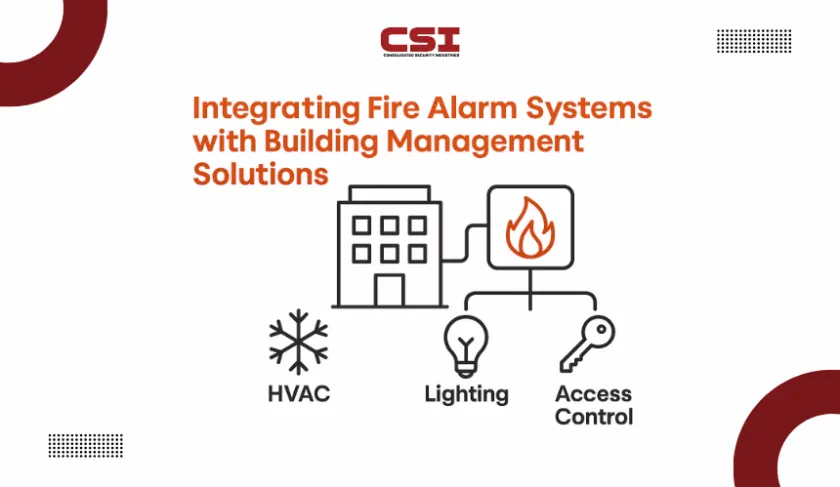
Integrating Fire Alarm Systems with Building Management Solutions
Did you know? Integrated fire alarm communication systems enable 45% faster evacuation times during emergencies compared to basic alarm setups, which is crucial for minimizing injuries and fatalities. |
Fire alarm communication becomes even more powerful when integrated with broader building automation systems.
How Do Fire Alarms Integrate with Other Safety Systems?
Integration allows fire alarm systems to share data with HVAC, lighting, access control, and sprinkler systems. When an alarm is triggered, these systems can automatically adjust air circulation, unlock emergency exits, and activate suppression equipment.
This connected environment improves response efficiency and enhances occupant safety by coordinating every part of the building’s emergency protocol.
Why Are Integrated Systems Beneficial?
A unified building management platform reduces human error and centralizes monitoring. Facility managers can oversee alarms, maintenance schedules, and event history from a single dashboard. This not only simplifies operations but also ensures that safety procedures happen instantly and accurately when needed.
Frequently Asked Questions
How do smart buildings use fire alarm data for facility management?
Modern smart buildings connect fire alarm systems with analytics platforms that use sensor data to identify trends, predict maintenance needs, and coordinate emergency responses across other systems such as lighting or HVAC. This helps reduce false alarms and supports faster decision-making during critical events.
Can fire alarm systems be integrated with mobile notification platforms?
Yes. Many new systems support mobile applications that send push alerts or SMS messages directly to building managers and emergency teams. These notifications provide live updates on alarm status, device location, and response progress, improving communication beyond on-site control rooms.
What cybersecurity measures protect cloud-connected fire alarm systems?
Fire alarm networks that use cloud or IP communication include encryption, multi-factor authentication, and secure data channels to prevent unauthorized access. Some manufacturers also offer remote firmware updates to patch vulnerabilities and strengthen long-term data protection.
How do environmental conditions affect wireless alarm communication?
High humidity, temperature extremes, or metal structures can interfere with wireless signals. Engineers use frequency hopping and network redundancy to counter these effects, ensuring that signals still reach the control system reliably even in complex building layouts.