
- csi_security
DIY vs. Professional Alarm Installation: What’s Best for Your Home Security?
When it comes to securing your home, one of the most critical decisions is how your alarm system will be installed. Should you handle it yourself with a DIY kit, or hire professionals to do it right the first time?
With over 1 million home burglaries reported annually in the U.S. and growing demand for smart-home-compatible security solutions, this choice can significantly impact your system’s effectiveness, reliability, and response readiness.
DIY alarm systems offer convenience, lower upfront costs, and the ability to install on your own schedule, but they also come with technical responsibilities and potential security gaps.
On the other hand, professional installation ensures optimal sensor placement, system calibration, and integration with 24/7 monitoring services, all tailored to your specific property layout and risk level.
Did you know? Studies reveal that more than 60% of burglars stop their break-in attempt when they detect a security alarm. |
In this article, we’ll break down the pros and cons of DIY systems, explain what professional installation truly involves, and help you decide which approach is best for home security installation.
Why Is This Decision Important?
The way your security cameras are installed can be the difference between a deterrent that fails under pressure and a security solution that responds instantly when it counts.
According to the FBI Uniform Crime Reporting Program, a burglary occurs approximately every 25 seconds in the U.S., and homes without effective alarm systems are significantly more likely to be targeted.
A home security system depends on precise sensor placement, seamless integration, and accurate calibration. Poorly installed systems can leave critical areas unmonitored, increase false alarms, and delay emergency response times.
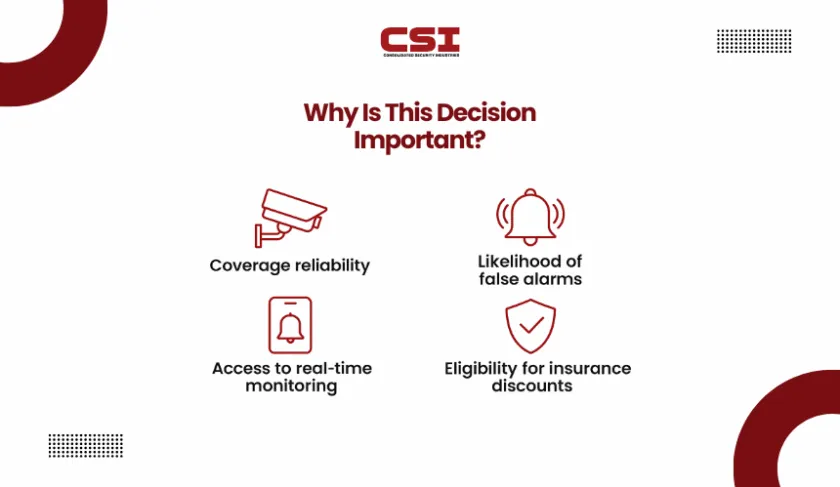
Additionally, with the rise of smart home ecosystems, many modern systems now connect with fire alarms, video surveillance, mobile apps, and voice assistants. Whether you choose a DIY path or rely on professionals, the installation method you choose will influence:
- The system’s coverage reliability
- The likelihood of false alarms
- Your access to real-time monitoring and emergency dispatch
- Your eligibility for home insurance discounts
In short, the installation route is a foundational decision that shapes your overall security strategy. In the sections below, we will explore what you gain and what you risk with each approach.
DIY Alarm Systems: Pros and Cons
DIY alarm systems have surged in popularity due to their lower cost, fast setup, and compatibility with today’s smart-home lifestyles.
They’re shipped as ready-to-install kits that let homeowners take control of their own security without waiting for a technician.
But while DIY options offer flexibility and savings, they also come with notable limitations, especially when it comes to coverage accuracy, reliability, and long-term peace of mind.
Pros of DIY Installation
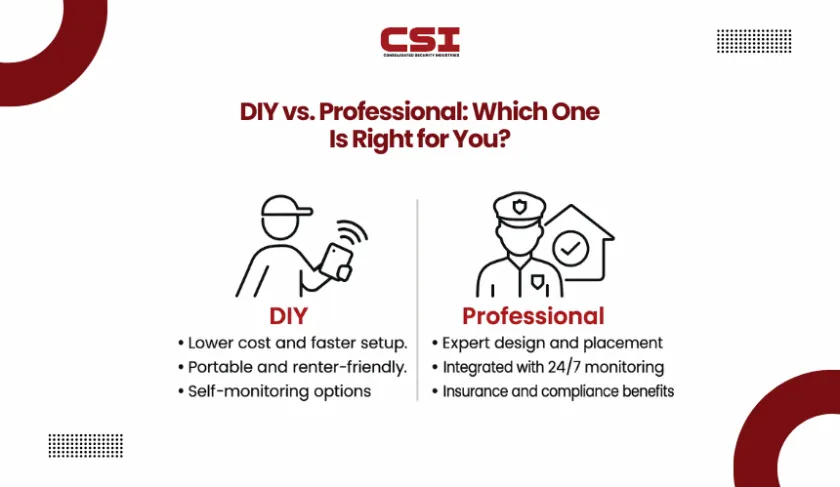
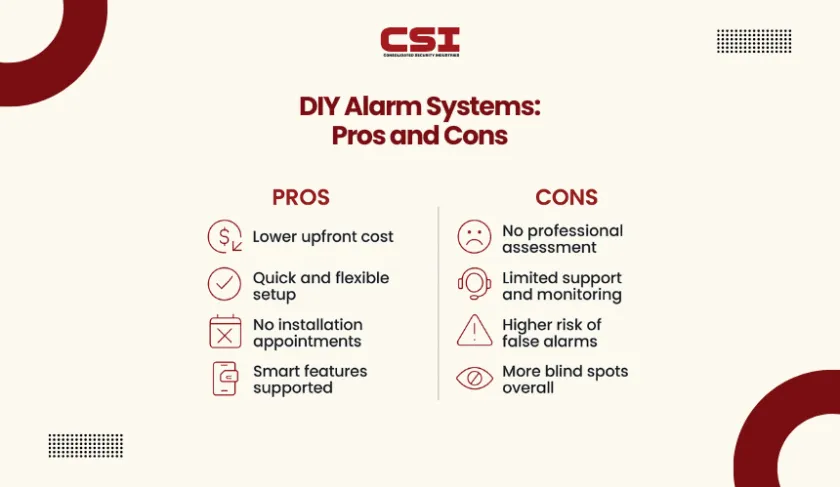
- Lower Upfront Cost: Most DIY security kits range from $150 to $500, depending on the number of sensors and smart features. In comparison, professionally installed systems can run $800 to $1,500 or more, including labor and setup fees. With DIY, you bypass technician charges entirely and pay only for the hardware.
- Fast, Flexible Setup with No Appointments: DIY systems are designed for quick self-installation. Most kits include peel-and-stick wireless sensors and in-app setup guides, allowing you to complete the job in under an hour. No drilling or wiring required.
- Perfect for Renters and Frequent Movers: Because DIY systems are wireless and portable, you can easily uninstall and take them with you. This makes them a smart fit for apartment dwellers or people in temporary housing.
- Smart Features Built In: Many DIY kits support mobile alerts, two-way audio, motion-triggered video recording, and integration with Alexa, Google Assistant, or Apple HomeKit. You still get smart home automation convenience without hiring an installer.
Cons of DIY Installation
- No Professional Layout or Risk Assessment: With DIY, you are in charge of deciding where to place sensors and cameras. That often leads to missed blind spots, improper angles, or failure to cover critical entry points like basement windows or second-story access points.
- Limited Support When Something Goes Wrong: Most DIY brands offer remote customer service only. If a sensor fails, a false alarm is triggered, or your app crashes, you’re left to troubleshoot or replace parts on your own, sometimes at your own cost.
- Emergency Response Isn’t Always Included: DIY systems typically default to self-monitoring, meaning you receive alerts but must call 911 yourself. While some brands offer paid professional monitoring, they often lack the direct integration with emergency dispatch centers that professional systems include by default.
- Increased False Alarm Risk: Without calibration or proper sensor spacing, DIY systems tend to trigger more false alarms, especially from pets, HVAC drafts, or motion overlaps. Some cities even fine homeowners for repeat false alarms when no threat is present.
DIY alarm systems are best suited for small homes, tech-savvy users, or those on a strict budget. But if you’re seeking full-coverage protection, automatic emergency response, and peace of mind backed by a professional team, DIY might fall short.
What Is Professional Alarm Installation & When Should You Choose It?
Unlike DIY systems that rely on self-installation, professionally installed security systems involve certified security technicians who assess your property, develop a customized protection plan, and install your alarm system for maximum performance.
It is not just about placing a few sensors; it is about designing a comprehensive security infrastructure tailored to your home’s layout, entry points, and threat profile.
What’s Included in Professional Installation?
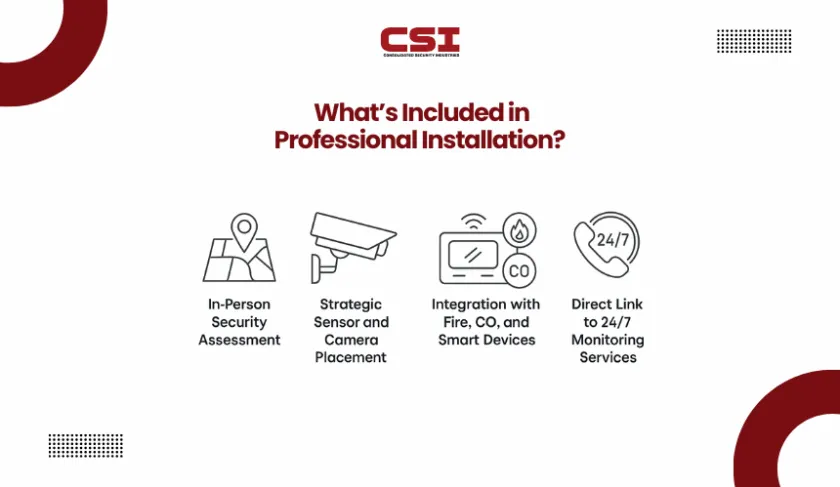
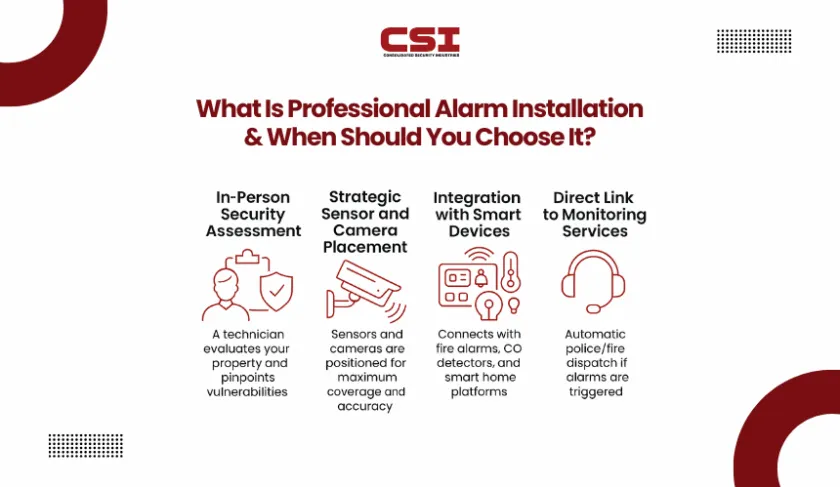
- In-Person Security Assessment: A trained technician visits your home to identify vulnerable zones, such as rear entrances, dark exterior corners, and second-story access points that many homeowners overlook.
- Strategic Sensor and Camera Placement Professionals ensure sensors are spaced correctly, mounted at optimal heights, and calibrated to minimize false alarms. Cameras are placed to capture clear lines of sight and avoid obstructions like light glare or motion overlap.
- Integration with Fire, CO, and Smart Devices: Many professionally installed systems can be integrated with fire alarms, carbon monoxide detectors, flood sensors, and smart home platforms for unified control through a central hub or app.
- Direct Link to 24/7 Monitoring Services: Professionally installed systems are often pre-configured to connect to UL-listed monitoring centers, enabling immediate police or fire dispatch if an alarm is triggered. No manual response is needed.
- Compliance and Insurance Benefits: Installations performed by licensed providers often meet BSIS (California) or local regulatory standards. Many homeowners also receive insurance discounts of 5% to 20% for certified systems.
When Should You Choose Professional Installation?
You should strongly consider hiring professionals if:
- You Own a Home or Plan to Stay Long-Term: For permanent residences, professional systems offer longer lifespan, deeper integration, and better return on investment than portable DIY setups.
- Your Property Has Multiple Entry Points or Larger Square Footage: Homes with multiple floors, garages, sliding doors, or large backyards need layered protection, which can be difficult to achieve without a trained eye.
- You Want Automatic Emergency Dispatch: If you’re away from home often or can’t monitor alerts 24/7, professional systems provide peace of mind with real-time intervention.
- You Prefer a Hands-Off, Hassle-Free Setup: No wiring, drilling, troubleshooting, or app syncing. Your entire system is professionally installed, tested, and ready to use the same day.
- You’re Concerned About Missed Vulnerabilities: Professionals can detect and address less obvious threats like blind zones, crawl space access, or signal interference, which DIY users often miss.
Why risk blind spots or false alarms with a system you’re unsure about? With expert setup, real-time monitoring, and smart-home integration, your alarm system should do more than just make noise. That’s where CSI Security comes in, offering professionally installed solutions designed to protect every inch of your home with confidence.
Frequently Asked Questions
Can I combine DIY installation with professional monitoring or setup support?
Yes, you can choose a hybrid approach. Install the hardware yourself, then add professional monitoring or request a technician to finalize the configuration. This offers cost savings with a safety net.
Can I mix wired and wireless devices in a professional installation?
Yes, you absolutely can. Many modern pro-installed systems use hybrid setups, combining wired sensors for reliability with wireless cameras for flexibility. This approach helps cover all zones, including outbuildings or garages, while minimizing installation complexities.
What communication backup options exist if Wi‑Fi fails or gets jammed?
The best professional systems use dual-path communication: Wi‑Fi or landline backed up by cellular. Experts and users agree this is the most secure setup. If one fails, the other bridges the gap.
How scalable are DIY alarm systems as my security needs grow? (H3)
Most DIY kits support adding more sensors and cameras, but may face range limits or app compatibility issues as you expand. Larger homes often benefit from professional-grade systems or range extenders for reliable coverage.