
- csi_security
Understanding the Different Types of Alarm Signals and What They Mean
Alarm signals exist to grab your attention for one critical purpose: safety. Every tone, flash, or vibration carries a clear message about what’s happening and what action you should take.
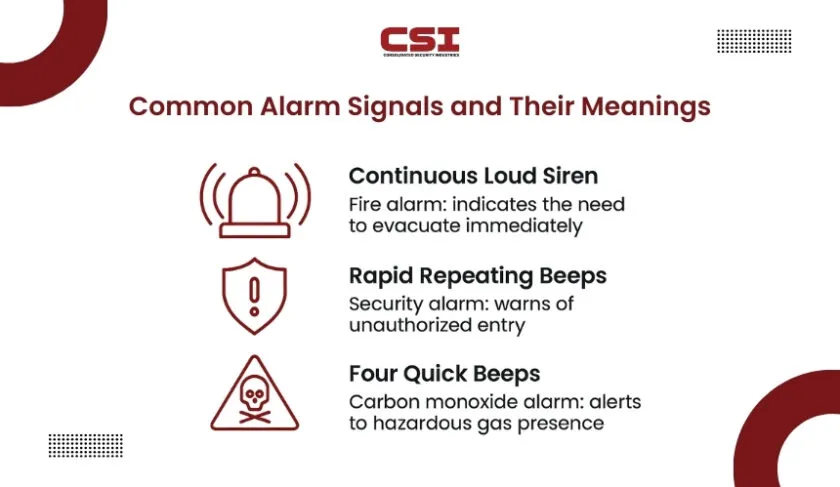
A continuous loud siren often signals a fire emergency, while short, intermittent beeps may indicate smoke detection or a low battery. Rapid, high-pitched beeps can point to a security breach, and four quick chirps followed by a pause typically warn of carbon monoxide.
This guide will help you recognize the most common alarm signals and explain what each one means so you can respond quickly and correctly when it matters most.
What Are Alarm Signals?
Alarm signals are structured alerts that communicate a specific condition or danger. They are designed to grab attention and guide the next step. These signals come in three main forms: audible sounds, visual indicators, and digital notifications.
Audible alarms include steady sirens, intermittent beeps, or patterned chirps. Each sound type is intentional so you can distinguish between emergencies like fire, gas leaks, or security breaches. Visual signals such as flashing red lights or color-coded LEDs support audible alerts in loud areas or help those with hearing challenges.
Digital notifications work through mobile apps or system dashboards, providing instant details even when you are away from the alarm source.
Common Alarm Signals and Their Meanings
Alarm signals are not random sounds. Each tone, pattern, or alert is programmed to indicate a specific situation. Understanding these signals ensures that you take the right action without hesitation. Below are the most common types of alarm signals and what they mean.
Fire Alarm Signals
- Continuous Loud Siren: This sound signals an active fire. It means immediate evacuation is required. Do not waste time investigating; leave the building and follow your fire safety plan.
- Intermittent Beeping: Short beeps at regular intervals usually indicate smoke detection. This is an early warning that something is burning. Inspect the area quickly, but be prepared to evacuate if the sound changes to a continuous tone.
- Voice Message Alerts: Some modern systems use spoken instructions. These provide clear evacuation guidance such as “Leave the building immediately” or “Do not use elevators.” Always follow these directions without delay.
Did you know? Homes with working smoke alarms are 2.9 times less likely to have a fire reported to the fire department than those without them. |
Security Alarm Signals
- Rapid Repeating Beeps: This pattern indicates unauthorized entry or a triggered security sensor. It means a possible break-in. Move to a safe area and contact security or law enforcement.
- Long Beep with Flashing Light: This usually signals incorrect arming or disarming of the security system. Check your security panel and reset as needed.
- Silent Alarm Activation: This is a covert alert sent to a monitoring service during emergencies like a robbery. You will not hear a sound, but help will be on the way if your system is connected to professional monitoring.
Carbon Monoxide and Gas Alarm Signals
- Four Quick Beeps Followed by a Pause: This signal warns of carbon monoxide presence. Leave the area immediately, open windows for ventilation, and contact emergency services.
- Continuous High-Pitched Tone: This indicates a gas leak. Do not switch on electrical devices. Evacuate and call the gas company or emergency responders.
Did you know? In 2017, 399 people in the U.S. died from unintentional, non-fire carbon monoxide poisoning, and fire departments responded to about 79,600 CO incidents annually. This underscores the importance of timely gas leakage detection. |
Medical Alert Signals
- Single Beep Repeated at Intervals: This often means a request for medical assistance. Respond quickly, especially if connected to an elderly care or hospital system.
- Flashing Red Indicator with Beeping: This signals a critical condition such as low oxygen or abnormal vital signs. Immediate attention is required.
Visual Alarm Indicators
Alarm systems do not rely on sound alone. Visual indicators are an essential part of alert systems, especially in environments where noise levels are high or when accommodating individuals with hearing difficulties.
These indicators use lights or color signals to convey specific conditions, and understanding them ensures you can interpret alerts accurately even without sound.
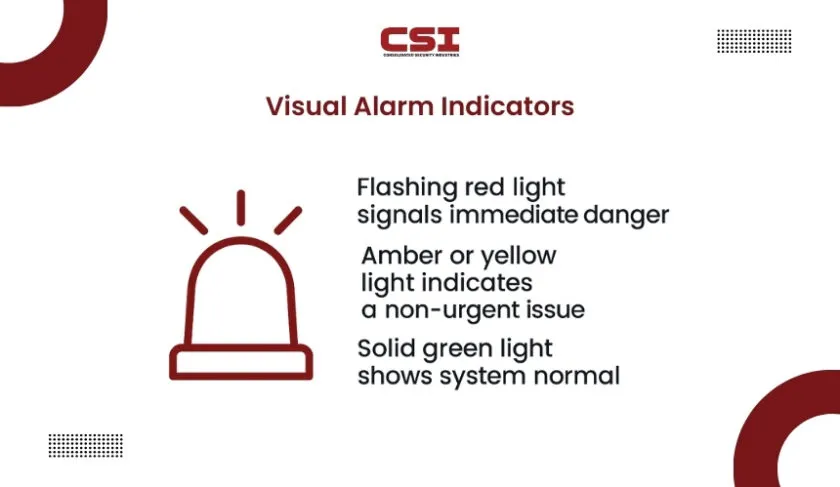
- Flashing Red Light: This typically signals an immediate danger such as fire or a critical system alarm. When you see a red flashing light, evacuate or take the recommended emergency action without delay.
- Amber or Yellow Light: This color often indicates a system fault, maintenance requirement, or a non-urgent issue. It means the system is not operating at full capacity and needs inspection soon to prevent potential failure.
- Solid Green Light: A steady green light generally means the system is functioning normally. It confirms that sensors and monitoring components are active and working as expected.
- Alternating Lights: Some alarms use a combination of flashing colors to indicate multiple conditions, such as a fault combined with an active alert. Always refer to the system’s guide if you encounter alternating signals.
Visual cues are designed to complement audible alarms, ensuring redundancy in safety communication. They play a critical role in industrial settings, hospitals, and homes equipped with advanced smart systems.
Digital and Smart Alarm Notifications
Modern alarm systems extend beyond sounds and lights by delivering alerts through digital platforms. These notifications are designed to keep you informed no matter where you are, ensuring you can respond quickly even when away from the physical alarm source.
- Mobile Push Notifications: Smart alarms often send instant alerts to your smartphone through dedicated apps. These notifications provide details such as the type of alarm, location, and suggested actions. For example, a push alert might say, “Smoke detected in kitchen, evacuate immediately.”
- SMS and Email Alerts: Many systems offer text message or email alerts for added redundancy. These messages are particularly useful when internet connectivity is unstable. They often include time stamps and specific event logs for accurate tracking.
- System Dashboard Notifications: For businesses or integrated security networks, centralized dashboards display real-time alerts. These dashboards allow you to monitor multiple zones, check sensor status, and manage responses from one interface.
- Voice Assistant Integration: Advanced alarms connect with smart assistants like Alexa or Google Home. They provide spoken alerts and can trigger automated actions such as turning on lights or unlocking doors during an emergency.
Digital notifications enhance situational awareness by providing context and actionable information. They make remote monitoring practical and ensure that critical warnings never go unnoticed.
How to Respond to Alarm Signals
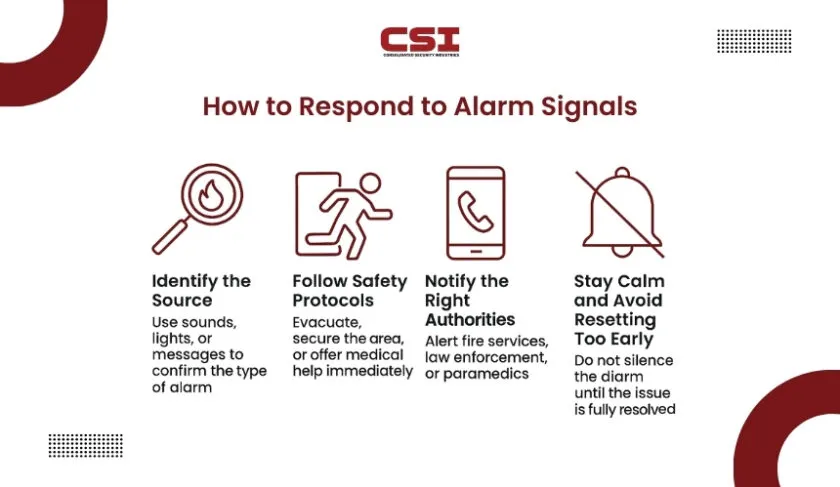
Responding to alarm signals correctly is crucial for safety. Each type of alert requires a different approach, and acting without hesitation can prevent harm or property damage. Here is a clear guide for handling various situations:
1. Identify The Source
As soon as you hear or see an alarm, determine its origin. Check whether it is a fire alarm, security alert, gas warning, or medical signal. Use the specific sound pattern, light indicator, or digital message to confirm the type.
2. Follow Safety Protocols
For fire or gas alerts, evacuate the area immediately using designated exits. Avoid elevators and assist others if possible. In security incidents, move to a secure location and avoid confrontation. For medical alerts, provide assistance or call emergency services right away.
3. Notify the Right Authorities
Once you are in a safe location, report the incident. For fire or gas emergencies, contact fire services or utility companies. For break-ins, call law enforcement. If the alarm relates to a medical emergency, provide accurate details to paramedics.
4. Use Backup Systems When Needed
If the primary alarm system fails or continues after the situation is resolved, activate backup alarms or manual alert devices. This ensures safety until the main system is restored.
5. Stay Calm and Avoid Resetting Too Early
Never reset an alarm before confirming the issue is resolved. Premature resets can delay critical responses and put people at risk.
A well-structured response plan minimizes panic and ensures that everyone knows what to do during an alert. Quick recognition and proper action are as important as the alarm itself.
For reliable protection and rapid incident handling, CSI Security offers advanced alarm systems with professional monitoring and armed patrol response. Ensure every alert is addressed immediately and every property remains secure with solutions designed for maximum safety and peace of mind.
Frequently Asked Questions
Can smart fire or gas alarms distinguish between real threats and harmless events like cooking smoke or steam?
Yes. Many advanced fire and gas alarms now include multi-sensor technology that combines heat, smoke, and air quality readings to determine whether an alert is genuine. These systems often feature AI-driven algorithms that learn patterns over time, reducing false triggers from common sources such as cooking fumes, steam from showers, or dust particles.
How do cloud-connected alarm systems protect data and user privacy from hacking or manipulation?
Cloud-connected alarm systems use encrypted communication, secure servers, and multi-factor authentication. Regular updates and strong passwords further protect against cyberattacks. For extra safety, alarms should run on a dedicated IoT network.
What sensor type is best for detecting different gases such as carbon monoxide, natural gas, or propane?
Carbon monoxide (CO) alarms use electrochemical sensors, which measure CO levels through chemical reactions, providing high accuracy and stability. For natural gas or propane detection, catalytic bead sensors or infrared sensors are commonly used because they detect combustible gases by measuring changes in heat or light absorption.
Placement matters: CO alarms should be installed near sleeping areas, while gas detectors should be near appliances and low to the ground since propane is heavier than air.
What causes alarm fatigue, and how can it be avoided to ensure genuine alerts are never ignored?
Alarm fatigue occurs when individuals are exposed to frequent false alarms or non-urgent alerts, causing them to become desensitized and slower to respond to real emergencies. To avoid this, regular system maintenance and proper sensor calibration are essential.
Advanced systems with self-learning algorithms and multi-sensor validation help reduce nuisance alarms by confirming multiple conditions before triggering an alert.
Are certain alarm signals or systems required by law in rental properties, especially for CO detectors?
Yes. Many regions mandate smoke alarms in every sleeping area and at least one on each level of the property. Carbon monoxide detectors are often required near bedrooms and fuel-burning appliances. Regulations can also specify alarm type (hardwired or battery-powered) and replacement intervals, typically every 7 to 10 years.
What are the best practices for placement of sensors (height, room location, avoidance zones)?
Proper sensor placement ensures maximum accuracy. Smoke alarms should be installed on ceilings or high on walls because smoke rises.
- CO detectors work best near bedrooms but should not be placed in bathrooms or next to fuel-burning appliances to avoid false alarms.
- Gas detectors for natural gas should be placed high, near ceilings, while propane detectors should be low since propane settles near the floor.
Avoid locations near windows, vents, or fans where airflow can interfere with detection. Following manufacturer guidelines and local regulations is essential for correct installation.