
- csi_security
Top Commercial Alarm System Trends For 2026: AI, Cloud Monitoring & Mobile Access
The security landscape for businesses is evolving rapidly, driven by advancements in technology that are reshaping how commercial alarm systems operate. As we look toward 2026, businesses are increasingly turning to innovative solutions like artificial intelligence (AI), cloud-based monitoring, and mobile access to enhance their security infrastructure.
These technologies not only improve threat detection and response time but also provide greater control and flexibility, allowing businesses to manage their security systems from anywhere at any time.
In this article, we will explore the key trends shaping commercial alarm systems in 2026 and why businesses must consider adopting these innovations to stay ahead in the evolving security landscape.
AI-Powered Commercial Alarm Systems
As we move to 2026, AI is transforming the way businesses protect their premises, offering a level of automation and intelligence that traditional alarm systems simply cannot match. AI-powered commercial alarm systems use advanced algorithms to analyze vast amounts of data from surveillance cameras, motion detectors, and other sensors.
What is AI in Alarm Systems?
AI in alarm systems refers to the integration of machine learning and advanced algorithms that enable these systems to adapt and learn from patterns in their environment.
Unlike conventional systems that rely on preset triggers (like motion detection or manual input), AI systems continuously learn and improve their ability to detect threats autonomously. This results in more reliable and proactive security management.
How AI Enhances Threat Detection and Response
One of the most significant benefits of AI in commercial alarm systems is its ability to enhance threat detection and response. With AI, systems can recognize unusual patterns, such as a person loitering near a restricted area or abnormal behavior that might indicate a security breach.
AI’s machine learning models can also analyze video footage for facial recognition or license plate identification, alerting security personnel only when a real threat is detected, thus minimizing false alarms.
By leveraging predictive analytics, AI-powered alarm systems can even foresee potential threats by detecting subtle patterns that might go unnoticed by human operators. This allows businesses to take preventive action before an incident escalates.
The Rise of Cloud-Based Monitoring in Alarm Systems
Cloud technology is revolutionizing how commercial alarm systems are managed, offering unprecedented flexibility and scalability. Instead of relying on expensive hardware and local storage, cloud-based systems allow businesses to monitor their security from any location, using an internet connection.
What is Cloud Monitoring and How Does It Work?
Cloud monitoring refers to the practice of using cloud computing platforms to manage alarm systems remotely. Security data, such as footage from cameras, sensor activity, and alarm triggers, is stored on the cloud, making it accessible from any device connected to the internet.
Cloud systems are highly adaptable and can be customized to meet the specific needs of a business, whether it’s a single office or multiple commercial properties.
Benefits of Cloud-Based Alarm Systems for Commercial Properties
The benefits of cloud-based alarm systems are clear. First, they eliminate the need for on-site storage and hardware, reducing costs and maintenance requirements. Businesses can also take advantage of automatic software updates, ensuring their systems are always equipped with the latest security features.
Additionally, cloud monitoring provides enhanced security against local system failures, as data is stored off-site and is less susceptible to being compromised in case of a physical break-in. For businesses looking to implement a reliable solution, working with a trusted commercial alarm installation company ensures a smooth transition to cloud-based systems.
Cloud systems also offer the ability to integrate seamlessly with other IoT (Internet of Things) devices, providing a comprehensive security solution that includes everything from access control to environmental monitoring. This integration makes it easier for businesses to manage their entire security ecosystem from a single platform.
How Cloud Monitoring Facilitates Remote Access and Control
Cloud-based systems offer another major advantage: remote access. Business owners and security managers no longer need to be on-site to manage alarms or respond to security alerts.
With cloud monitoring, you can access security systems via a computer or mobile device, giving them real-time control over their alarm system, cameras, and other devices.
This flexibility is gaining popularity as we move towards 2026, and it ensures that security personnel can respond quickly to emergencies, even if they are not physically present.
Cloud monitoring also enables businesses to grant secure access to authorized personnel, allowing for efficient management of security across multiple locations.
How Mobile Access is Transforming Alarm Systems
In today’s fast-paced world, the ability to manage security from anywhere is crucial. As we approach 2026, mobile access for alarm systems enables business owners and managers to keep an eye on their premises no matter where they are.
How Mobile Apps Are Revolutionizing Commercial Alarm Systems
Mobile apps designed for alarm systems allow users to control, monitor, and receive alerts about their security systems directly from their smartphones or tablets.
These apps typically feature intuitive interfaces that give users the ability to arm or disarm their alarm systems, view camera feeds, and receive instant notifications if an alarm is triggered. With these apps, security management becomes seamless and accessible at any time.
For business owners who are often away from the office, mobile apps provide peace of mind, ensuring that they can stay on top of security matters, even while traveling. The convenience of mobile access makes it easy for managers to make quick decisions and take action when necessary, all from the palm of their hand.
Step-by-Step Guide to Choosing the Right Alarm System in 2026
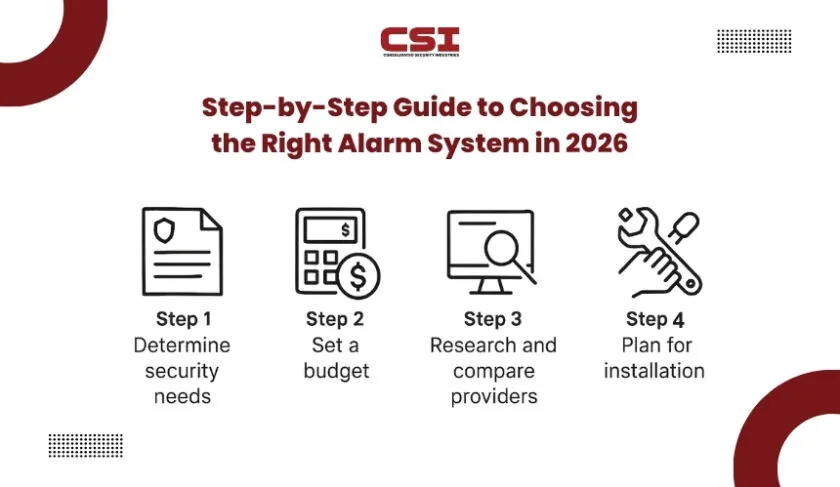
Choosing the right alarm system for your business in 2026 involves understanding the latest technologies and aligning those capabilities with your specific security needs.
This step-by-step guide will help you navigate the process of selecting, purchasing, and installing an alarm system that fits your requirements.
Step 1: Determine Your Business’s Security Needs
Start by conducting a thorough risk assessment and evaluating your existing infrastructure. Identify areas of vulnerability and decide whether you need advanced features like AI-powered threat detection, cloud-based storage, or mobile accessibility. For businesses with multiple locations or 24/7 operations, consider systems that allow remote monitoring.
Step 2: Set a Budget
Next, establish a realistic budget for your security system. While AI and cloud-based systems may have a higher initial cost, they can offer long-term savings through increased efficiency and reduced maintenance. Weigh the upfront investment against the benefits of enhanced security and peace of mind.
Step 3: Research and Compare Providers
Research top alarm system providers that offer the features you need. Look for reputable companies that specialize in AI, cloud-based monitoring, and mobile integration. Compare the features, pricing, and customer reviews to find the best options.
Step 4: Create a Features Checklist
Use a checklist to ensure the system you choose includes all the necessary features. Key items may include:
- AI capabilities for smart threat detection and video analytics
- Cloud storage for remote data access and automatic updates
- Mobile access for real-time control and alerts
- Integration with other devices, like access control and environmental sensors
Step 5: Plan for Installation
Once you’ve selected your system, plan for installation. Professional installation is often recommended to ensure that all components are set up properly and are fully integrated. Many security companies provide expert installation services to ensure that your system is installed efficiently and correctly.
Step 6: Test and Customize the System
After installation, conduct thorough testing to ensure the system is functioning as expected. Customize the settings to align with your business’s security protocols. This might include configuring alarm triggers, adjusting camera settings, or setting up notifications for specific events.
Upgrading your business’s security system in 2026 is a smart investment that will pay off in the long run. If you’re ready to take the next step, trust CSI Security for residential and commercial security alarm installation. Contact us today to schedule a consultation and secure your business’s future with the latest in security technology.
Frequently Asked Questions
How does AI improve the accuracy of commercial alarm systems?
AI enhances alarm system accuracy by analyzing patterns in real-time, distinguishing between potential threats and false alarms. This ensures faster, more reliable responses to actual security risks.
What are the key differences between cloud-based and hybrid alarm systems?
Cloud-based systems store all data remotely, offering scalability and ease of access, while hybrid systems combine cloud storage with on-premise hardware for added security and control.
How secure is cloud-based alarm monitoring from cyber threats?
Cloud-based systems are typically secured with encryption, multi-factor authentication, and regular software updates, making them resistant to most cyber threats. However, businesses must choose providers with robust security measures in place.
Are there any specific industries that benefit more from AI-powered alarm systems?
Industries with high security needs, such as retail, healthcare, and manufacturing, benefit most from AI-powered systems. AI can help manage high volumes of security footage and detect unusual behavior in busy environments.
How do AI and machine learning adapt to new security threats over time?
AI and machine learning systems continuously learn from data, allowing them to detect evolving security threats and improve accuracy. They adjust to new patterns, ensuring that security systems stay ahead of emerging risks.