
- csi_security
How to Choose the Best Alarm Monitoring Services for Your Home
The best alarm monitoring service is the one that guarantees a fast, verified response when real danger strikes, whether it is a break-in, fire, or medical emergency.
Choosing the right provider is not about brand names or flashy apps. It’s about knowing how quickly your alerts will be answered, how reliably they’re verified, and whether help will actually come when you need it most.
This guide breaks down every decision point from central station vs. self-monitoring, response time benchmarks, communication paths, smart home compatibility, hidden costs, and licensing requirements, so you can choose a monitoring service that’s actually built to protect your home, not just market to it.
Things You Should Always Consider Before Choosing an Alarm Monitoring Service
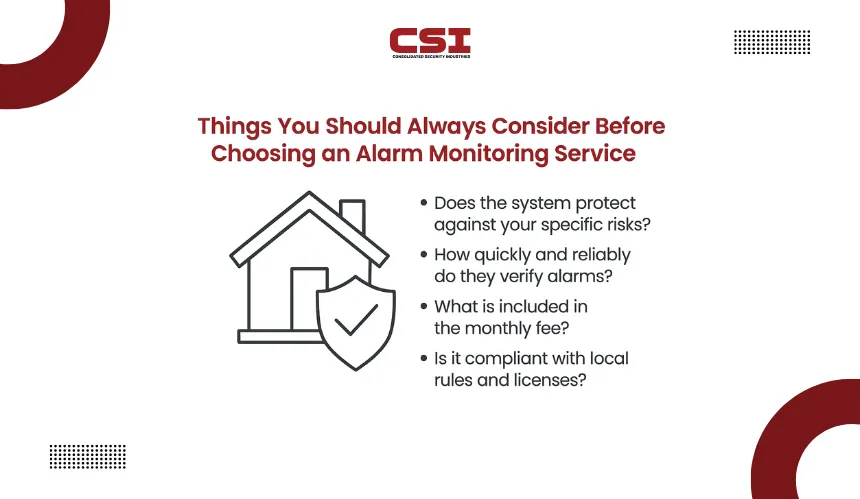
Choosing an alarm monitoring service means knowing whether the system can truly protect your home from the specific risks you face, like break-ins, fires, carbon monoxide leaks, or medical emergencies.
You need to consider how quickly the monitoring center responds when something goes wrong, and whether they verify the threat before dispatching help.
It is also important to know exactly what the monthly service includes, how well it integrates with your smart home devices, and whether the company is properly licensed and compliant with local laws. Let’s break down the eight main considerations:
1. Understand the Different Types of Alarm Monitoring Services
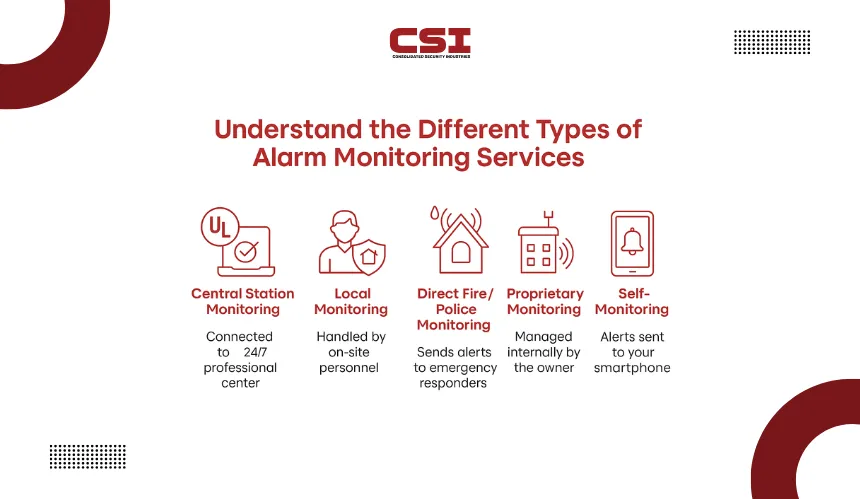
Choosing the right alarm monitoring type is the foundation of your home security system, it determines who responds when danger strikes, and how fast. Each method comes with its own structure, reliability level, and response flow. The five main types of alarm monitoring services are described below:
Central Station Monitoring
This is the most widely used and trusted form of professional alarm monitoring. Your alarm system is connected to a UL-certified central monitoring station, where trained security professionals are available 24/7.
When a threat is detected, such as a fire, break-in, or medical emergency, these operators receive the signal, verify the event, contact the property owner, and dispatch emergency services when needed.
Central stations often have redundant power supplies, backup communication paths, and response time standards regulated by industry certifications like UL or TMA (CSAA). This makes it the most reliable choice for homeowners who want guaranteed, third-party oversight.
In a true emergency, central station monitoring ensures someone responds, even if you are asleep, unreachable, or out of town.
Local Monitoring
Local monitoring relies on someone within or near the premises, such as a security guard, front desk attendant, or building staff member to receive and respond to alarms. The system may trigger lights, sirens, or internal alerts, but no external service is automatically contacted.
While this setup can work in your commercial or multi-unit buildings with staff on-site, it poses serious risks for homes. Human error, delays in response, and lack of escalation protocols can lead to critical failures when seconds matter.
Local monitoring puts full responsibility on the people present. If no one hears or reacts to the alarm, there’s no protection your property.
Direct Fire or Police Monitoring
This specialized method connects your alarm system directly to a municipal emergency response center, typically fire or police departments. When triggered, the signal bypasses any monitoring station and goes straight to the relevant authority for immediate dispatch.
While rare for residential use, some jurisdictions still allow this setup for fire alarms or panic systems in high-risk areas. However, strict permitting and reliability requirements make it impractical or even prohibited in many regions.
It enables the fastest possible response for the protection of your home, but typically requires municipal approval. False alarms may carry legal consequences.
Proprietary Monitoring
In a proprietary system, the owner or a designated team on the premises handles all alarm signals internally. This setup is common in large commercial facilities, schools, or campuses with full-time security staff.
Although it offers full control over how and when alarms are handled, it requires trained personnel, infrastructure, and constant availability. For residential homes, proprietary monitoring is not only uncommon. It is often cost-prohibitive and ineffective for your home security.
Proprietary systems work only when backed by sufficient staffing, training, and infrastructure, which most homes don’t have.
Self-Monitoring
Self-monitoring sends alerts directly to your smartphone through a mobile app. You receive notifications instantly when a sensor is tripped, but it’s entirely up to you to decide what to do next. You may verify the threat, call emergency services, or ignore the alert.
It’s affordable and flexible, but also risky. If your phone is off, on silent, or out of service, you won’t know anything is happening. And if you miss the alert, no one else is coming.
Self-monitoring provides visibility, but no backup. In critical moments, it can fail when you need it most.
2. Understand Your Security Needs
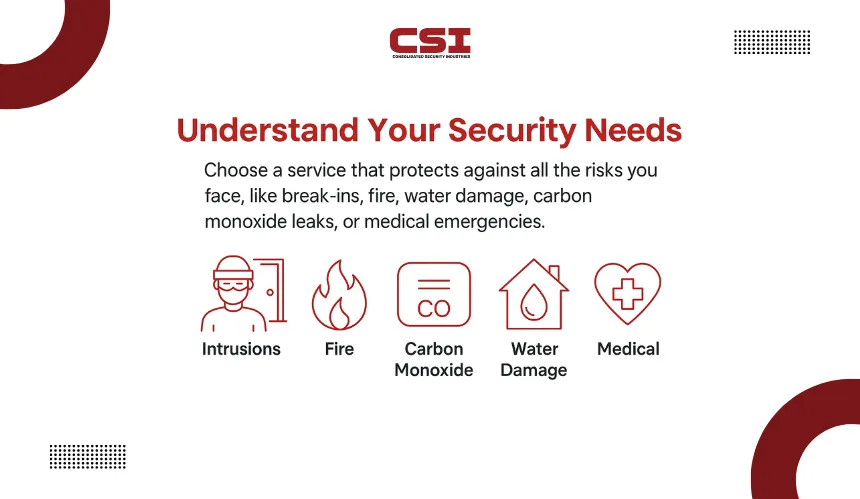
To choose the right alarm monitoring service, you first need to understand what you’re protecting, what risks exist in your home, and which types of emergencies you want the system to detect and respond to.
This means looking beyond just break-ins and considering things like fire hazards, gas leaks, water damage, and even medical emergencies, especially if you have seniors, children, or vulnerable family members at home.
Important: If your current system only protects against break-ins, you could be missing over 60% of household threats. A good alarm monitoring service should watch over everything that puts your home, or your life at risk. |
Let’s break down the five most common risks your home may face, and why your alarm monitoring plan needs to be built around them:
Intrusions and Break-Ins
This is the most common reason people install alarm systems. Door/window sensors, motion detectors, and glass-break sensors all work together to detect unauthorized entry. But detection is only half the job. What matters most is how quickly that signal is verified and escalated.
Best for: Homes in high-crime areas, frequent travelers, or anyone who wants 24/7 protection.
System fit: Look for central station monitoring with door/window contacts, motion detectors, and glass-break sensors.
Fire, Smoke, and Heat Detection
Fires spread fast. A good alarm system integrates with smoke detectors and heat sensors that can pick up on rising temperatures even before flames are visible. With professional monitoring, that alert goes straight to the fire department, even if you are not home to react.
Best for: Homes with gas stoves, fireplaces, older electrical systems, or sleeping children.
System fit: UL-listed systems with monitored smoke/heat detectors and automatic dispatch.
Carbon Monoxide Leaks
CO is odorless, invisible, and deadly. Many homeowners don’t realize their alarm system can include CO monitoring that alerts you and the authorities, if dangerous levels are detected. It is a critical layer of protection, especially if you have gas appliances or an attached garage.
Best for: Any home with gas appliances, attached garages, or fuel-burning heating systems.
System fit: Systems with integrated CO detectors and direct central station notification.
Flood and Water Leak Detection
Small leaks can cause big damage if they go unnoticed. Some systems include moisture sensors that detect water near appliances, basements, or plumbing. When paired with 24/7 monitoring, you can be alerted before water damage becomes expensive or irreversible.
Best for: Basements, older plumbing systems, or homeowners who travel often.
System fit: Add-on water sensors linked to monitored smart alarm systems.
Medical Emergencies
For seniors or anyone with health risks, medical alert monitoring can be life-saving. Wearable panic buttons or wall-mounted emergency devices connect to your monitoring center and trigger an immediate wellness check or EMS dispatch.
Best for: Seniors, individuals with chronic conditions, or anyone who lives alone.
System fit: Systems offering medical alert monitoring, panic pendants, and EMS dispatch options.
3. Make Sure the Monitoring Center Is UL-Listed
If you’re trusting a company to protect your home during a real emergency, their monitoring center needs to be UL-listed.
This certification means their facility meets strict national standards for response time, operator training, backup systems, and operational reliability. It is not just a nice-to-have, it is the baseline for serious, professional alarm monitoring.
A UL-listed monitoring center is built to stay operational even during power outages, natural disasters, or high-alert situations. They’re required to have:
- Backup power generators.
- Redundant communication systems.
- Fast signal processing protocols.
- Regular inspections by third-party auditors.
It is the difference between a center that “tries its best” and one that’s been tested to perform under pressure, because when your alarm goes off at 2:00 a.m., you need to know that someone is awake, trained, and ready to respond.
4. Evaluate Response Times and Signal Verification Methods
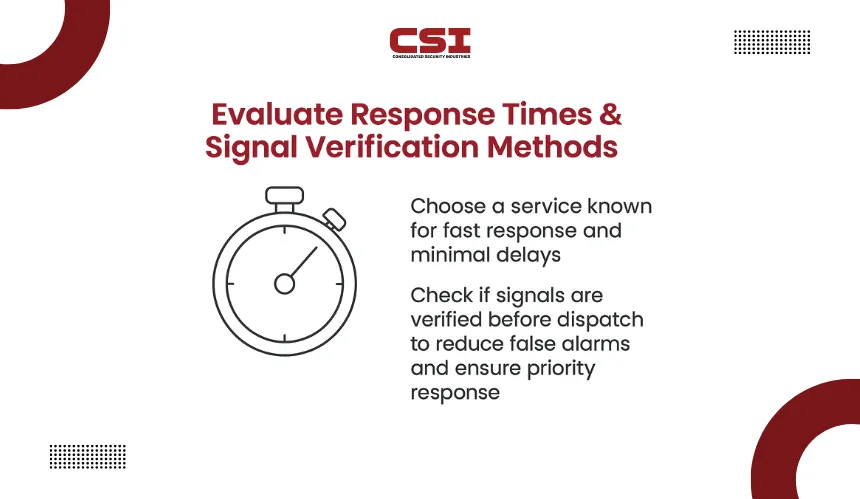
Fast response means nothing if the signal isn’t verified first, and verification means fewer false alarms and faster real help.
The best home security services verify the threat before dispatching emergency responders. This step matters because verified events get priority police response, while unverified alarms often get delayed or ignored.
There are a few verification methods worth knowing:
- Enhanced Call Verification (ECV): Operators call multiple contacts to confirm an alarm before dispatching help.
- Video Verification: Camera footage is reviewed in real time to confirm an intruder or fire.
- Audio Verification: Microphones pick up sounds (like breaking glass or smoke alarms) to validate the event.
5. Know What’s Included in the Monthly Monitoring Fee
The cheapest monthly fee isn’t always the best deal, and the most expensive one doesn’t always include everything you think.
Some companies quote low monthly prices but charge extra for essentials like cellular backup, app access, or smoke detection monitoring. Others lock you into long-term contracts with early termination fees buried in the fine print.
Here’s what you should confirm:
- Is the monthly fee flat or tiered based on features?
- Does it include fire, CO, and medical monitoring, or just burglary?
- Is cellular communication standard, or an extra charge?
- Can you cancel at any time, or is there a contract commitment?
6. Check for Smart Home Integration
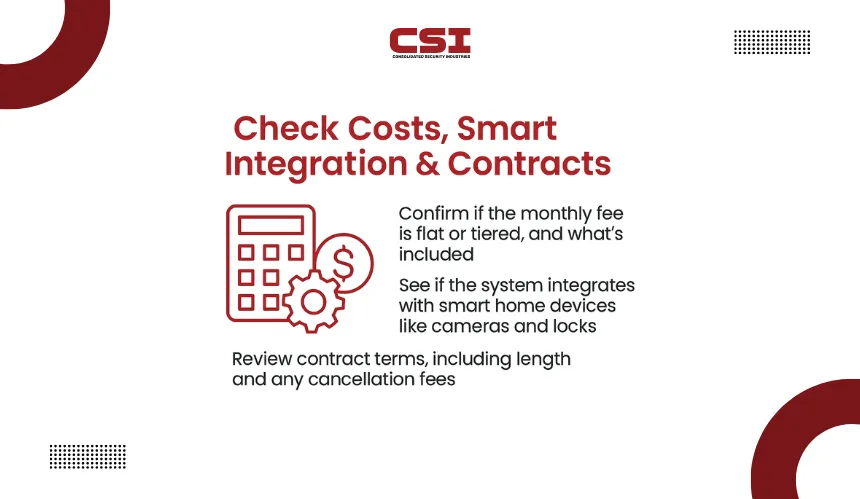
If you’re already using smart locks, cameras, or lights, your monitoring system should work with them, not against them.
Modern alarm systems can do much more than sound a siren. With smart home integration, you can:
- Arm/disarm the system remotely.
- Control door locks, thermostats, and lighting.
- View live camera feeds from your phone.
- Get real-time alerts and control everything from one app.
For the best experience, look for systems compatible with platforms like Z-Wave, Alexa, Google Assistant, or Apple HomeKit.
7. Review Contract Terms, Customer Support, and Service Flexibility
You don’t want to get stuck in a long-term contract with poor support and no way out. Here’s what to double-check before signing up:
- Are you locked into a multi-year contract, or is it month-to-month?
- What happens if you move. Can the system transfer, or do you start over?
- Is technical support available 24/7, or just during business hours?
- How easy is it to pause or cancel the service?
Also, ask how service issues are handled. Will they send a technician, or is it all DIY troubleshooting?
8. Understand Local Licensing and Alarm Permit Requirements
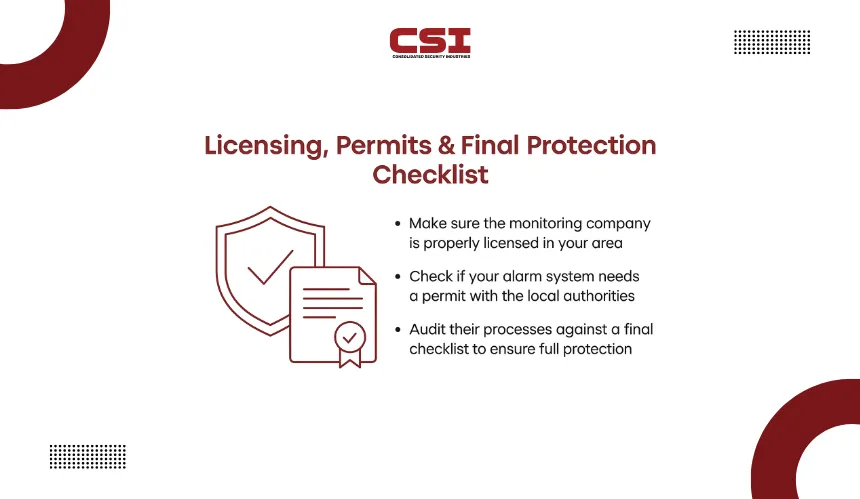
In cities like Los Angeles, your alarm monitoring service must follow specific laws, including licensing, dispatch rules, and local permitting.
For example, in California, alarm companies must be licensed through the Bureau of Security and Investigative Services (BSIS). In Los Angeles specifically, homeowners are also required to register their alarm system with the Los Angeles Police Commission Alarm Section to avoid penalties for false alarms.
If your monitoring company is not familiar with these requirements, it can lead to delayed dispatch or fines, even if your system works perfectly.
Final Thoughts: Protection Only Works When It’s Done Right
Every second counts in an emergency, and the system you choose should be ready to respond when it matters most. Focusing on what really matters, UL-certified reliability, fast response times, full-threat coverage, and clear contract terms, means you’re investing in peace of mind.
Not sure which professionally monitored system is right for your home? At CSI Security, we make it easy to choose a solution that fits the way you live. We are here to make home protection simple, reliable, and personal.
Frequently Asked Questions
Can I control my alarm system remotely?
Many alarm monitoring services offer mobile apps that allow you to arm or disarm your system, receive alerts, and monitor your property from anywhere with an internet connection. Ensure that the service you choose provides this feature if remote control is important to you.
What happens if my alarm is triggered by mistake?
Most monitoring centers will attempt to contact you to verify the alarm. If they cannot reach you, they may dispatch emergency services. To minimize false alarms, ensure that your contact information is up-to-date and that all household members are familiar with the system’s operation.
How do I know if my system is UL-listed?
A UL-listed system has been tested and certified by Underwriters Laboratories for safety and performance. You can verify this by checking the equipment’s labeling or contacting the manufacturer directly.
Can I use my existing equipment with a new monitoring service?
In some cases, existing equipment can be integrated with a new monitoring service. However, compatibility depends on the system’s make and model. Consult with the new provider to determine if your current equipment can be utilized.
Will my alarm system work with VoIP phone lines?
Some VoIP services may not support the digital signals used by alarm systems, potentially causing communication issues. It’s advisable to check with your provider to ensure compatibility or consider alternative communication methods like cellular backup.
Can I add more sensors or cameras to my system later?
Many alarm systems are expandable, allowing you to add sensors, cameras, or other devices as your needs change. Discuss expansion options with your provider to ensure future scalability.