
- csi_security
7 Key Advantages of Wireless Security Systems for Renters | Smart, Flexible Protection
Renters often face a common dilemma: how to secure their home without drilling holes, altering walls, or violating lease agreements. Traditional wired alarm systems require invasive installation, landlord permission, and permanent fixtures. These barriers don’t align with rental living.
Wireless security systems solve this problem with non-invasive, adhesive-mounted devices, battery-powered sensors, and Wi-Fi or cellular communication. They are the best home security systems for apartments, condos, and rental homes where flexibility matters.
With features like mobile app control, 24/7 monitoring, and easy relocation, these systems give renters complete security without long-term commitments or property damage.
Below, we explore the exact benefits that make wireless systems the smarter, lease-friendly choice for modern tenants.
Why Wireless Security Systems Are a Game-Changer for Renters
No Drilling or Wall Modifications Required
Most lease agreements prohibit physical alterations to walls, doors, or ceilings. This makes traditional wired security systems impractical for renters. These systems typically require drilling through drywall, anchoring cables, and permanently mounting sensors, which can lead to lease violations or loss of the security deposit.
Wireless security systems, by contrast, are built specifically to avoid these issues. The core components, including door/window contact sensors, motion detectors, and control hubs, use adhesive strips, magnetic mounts, or freestanding designs. Installation requires no screws, no anchors, and no structural modifications.
For example:
- Entry sensors are peel-and-stick and attach to door or window frames using strong but removable adhesive.
- Indoor cameras can sit on shelves or be mounted with non-invasive brackets.
- Keypads and control hubs can be placed on flat surfaces or attached without tools.
This means renters can secure their homes without making permanent changes, ensuring full compliance with property rules and avoiding repair costs when moving out.
Fast Setup with Optional Professional Help
One of the key advantages of wireless security cameras is their streamlined installation process. Wireless setups can be completed quickly and with minimal disruption.
Most systems are designed for tool-free, adhesive-based installation, making them ideal for renters who need fast protection without waiting on building approval.
Sensors, keypads, and control hubs are pre-configured to pair automatically, and the setup process is typically guided through a smartphone app.
However, professional support can still play a critical role. Many renters prefer to have their system expertly installed and calibrated to ensure optimal sensor placement, full coverage, and seamless smart home integration.
Whether you’re comfortable installing it yourself or want a hands-off, professionally optimized experience, wireless systems make it easy to secure your space on your terms.
Portability for Easy Relocation
Renters often relocate due to job changes, lease expirations, or evolving lifestyle needs, and a key strength of wireless security systems is that they’re designed to move with you.
Devices like contact sensors, motion detectors, and indoor cameras are typically adhesive-mounted or freestanding, allowing them to be removed without damaging walls or fixtures. Control panels and smart hubs are plug-in ready and can be reconnected to a new Wi-Fi network in minutes.
When it’s time to move:
- Sensors and hubs can be safely detached and reinstalled in a new residence.
- System settings can be retained or reset via mobile apps.
- New property layouts can be accommodated with add-on modules or custom zone reconfiguration.
Some systems even support geo-fencing features or location-based automation, which update device behavior based on your new address or GPS location.
No Dependence on Landline or Complex Infrastructure
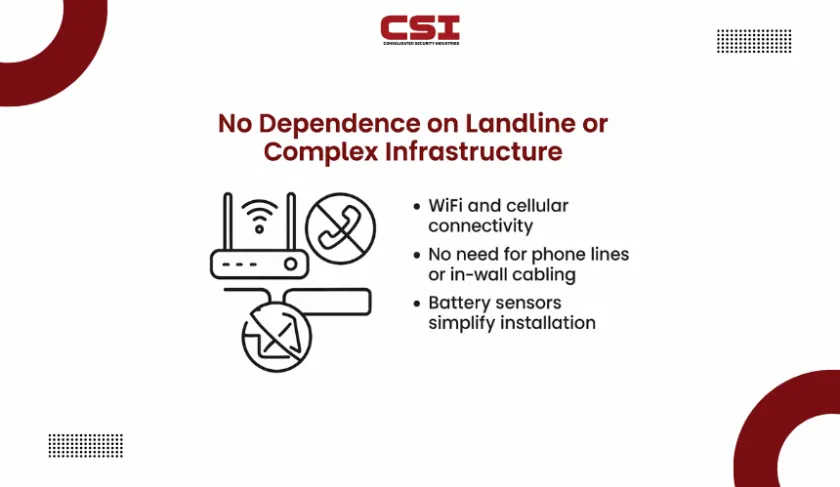
Traditional wired security systems often rely on existing infrastructure, such as landline telephone lines or in-wall Ethernet cabling, to communicate alarms and alerts.
If you are a renter, this dependency can create significant limitations. Most rental properties no longer include landline service, and installing new wiring is typically prohibited.
Wireless security systems overcome these barriers by leveraging modern communication technologies:
- Wi-Fi connectivity serves as the primary channel for real-time alerts, mobile app control, and video streaming.
- Cellular backup networks provide fail-safe communication in case of Wi-Fi outages, power failures, or internet disruptions.
- Devices are powered by battery-operated sensors, eliminating the need for external power wiring or outlets near every sensor.
This infrastructure independence means renters can deploy a fully functional security system without altering the property or relying on landlord-installed telephone or network lines.
Seamless Integration with Smart Home Devices
Renters today don’t just want security; they want a smart home experience that feels effortless and connected. Wireless security systems excel by integrating smoothly with popular smart home security equipment, creating a safer and more convenient living environment.
Imagine if you step inside your apartment, and your smart locks automatically disarm the alarm while your lights brighten gently to welcome you home. All of this happens without lifting a finger, thanks to wireless systems that work hand-in-hand with Amazon Alexa, Google Assistant, and other IoT platforms.
Key integrations include:
- Voice control for arming/disarming alarms and controlling cameras.
- Smart locks that sync with security sensors for enhanced entry monitoring.
- Connected lighting that triggers based on motion detection or alarm status.
- Cloud video storage and instant push notifications on your phone.
For renters, this means more than just security; it is about peace of mind and control at your fingertips, no matter where you are.
Cost-Effective with Flexible Plans
For renters, budget constraints and short-term commitments often make traditional security systems impractical. Wireless security systems, however, offer an affordable alternative tailored to these needs without compromising on protection or features.
Many wireless systems come with low upfront costs, often priced under $200 for a starter kit including sensors, a control panel, and a camera. The reason for this low cost is that wireless plug-and-play technology reduces overall expenses.
Moreover, monitoring plans for wireless systems tend to be month-to-month with no long-term contracts or early termination fees. This flexibility allows renters to scale services based on their lease duration and changing security needs.
There are some customizable packages where tenants pay only for the features they require, such as professional monitoring, video storage, or smart home integrations. This enables better budget control.
Remote Monitoring and Mobile App Control
Wireless security systems empower renters with full control over their home’s safety from their smartphones. Through dedicated mobile apps, users can monitor live video feeds, receive instant alerts, and manage alarm settings no matter where they are.
This remote access means that if an alarm triggers, renters get real-time push notifications to their phone, enabling immediate response whether they are at work, running errands, or traveling.
Features such as two-way audio through smart cameras allow for direct communication with visitors or even deter potential intruders remotely.
Additionally, mobile apps enable renters to:
- Arm or disarm their system with a tap
- Check sensor status and battery levels instantly
- Review recorded footage stored securely in the cloud
- Customize alert preferences and emergency contacts
This level of transparency supports flexible lifestyles, whether you are frequently on the move or working remotely, because you stay connected to your home’s security ecosystem at all times.
For renters looking to enhance their security without compromising lease agreements or lifestyle flexibility, CSI Security offers trusted guidance, modern solutions, and renter-friendly installation support tailored to your needs.
Frequently Asked Questions
Does renter’s insurance cover wireless security equipment if it’s damaged or stolen?
Yes, most standard renter’s insurance policies classify security devices (cameras, sensors, smart locks) as personal property.
If they are stolen or damaged by covered events like theft or fire, you can claim reimbursement by providing receipts or model numbers. Always verify your policy’s coverage limits and document your equipment for smoother claims.
Do I need landlord permission to install wireless security devices like cameras or sensors?
Typically, no formal permission is needed when devices are non-invasive (adhesive-mounted sensors, peel-and-stick doorbell mounts) and can be removed without damage.
However, transparent communication is wise, especially for outdoor cameras. Some renters report permission being denied, even when they offer to install at their own cost .
Will my pet trigger false alarms on wireless motion sensors?
Not necessarily. Many systems now include pet-immune motion sensors that use weight, body heat, and movement patterns to ignore animals (even up to ~80 lbs).
Placement helps too. Placing sensors higher or farther away from pet paths can further reduce false alerts. For extra reliability, ask about pet-specific sensors if you have furry roommates.
Can renters keep their security equipment if they move or change monitoring services?
Yes, as long as you own the equipment outright, you can take it with you. Many providers sell the hardware separately from monitoring and don’t retain ownership rights. Be sure to read the terms carefully. Some “free” systems may actually be leased or tied to a long-term monitoring contract that restricts portability.