

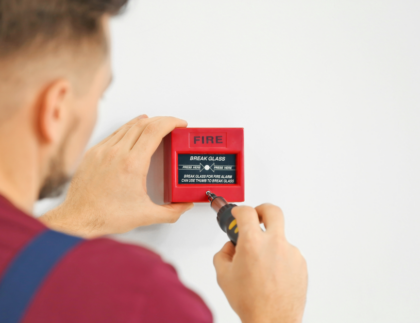
A Quick Answer: Fire alarm systems integrate with Building Management Systems by sharing real-time alerts, equipment statuses, and emergency triggers through communication protocols that allow the BMS to respond automatically during a fire event.  This connection gives the building a coordinated safety response while keeping all critical data on a central platform. Many facility managers...
A Quick Answer: Latest fire alarm requirements for commercial buildings in California in include compliance with the California Fire Code, Title 24, and NFPA 72.    These standards require approved detection devices, audible and visual notification appliances, monitored fire alarm control systems, emergency communication capabilities where applicable, and routine inspection, testing, and maintenance.    Requirements...
Installing a fire alarm system is more than just connecting devices. It is about protecting lives, property, and ensuring full compliance with safety codes. Yet, many installations fall short because of preventable mistakes that compromise performance and reliability.  From improper detector placement to skipped testing procedures, these errors can delay response times or cause false...
A Quick Answer: The top features every Los Angeles homeowner should know in a smart home security system include motion detection sensors, smart cameras with live monitoring, keyless entry and smart locks, 24/7 professional monitoring, mobile app integration, and environmental hazard sensors for fire, smoke, and water leaks. These features are particularly important in Los...
A Quick Answer: UL listings and certifications for fire alarm components indicate that each device has been rigorously tested and approved by Underwriters Laboratories (UL) to meet nationally recognized safety, performance, and reliability standards. In simpler terms, when a fire alarm component is UL listed, it means it has passed a series of stringent evaluations...
A Quick Answer: Fire alarm zones are designed by dividing a building into distinct areas based on layout, occupancy, and risk level. Each zone connects specific detectors and devices to a control panel, allowing the system to pinpoint the exact fire location. Designers follow NFPA zone design guidelines to ensure every zone provides clear identification,...
A Short Answer: Fire alarm battery backup and power supply requirements refer to the standards that ensure a fire alarm system continues to function safely during a power outage. According to NFPA 72, every system must include a primary power source, usually the building’s main electrical line, and a secondary source, such as batteries, capable...
A Direct Answer: Fire alarm devices communicate through wired or wireless networks that send signals from detection devices to a central control panel. The control panel triggers audible and visual alerts and can also send a signal to a remote monitoring station to notify emergency services. These systems use dedicated communication paths, which were once...
A Short Answer: Fire alarm circuits come in three main types: Class A Circuits offer redundancy by using a loop configuration that continues functioning even if a part of the circuit is damaged, making them ideal for high-importance buildings where reliability is critical.  Class B Circuits use a simpler, single-loop design, making them more cost-effective...
A Direct Asnwer: Fire alarm control panels (FACP) work by receiving signals from detection devices, processing those signals through programmed logic, and activating alarms or notification systems to alert building occupants and emergency responders. A fire alarm control panel (FACP) serves as the core of a building’s fire alarm system, managing how signals from various...